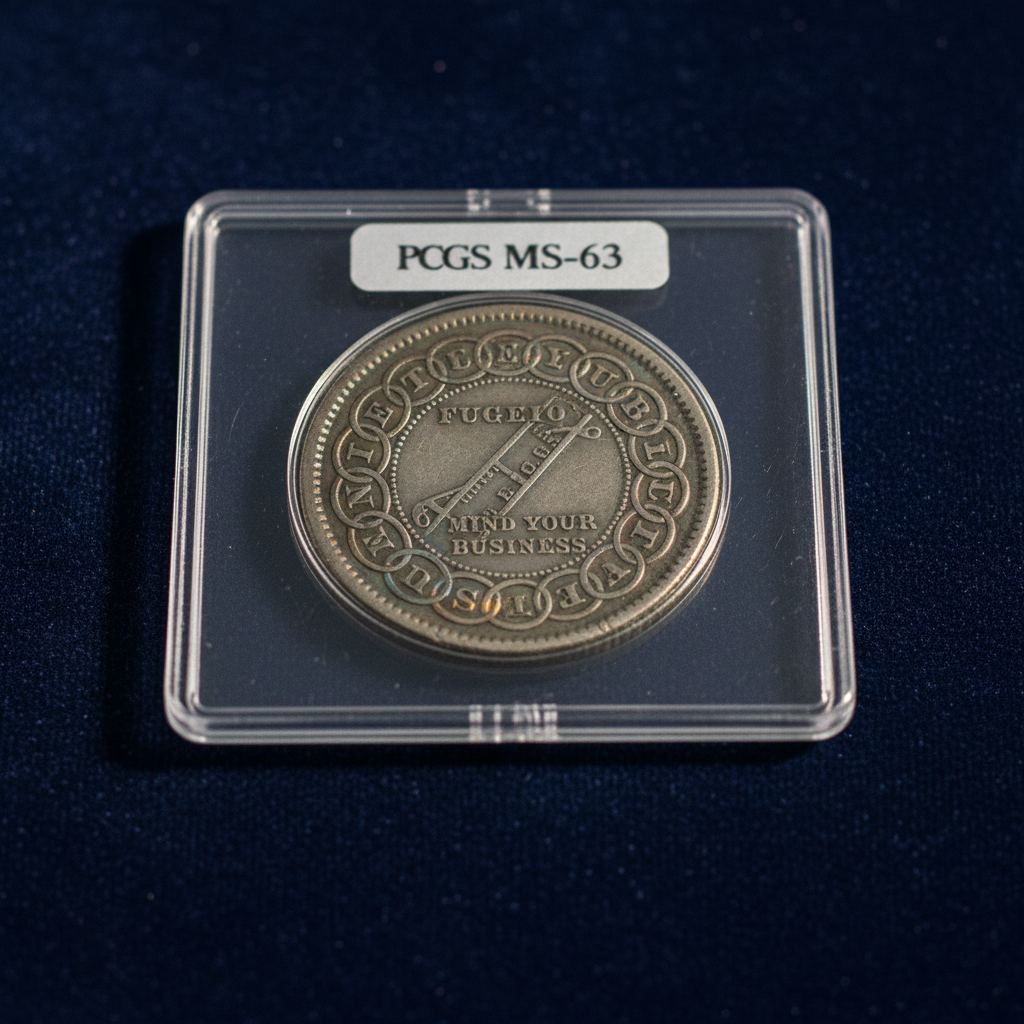
One of early American numismatics' most contested artifacts is headed to auction. A 1776 Continental Dollar will anchor Lot 2001 of Stack's Bowers Galleries' June 16, 2026 Rarities Night session — the prestige slot of the firm's June 2026 Showcase Auction, Session 2. And the debate that has followed this piece for nearly 250 years will almost certainly follow it to the auction floor.
The Continental Dollar occupies a singular, uncomfortable position in American coinage history: it may not technically be a coin at all. The question of whether these 1776-dated pieces represent an official government issue, a pattern, a medal, or something else entirely has never been definitively resolved. That ambiguity doesn't suppress collector demand — if anything, it amplifies it. Mystery, in this market, is a feature.
What the Continental Dollar Actually Is
The Continental Dollar was struck in 1776, the same year the Declaration of Independence was signed, and bears designs tied to Benjamin Franklin's aesthetic sensibilities — the sundial obverse, the chain-link reverse representing the thirteen colonies. Multiple metal compositions exist: pewter, brass, and silver. The silver examples are the rarest and most valuable, with high-grade survivors capable of commanding six figures at auction.
The central controversy is one of authorization. No congressional record definitively confirms these were struck as circulating currency. The Continental Congress was still a fledgling body in 1776, operating without a formal mint, and the coins — if that's what they are — were likely produced by private contractors. Some numismatic historians classify them as patterns or proto-coins; others treat them as the de facto first national coinage of the United States. The American Numismatic Association and major grading services have long catalogued them as coins, but the scholarly debate persists.
For the market, the classification debate is almost beside the point. These pieces trade as foundational American artifacts, full stop.
The Auction Landscape for Continental Dollars
Stack's Bowers knows this territory well. The firm has handled multiple Continental Dollar appearances over the years, and the Rarities Night placement signals that the consignor and auction house expect serious action. Rarities Night sessions are curated events — not every lot qualifies. Positioning this piece as Lot 2001, essentially the session opener, is a deliberate statement about its expected draw.
For context on where the market sits: a PCGS MS-63 Continental Dollar in pewter sold for over $105,750 at a major auction in recent years. Silver examples in comparable grades have pushed well past that. The finest known specimens — those graded MS-65 or better by PCGS or NGC — are effectively one-of-a-kind transactions, priced by negotiation as much as by hammer.
The population of high-grade survivors is genuinely thin. PCGS and NGC combined have graded relatively few Continental Dollars in any composition at Mint State levels, and the silver strikings in particular represent some of the lowest population counts in all of early American coinage. When one surfaces at a major auction, the numismatic community pays attention.
Stack's Bowers has not yet disclosed the specific composition, grade, or provenance of the June 2026 lot — details that will matter enormously to final price. A pewter example in Fine-15 trades in an entirely different universe than a silver example in AU-55. The Rarities Night placement, however, suggests this isn't a circulated mid-grade pewter piece. Expect something with either exceptional grade, rare composition, or significant pedigree. Possibly all three.
Why June 2026 Is Worth Watching
Stack's Bowers' June Showcase has historically been one of the firm's strongest sessions of the calendar year, often timed to coincide with major collector conventions and drawing competitive bidding from both domestic and international buyers. Anchoring Session 2 with a Continental Dollar is a smart programming move — it sets a tone of historical gravitas for everything that follows.
Early American coinage has shown resilience in recent auction cycles even as parts of the broader collectibles market have cooled. The segment benefits from a finite, well-documented universe of survivors and a collector base that skews toward long-term holders rather than speculative flippers. Pieces with genuine historical ambiguity — like the Continental Dollar — tend to hold value precisely because their story never fully closes.
The full lot details, including grade, composition, and estimated value, are expected to appear in Stack's Bowers' official catalog ahead of the June 16 session. When they do, the real conversation begins. A coin that spent 250 years arguing about what it is will have one night to prove what it's worth.