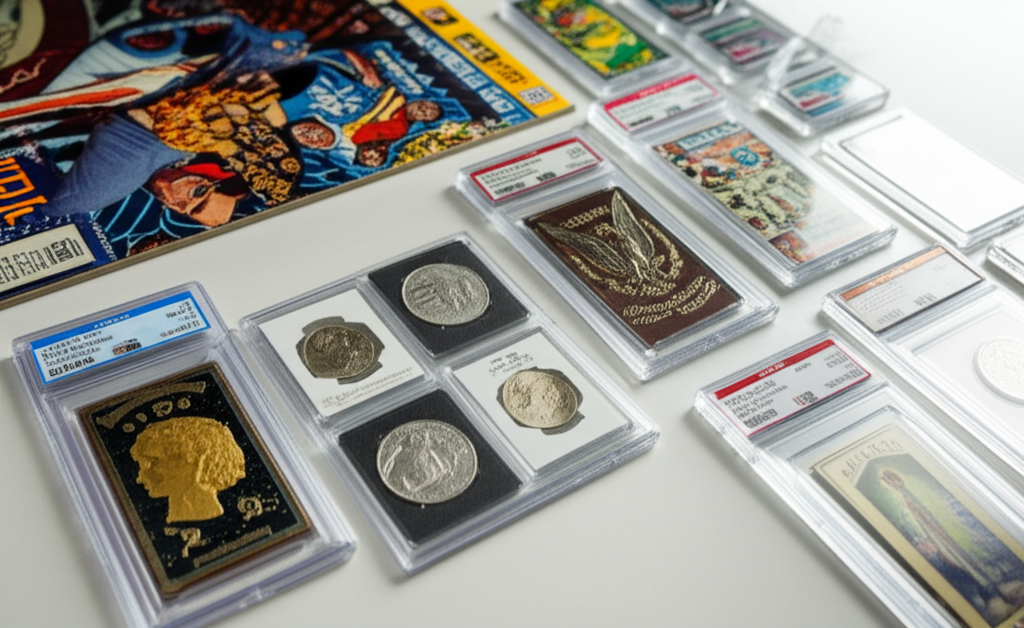
The 1886-O Morgan Dollar is one of American numismatics' cruelest paradoxes: the New Orleans Mint struck 10,710,000 of them in a single year — and yet finding a problem-free Mint State example today is a genuine ordeal. With a PSA/NGC MS-65 population that ranks among the lowest of any high-mintage Morgan date, this coin has quietly become one of the most treacherous condition rarities in the entire series, punishing collectors who confuse large original mintage with actual market availability.
A Mint That Worked Overtime — And Left Almost Nothing Behind
In 1886, the New Orleans Mint was singularly focused: it struck silver dollars and nothing else. The result was a 10.71 million-coin output that made the 1886-O one of the larger Morgan issues of the decade on paper. But production volume and survival quality are entirely different conversations. The coins were struck on worn dies with inconsistent luster, and the New Orleans Mint's notorious quality control issues during this era meant that even freshly struck pieces often exhibited weak central detail — particularly on Liberty's hair above the ear and the eagle's breast feathers. Most of these dollars entered circulation immediately, absorbing decades of wear in commercial channels across the American South and Midwest.
What wasn't spent was often stored carelessly, without the canvas bag protection that preserved so many Philadelphia and San Francisco issues. By the time the great Treasury releases of the 1950s and 1960s flooded the market with Morgan dollars, the 1886-O was conspicuously absent from the flood. No significant hoard has ever surfaced. The GSA sales of the early 1970s, which distributed millions of Carson City Morgans, offered no relief for 1886-O collectors either. The coin simply wasn't there in quantity — and it certainly wasn't there in quality.
Today, NGC has certified fewer than 150 examples in MS-65 or better, with the MS-65 population sitting in the double digits for most services. PCGS data tells a similarly grim story. At MS-64, the combined population climbs modestly, but eye appeal remains a persistent problem — many technically graded coins carry the baggy, washed-out surfaces that define New Orleans Mint production of this era. Auction appearances in the top grades are measured in years, not months.
Why the Market Hasn't Fully Priced This In — Yet
Here is where the 1886-O becomes genuinely interesting for market-watchers. Despite its documented condition rarity, the coin has historically traded at a discount to flashier Morgan keys like the 1893-S, 1895, or 1889-CC. That's partly because casual collectors anchor on mintage figures — they see 10.7 million and assume availability. It's also because the 1886-O lacks the dramatic backstory of a low-mintage rarity. There's no legendary hoard, no famous provenance, no Hollywood narrative. It's just a coin that was made in enormous quantities and survived in almost none.
Recent auction results suggest that sophisticated buyers are starting to close the gap. A PCGS MS-64 example hammered for $4,800 at Heritage Auctions in a recent session — a figure that would have seemed aggressive five years ago for a non-key Morgan date. MS-65 coins, when they appear, are commanding $18,000 to $25,000 depending on strike quality and luster, with CAC-approved examples pushing toward the top of that range. Compare that to an 1881-S MS-65, a coin with a comparable mintage but vastly superior survival rate, which trades routinely under $500 in the same grade. The condition rarity premium for the 1886-O is real, measurable, and still arguably undervalued relative to its actual population data.
Broader Morgan dollar market momentum is also working in this coin's favor. The series has seen sustained collector interest through the early 2020s, driven in part by the 100th anniversary of the last Morgan production run in 1921, the US Mint's commemorative reissues, and a general flight toward hard assets with historical pedigree. When a category heats up, condition rarities within that category tend to outperform — and the 1886-O is exactly that kind of sleeper.
Collector Takeaway: Buy Quality or Walk Away
The strategic play on the 1886-O is straightforward but unforgiving: grade matters more here than on almost any other Morgan date. An MS-63 example with typical New Orleans surface issues is a mediocre coin at a mediocre price. An MS-64 with above-average luster and a clean strike is a legitimate asset. An MS-65 with CAC approval is, frankly, a trophy — and one that the population data suggests will only become harder to acquire over time. Do not buy this coin raw unless you have the expertise to evaluate New Orleans Mint luster and strike independently. Slabbed, CAC-approved examples from Heritage, Goldin, or Stack's Bowers are the appropriate acquisition channels.
For collectors building a complete Morgan dollar date set, the 1886-O is a mandatory hold once acquired in Mint State. For investors watching the broader silver dollar market, it represents one of the clearest cases of a coin whose market price has not yet caught up to its actual rarity. That gap won't last indefinitely. The population reports are public, the auction comps are accelerating, and the collector base for high-grade Morgans is growing. The 1886-O is the kind of coin you wish you'd bought three years ago — and the second-best time to act is now.