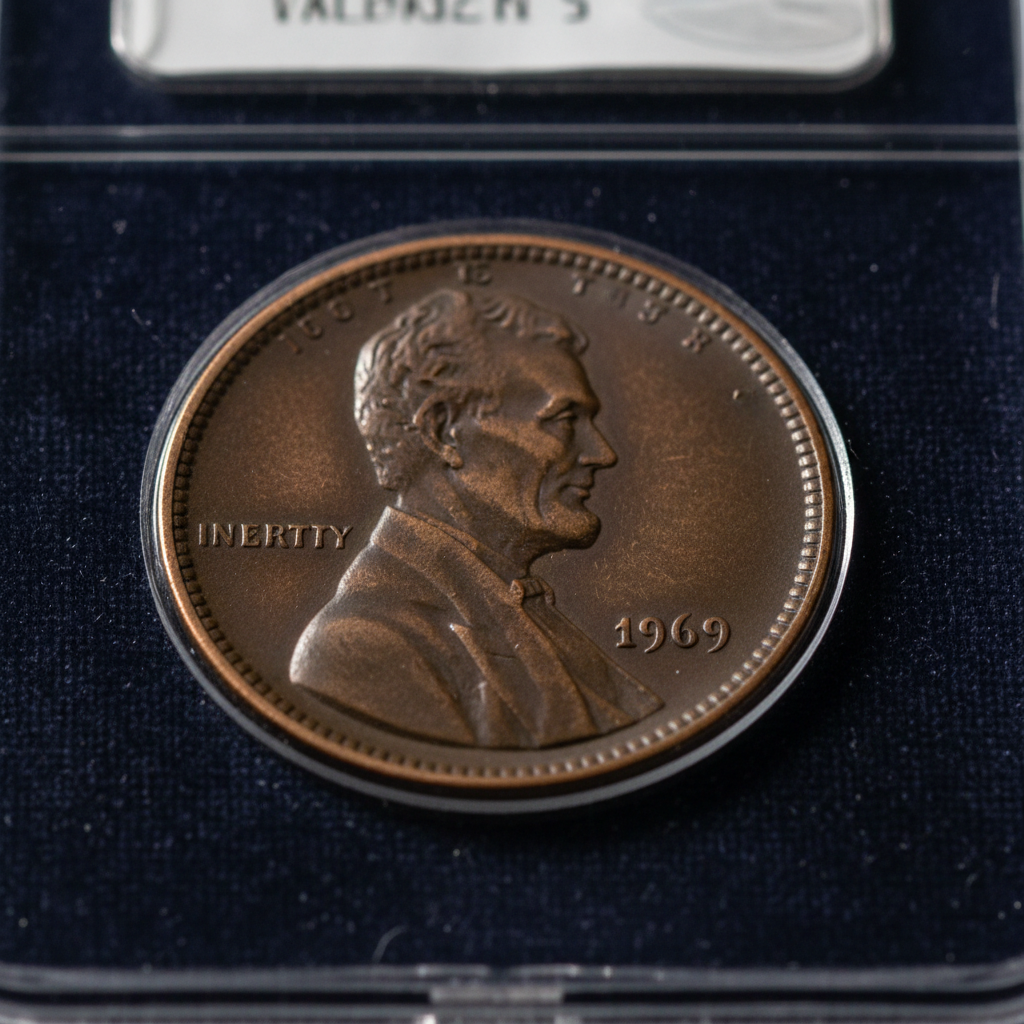
Before the Lincoln cent had its first birthday, the San Francisco Mint had already handed collectors one of the most visually compelling varieties in American small-cent history. The 1909-S/Horizontal S Lincoln cent — catalogued as FS-1502 and cross-referenced by PCGS as RPM-002 — is the product of a simple but dramatic punchwork error: a mintmark die that was stamped sideways before being corrected to its proper vertical orientation. The ghost of that rotated S is still visible on every surviving example, plain enough to see without a loupe if you know where to look.
That combination — first-year issue, San Francisco origin, and an error you can actually show someone — is rare in numismatics. Most varieties require magnification and patience to appreciate. This one makes its case immediately.
The Error Behind the Variety
Mintmark punching in the early twentieth century was a manual process. A worker physically drove a steel punch bearing the mintmark letter into the working die, and if that punch landed off-axis, the die went back to the bench for correction. In the case of the 1909-S/Horizontal S, the initial punch was rotated approximately 90 degrees — essentially sideways — before the correct vertical S was punched over it. The underlying horizontal S wasn't fully obliterated. It survived, and it's been driving collector demand ever since.
This is classified as a repunched mintmark (RPM) variety, but the horizontal orientation elevates it well above the typical slightly-doubled or slightly-shifted RPM. The misalignment is dramatic by the standards of the series, which is precisely why it earned a dedicated FS number in the Cherrypickers' Guide rather than being lumped into a footnote.
The host coin matters enormously here. The 1909-S Lincoln cent — plain, no VDB — is already a key date in its own right, with a mintage of just 1,825,000 pieces. That's low for a business-strike Lincoln cent, and survivors in problem-free circulated grades command real money. A straight 1909-S in PCGS MS-64 Red routinely brings $2,500 to $4,000 at Heritage and Stack's Bowers depending on eye appeal. The FS-1502 variety commands a premium on top of that — and in lower circulated grades, where most examples live, the variety designation can meaningfully separate two otherwise comparable coins at auction.
Population, Grades, and What the Market Tells You
PCGS population data for the FS-1502 variety specifically is limited relative to the broader 1909-S population, which itself is constrained by that sub-two-million mintage. The coins that do surface in higher grades — MS-63 Red-Brown and above — generate serious competition. Circulated examples in the VF-20 to EF-45 range are the sweet spot for most collectors: the variety is still visible, the price is approachable, and the coin is genuinely original in a way that high-grade examples sometimes aren't.
At the F-12 to VF-30 level, expect to pay a 15 to 25 percent premium over a straight 1909-S of equivalent grade when the variety is clearly attributed on the holder. Unattributed examples — raw coins or older holders that predate modern variety cataloguing — occasionally surface at shows and in bulk lots, which is where patient cherry-pickers still find value. The variety is well-known enough that dealers price it accordingly when they see it, but not so universally recognized that every coin shop owner will catch it in a junk box.
The broader Lincoln cent variety market has been quietly strong. Demand for first-year 1909 issues has held up even as some mid-series varieties softened. The combination of historical significance — the cent's debut, the transition from Liberty Head to Lincoln portraiture — and the accessibility of the series keeps new collectors entering at the bottom and experienced collectors upgrading at the top. The FS-1502 sits at the intersection of both impulses.
Why This Coin Stays Relevant
The 1909-S/Horizontal S isn't a coin that needs to be rediscovered. It's been in the Cherrypickers' Guide for decades, it has a PCGS designation, and it shows up in major auction catalogs with regularity. What keeps it interesting is that the underlying error is legible — you can hold this coin and understand exactly what went wrong at the mint in 1909. That narrative accessibility is underrated as a driver of long-term collector interest.
Compare it to some of the more obscure doubled-die varieties in the series, where the doubling requires a 10x loupe and a reference photo to confirm. The horizontal S tells its own story. That matters when you're explaining a purchase to a spouse, building a type set with variety upgrades, or introducing someone to the world of error coinage for the first time.
For a coin that's well over a century old, still tied to one of the most collected series in American numismatics, and carrying a minting blunder that's both documented and visible — the 1909-S/Horizontal S Lincoln cent has earned its legend status honestly.