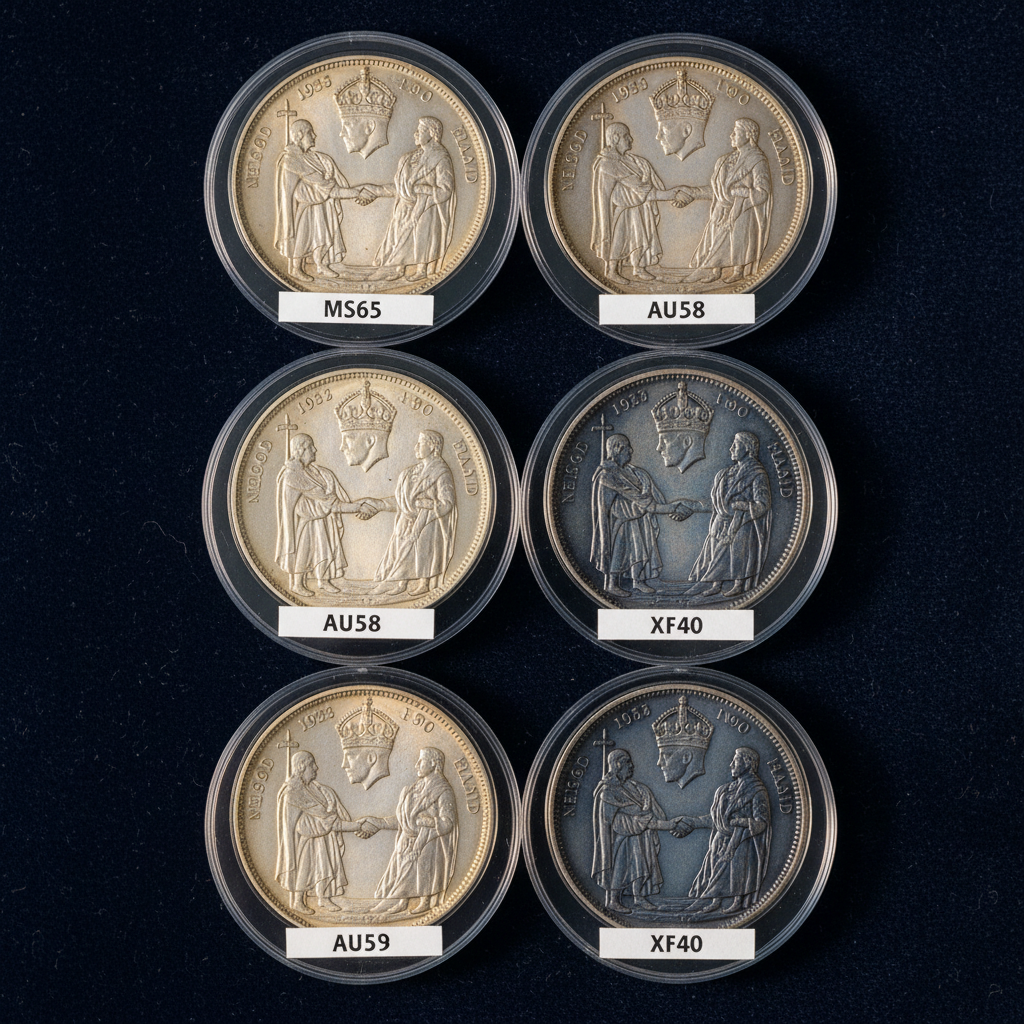
Only six proof specimens of the 1935 New Zealand Waitangi Crown are believed to exist. Six. For a coin that anchors the entire modern New Zealand numismatic canon, that population figure isn't just remarkable — it's the kind of scarcity that rewrites auction room expectations every time one surfaces.
The Waitangi Crown holds a dual distinction that few commemorative coins anywhere in the world can claim: it is simultaneously the first major commemorative coin issued for New Zealand and a direct artifact of one of the most consequential political documents in Pacific history. That combination of numismatic firsts and historical weight is why serious collectors treat it less like a coin and more like a primary source.
A Treaty, a Colony, and a Crown
The backstory matters here. By the 1830s, Aotearoa New Zealand had become a pressure point — British missionaries, traders, and settlers were arriving in growing numbers, and the absence of formal governance was producing exactly the kind of lawless friction that alarmed London. The solution, negotiated in February 1840, was the Treaty of Waitangi, signed between the British Crown and Māori rangatira (chiefs) across the country. It established British sovereignty — or, depending on which language version you read, a rather different arrangement — and it remains the foundational constitutional document of New Zealand to this day.
Nearly a century later, the centennial of the Treaty's signing provided the occasion for New Zealand's first commemorative crown-sized coin. The 1935 Waitangi Crown was struck in .500 fine silver, weighing 28.28 grams — the standard crown specification of the era — and designed by George Kruger Gray, the British artist responsible for much of the coinage imagery used across the British Empire during the 1930s.
The obverse carries the portrait of King George V by Percy Metcalfe. The reverse is where the coin earns its reputation: a Māori chief and a British naval officer flank a ceremonial handshake beneath the text WAITANGI, with a stylized Treaty document and a kiwi incorporated into the design. For 1935, this was a genuinely progressive piece of iconography — an acknowledgment of a bicultural agreement rendered in silver at a time when such representations were rare on official coinage.
The Six Proofs and the Broader Issue
The coin was issued in two formats. The circulation-strike version — produced for collectors and the general public — had a mintage of 364,000 pieces, making it accessible by commemorative standards of the period. These circulated examples still command serious premiums in top grades. A PCGS MS65-graded specimen has brought over $3,000 USD at auction, with the finest known examples pushing considerably higher as the population thins above that grade.
Then there are the proofs.
With only six proof Waitangi Crowns confirmed to exist, each auction appearance is an event. These were struck to the highest standard at the Royal Mint and were never intended for circulation. The mirrored fields and frosted devices that define proof coinage are present in their most exacting form here, and the historical significance amplifies every bid. When a proof example last appeared at auction — handled through Stack's Bowers — it achieved a result that placed it firmly among the most valuable 20th-century British Commonwealth coins on record.
For context: among Commonwealth crowns of the 1930s, the Waitangi proof occupies a tier occupied by almost nothing else. The 1937 Edward VIII patterns are rarer but were never officially issued. The 1935 George V Silver Jubilee Crown had a far larger proof mintage. The Waitangi proof stands largely alone.
What Drives the Market Today
Demand for the Waitangi Crown operates on two tracks that don't always overlap. New Zealand collectors — particularly those building comprehensive national collections — treat the coin as an anchor piece, the one item a serious collection cannot lack. That domestic demand is real and consistent.
The international track is driven by British Commonwealth specialists and world coin generalists who recognize the Waitangi Crown's place in the broader 20th-century commemorative hierarchy. The coin's design quality, historical narrative, and extreme proof rarity check every box that sophisticated world coin buyers prioritize.
Circulation strikes in MS64 and above have shown steady appreciation over the past decade, tracking the broader strength in pre-WWII Commonwealth silver. The proof market, by definition, is too thin to chart a trend line — but each appearance resets the ceiling upward.
Six coins. One treaty. Ninety years of collector demand that shows no sign of cooling. The Waitangi Crown isn't just a numismatic rarity — it's the kind of object that makes you reckon with what a coin can actually be asked to carry.