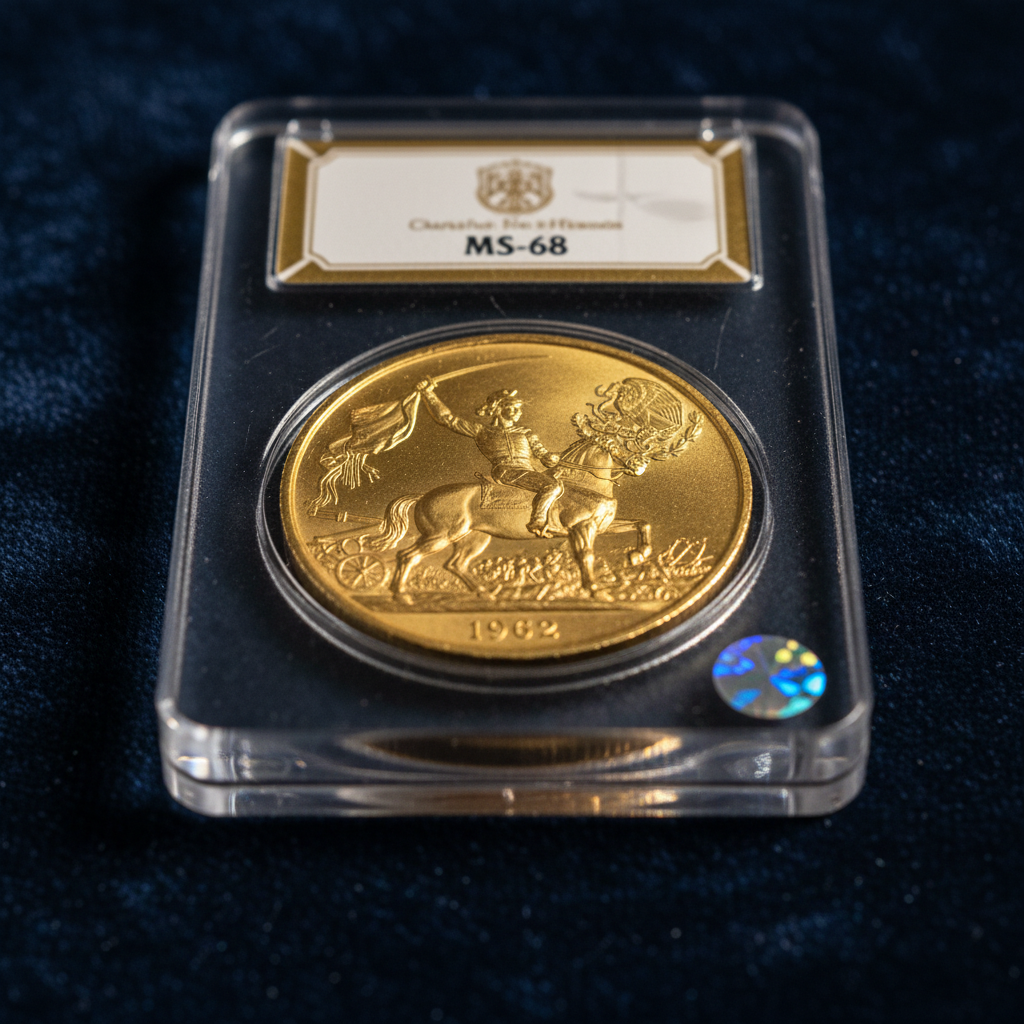
Mexico struck gold in 1962 — literally. The 1962-Mo Mexico Centennial of the Battle of Puebla gold medal is one of the more historically loaded pieces in 20th-century Latin American numismatics: a commemorative issued exactly one hundred years after one of the most improbable military upsets in the Western Hemisphere, struck at the Casa de Moneda de México (Mexico City Mint, mintmark Mo), and finished in a way that rewards close examination by anyone serious about world gold.
Cinco de Mayo gets reduced to bar specials and novelty sombreros in the United States every May. The medal does something more durable. It anchors the May 5, 1862 defeat of Napoleon III's French Expeditionary Force at Puebla de Zaragoza to a tangible, collectible object — one that the Mexican government commissioned at the centennial with the kind of intentionality that separates commemorative medals from generic bullion.
The Historical Weight Behind the Metal
The Battle of Puebla was a genuine underdog story. General Ignacio Zaragoza led a Mexican force of roughly 4,500 soldiers — many of them indigenous Zapotec and Mixtec fighters — against a French army that had not lost a major engagement in nearly 50 years. The French were routed. It didn't end the war (France would occupy Mexico City the following year and install Maximilian I), but the symbolic resonance of that single victory proved permanent. Mexico has celebrated it ever since.
When the centennial arrived in 1962, the Mexican government responded with commemorative issues across multiple formats. The gold medal stands apart from the broader series. Struck in .900 fine gold, the piece carries the portrait of General Zaragoza on the obverse, with reverse imagery referencing the battle's date and national symbolism. The craftsmanship reflects the mint's capabilities at the time — clean fields, deliberate design hierarchy, and the kind of relief work that photographs well even when the coin doesn't grade at the top of the population.
Where This Medal Sits in the Market
World gold medals from this era occupy an interesting corner of the market. They're not quite coins — no legal tender face value — and not quite art medals, since they carry official mint provenance. That ambiguity has historically kept prices below where the underlying gold content and historical significance might otherwise place them. For buyers, that's an opportunity. For the market broadly, it's a category that remains underappreciated.
Graded examples of the 1962-Mo Puebla centennial medal surface infrequently at major auction houses. Heritage Auctions and Stack's Bowers have handled comparable Mexican gold commemoratives from the same period, with mid-grade certified examples — think NGC MS-62 to MS-64 — trading in ranges that reflect both the gold melt value and a modest numismatic premium. Population data from NGC and PCGS on this specific medal remains thin, which itself signals rarity. When a piece has been graded fewer than a dozen times across both major services, that scarcity is real, not manufactured.
Raw, uncertified examples occasionally appear through Latin American dealers and estate sales, priced closer to melt. The spread between raw and certified can be meaningful here — certification adds provenance confidence on a piece where authentication questions are legitimate given its relative obscurity in North American dealer inventories.
For context, Mexican gold commemoratives from the 1921 Centennial of Independence series — arguably the most recognized benchmark in this category — have seen sustained collector demand and strong auction results over the past decade. The 1962 Puebla medal doesn't carry that same name recognition yet. That gap may be exactly the point.
What Collectors Should Know Before Buying
A few specifics matter when evaluating this medal in the current market:
- Gold content: Confirm the exact weight and fineness against published mint records — .900 fine is standard for Mexican commemorative gold of this period, but due diligence on any raw example is non-negotiable.
- Certification: NGC and PCGS both handle world medals. Given the thin population, a certified example in MS-63 or above would represent a meaningful upgrade over most available inventory.
- Provenance: Medals with documented collection history — especially from established Latin American numismatic collections — command premiums and reduce authentication risk.
- Condition sensitivity: The medal's design, with its relatively open fields, shows contact marks readily. Eye appeal matters more than the raw grade number on pieces like this.
The 1962-Mo Battle of Puebla gold medal isn't a headline-grabbing auction record waiting to happen. It's something rarer in today's market: a historically significant, officially struck gold piece that the mainstream collecting community hasn't fully priced yet. In a category where most of the easy money has already been made, that's a meaningful distinction.
General Zaragoza won his battle against long odds. Collectors who find this medal before the crowd catches up might feel similarly satisfied.