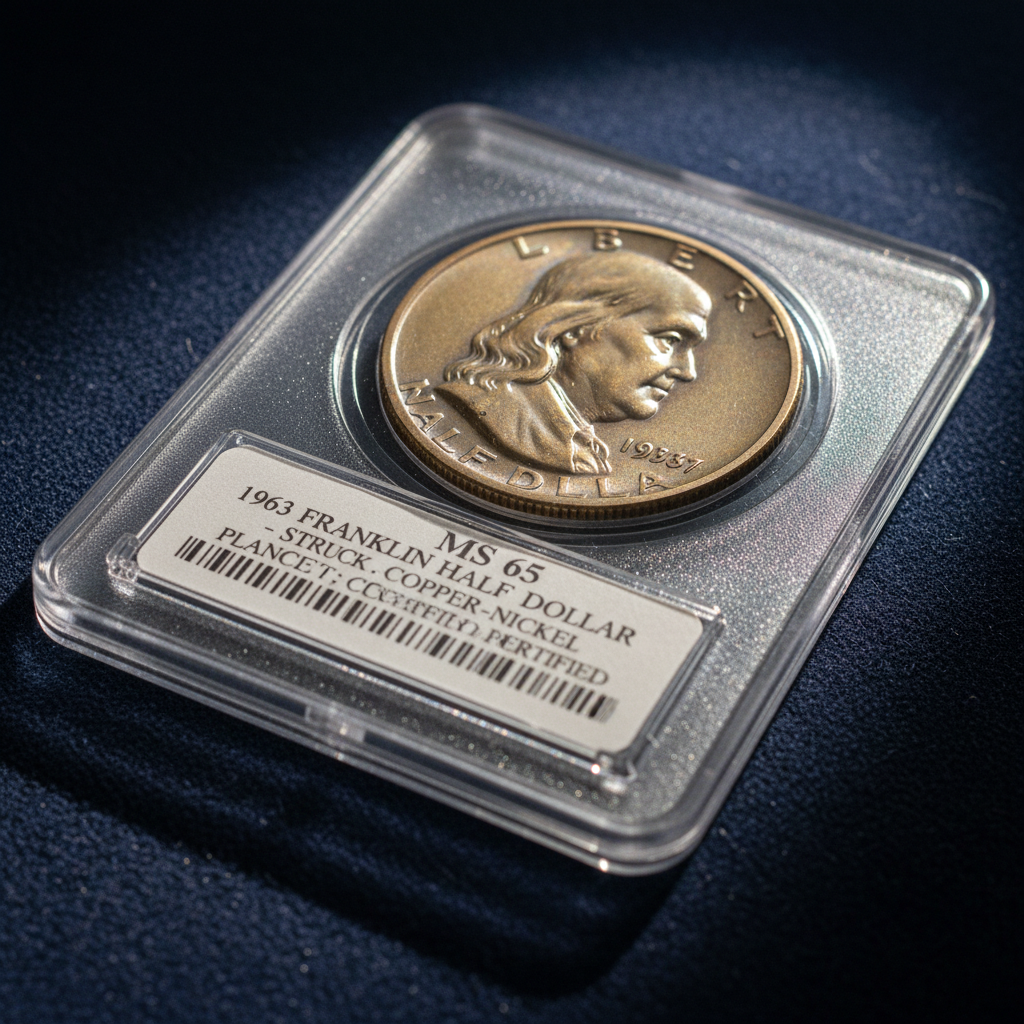
A single coin is upending decades of assumptions about what left the Philadelphia Mint in 1963. A newly documented 1963 Franklin Half Dollar has been confirmed struck on a 75% silver, 25% copper planchet — a composition that matches no standard U.S. Mint specification for the series — and weighs in at a precise 12.60 grams, well below the 12.50-gram standard for a normal Franklin. The discrepancy is not a rounding error. It is a fundamental metallurgical anomaly that has the error coin community buzzing.
Wrong-planchet errors are not unheard of in U.S. coinage. But this piece is different. The composition itself — not just the physical planchet — is off. That distinction matters enormously. A typical wrong-planchet error involves a coin struck on a planchet intended for a different denomination already in production. This Franklin appears to have been struck on a planchet with a silver alloy ratio that simply was not in regular circulation use at the time. That points away from a mundane production mishap and toward something far more deliberate.
The Case for an Experimental Origin
The most compelling theory circulating among specialists is that this coin is a Mint test piece — struck intentionally to evaluate how a modified silver alloy would perform under production dies. Context supports this reading. By 1963, the U.S. Treasury was already under significant pressure over silver coinage. Coin hoarding was accelerating, silver prices were climbing, and internal conversations about transitioning away from silver were well underway. The Coinage Act of 1965, which eliminated silver from dimes and quarters and reduced the half dollar's silver content to 40%, was less than two years away.
It is entirely plausible — and frankly logical — that Mint metallurgists were quietly testing alternative alloy compositions in the years immediately preceding that legislative shift. Experimental planchets occasionally escaped the Mint through channels that remain murky even today. The 1964 SMS Kennedy Half Dollars and the various transitional errors from the mid-1960s demonstrate that the Mint's internal testing process was not airtight. Pieces got out. Some ended up in collections. A few ended up rewriting the reference books.
This Franklin may belong in that category.
What the Grading and Market Record Tells Us
The coin is described as unique — meaning no other confirmed example with this specific composition exists in the census. That designation carries real weight in the error coin market. Unique U.S. Mint errors with a credible experimental backstory occupy a rarefied tier. For reference, the 1943 copper Lincoln cent, the most famous wrong-metal error in American numismatics, has seen individual examples cross $1 million at auction. The 1944 steel cent — its inverse — has performed similarly at the top of the grade range.
The Franklin is not in that league of public recognition. Not yet. But the structural argument for its value is sound: it is one-of-a-kind, it has a plausible and historically grounded origin story, and it sits at the intersection of two collector markets — Franklin Half enthusiasts and error coin specialists — both of which have shown sustained demand over the past decade.
- Composition: 75% silver, 25% copper (non-standard)
- Weight: 12.60 grams (standard Franklin: 12.50 grams)
- Date: 1963
- Status: Unique — no other confirmed example
- Classification: Possible experimental Mint test piece
Authentication will be the critical next step. PCGS and NGC both have the metallurgical testing infrastructure to verify the alloy composition independently. If either service encapsulates this coin with an experimental or wrong-planchet designation, the market conversation changes overnight. A certified unique experimental piece from the final year of Franklin Half production — a series that ended abruptly when the Kennedy Half was rushed into production following the assassination — carries a narrative that auction houses know how to sell.
Heritage Auctions and Stack's Bowers have both handled transitional-era Mint errors with strong results. A properly pedigreed piece like this, assuming authentication holds, would be a legitimate candidate for a major numismatic sale with a six-figure floor and real upside beyond that.
The 1963 Franklin Half Dollar was already the last of its kind — the series was discontinued the following year. If this coin turns out to be what the evidence suggests, it is not just a last-year issue. It is a window into the Mint's quiet, internal reckoning with the end of silver coinage in America. That is a story collectors will pay to own.