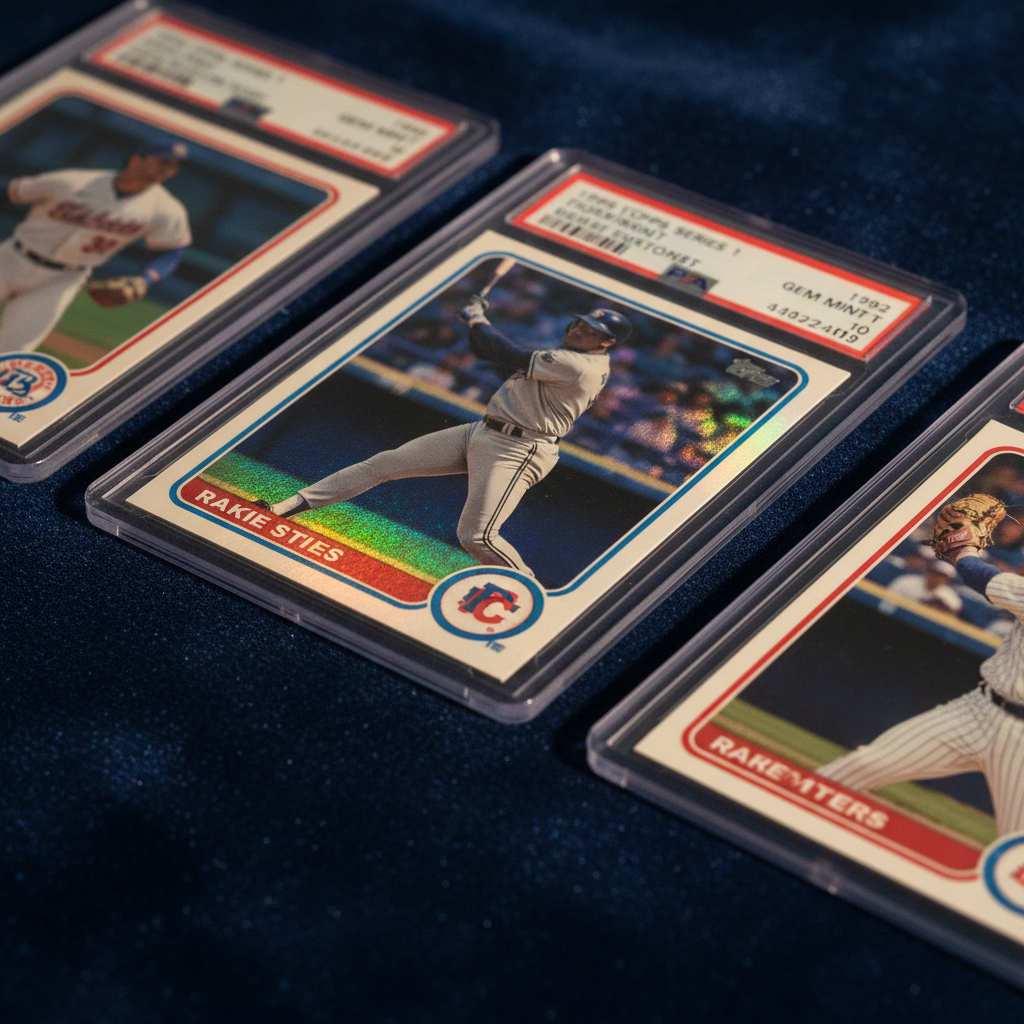
Thirty years on, a hobby box of 1995 Topps Series 1 Baseball still delivers a surprisingly respectable Hall of Fame hit rate — and a useful reminder of just how undervalued mid-90s Topps remains in the current market. Beckett's Cheap Wax Wednesday series put a full box of 36 packs under the microscope, and the results are instructive for anyone hunting affordable vintage-adjacent wax.
This is not a high-dollar proposition. A sealed hobby box of 1995 Topps Series 1 routinely trades in the $20–$45 range on eBay and through secondary dealers — a fraction of what comparable 1993 or 1994 Topps boxes command, and essentially nothing compared to the premium era product from the same year. That price point is the entire thesis.
The Set, the Era, and Why 1995 Gets Overlooked
The mid-90s represent a complicated chapter in the hobby. The 1994 MLB strike fractured fan interest heading into the 1995 season, and the card market — already bloated from the overproduction boom of 1989–1993 — was in the early stages of a painful correction. Topps responded the way most manufacturers did: keep printing, keep the price points accessible, and hope the collectors come back.
They did come back, eventually. But the stigma of that overproduction era stuck to sets like 1995 Topps like pine tar. Print runs were enormous. Condition-sensitive cards from this period flood PSA's population reports — the 1995 Topps Derek Jeter rookie card (#199), for instance, has been submitted in significant volume, with PSA having graded well over 4,000 copies, yet PSA 10 examples still command $80–$150 depending on centering and surface quality. That's real money for a card most collectors treat as a throwaway.
The checklist for Series 1 is legitimately stacked. You're pulling cards of Cal Ripken Jr., Ken Griffey Jr., Frank Thomas, Greg Maddux, Tony Gwynn, and Barry Bonds — a who's-who of the Hall of Fame ballot era. None of these are scarce. All of them grade well when pulled from fresh packs, and that's the sleeper angle here.
The Box Break Math
At 36 packs with roughly 12 cards per pack, a standard hobby box yields around 432 cards. Series 1 covers cards #1 through #396, so collation is reasonably tight, though duplicates are inevitable. The insert program is modest by modern standards — Topps Cyberstats and League Leaders subsets add some texture, but there's no autograph or relic program to anchor box value the way contemporary products do.
That's not a flaw. It's the point. This is a pure base-card exercise, and the value proposition lives entirely in the condition of what you pull and the names on the checklist. For a $30 box, the ceiling on a PSA 10 Jeter or a gem-mint Griffey is genuinely positive expected value — particularly as the 30th anniversary of the 1995 season starts generating nostalgia-driven demand.
- 1995 Topps Derek Jeter #199 — PSA 10: $80–$150
- 1995 Topps Ken Griffey Jr. #300 — PSA 10: $40–$75
- 1995 Topps Frank Thomas #230 — PSA 10: $25–$50
- 1995 Topps Greg Maddux #360 — PSA 10: $20–$40
None of those numbers are going to fund a retirement account. But they're all north of what you paid per pack, and that math compounds across a full box if the cards grade out.
The Grading Angle Collectors Are Missing
Here's the editorial position: mid-90s Topps is one of the most underworked grading opportunities in the hobby right now. Submission costs have dropped with PSA's value tiers, and the population of PSA 10s on many 1995 Topps base cards remains surprisingly thin relative to how many copies exist. The cards were printed in bulk, yes — but they were also handled carelessly, stored in shoeboxes, rubber-banded into oblivion. Truly gem-mint examples pulled from sealed wax are rarer in practice than the print run implies.
The Beckett box break format is a useful entry point for newer collectors trying to calibrate expectations. Thirty-six packs of 1995 Topps isn't a treasure hunt — it's a masterclass in reading card condition, understanding checklist depth, and appreciating why certain eras get repriced as anniversaries approach. The 1995 season was the year Cal Ripken broke Lou Gehrig's consecutive games record. That context doesn't disappear from the cardboard just because the print run was large.
Cheap wax breaks are often dismissed as content filler. This one makes a quiet case that the floor on 30-year-old Topps might be higher than the $30 box price suggests.