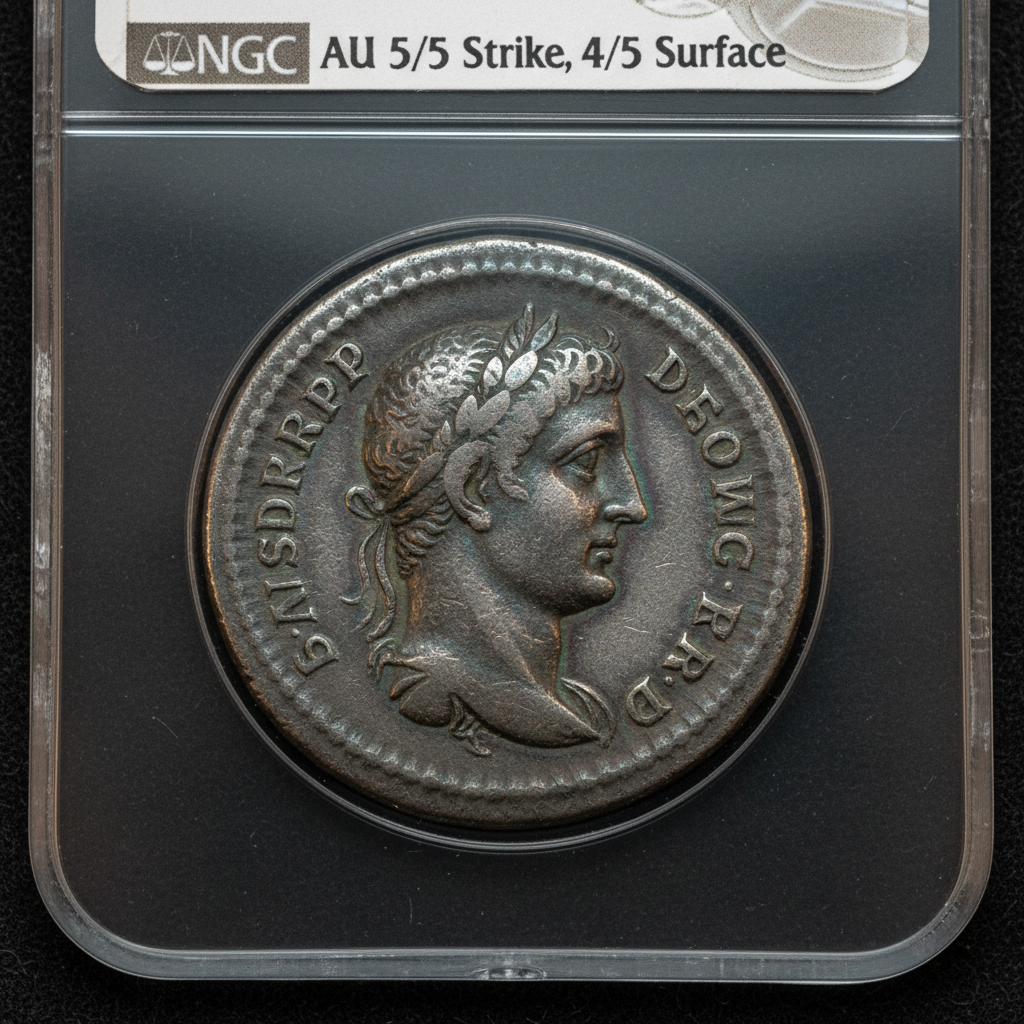
For roughly two decades, a genuine Roman coin — ancient enough to have circulated during the height of the empire — sat in a British family's possession, occasionally mistaken for ordinary change. The grandson of a mid-century city transport cashier recently discovered that the coin his grandfather had pocketed from a bus fare collection wasn't a curiosity. It was a museum-worthy artifact, likely minted more than two millennia ago.
The story is almost too good to be true, and yet it tracks with a well-documented pattern in the ancient coin market: extraordinary pieces surface in the most mundane circumstances. Attics, estate sales, old tobacco tins. Apparently, now bus fare boxes.
How a Roman Coin Ended Up in a Fare Box
The grandfather worked as a cashier for a city transport authority sometime in the mid-20th century — the precise decade isn't confirmed, but the timeline places the coin's accidental circulation somewhere in the postwar era. A passenger, presumably unaware of what they were handing over, dropped the Roman coin into the fare box as payment. The cashier noticed it, kept it as a curiosity, and passed it along to his grandson.
For years, the grandson held onto it without fully understanding its age or significance. It was only after seeking an expert assessment — the specific appraiser or institution hasn't been publicly named — that the coin's true origins came into focus. The verdict: ancient Roman, approximately 2,000 years old, and far beyond the scope of a private collection. The family has since indicated the coin belongs in a museum.
The coin's specific type, emperor, mint, and condition grade haven't been disclosed in available reporting, which is a meaningful gap. Those details would determine whether this is a common sestertius worth a few hundred dollars in circulated condition or something rarer — a denarius from a short-lived emperor, say, or a bronze piece with unusual provenance that commands a premium at auction. Provenance, in ancient numismatics, cuts both ways: it can add value when documented, and it can complicate legal ownership when the chain of custody is murky.
Ancient Coins and the Valuation Problem
The ancient coin market operates on different rails than modern numismatics. There's no PSA or NGC equivalent with standardized population reports. Grading firms like NGC Ancients do certify and grade ancient coins — using a descriptive scale rather than numeric grades — but the market is far more dependent on specialist dealers, auction house expertise, and academic authentication than the modern coin world.
For context, a common Roman bronze coin in Fine condition might fetch $30–$150 at a generalist auction. A well-struck silver denarius of Augustus in VF can clear $500–$2,000. Rare types — coins of Otho, Pertinax, or other brief-reign emperors — regularly exceed $10,000 at houses like Stack's Bowers, Heritage Auctions, or specialist firms like Roma Numismatics and CNG (Classical Numismatic Group). Without knowing the specific type, any valuation here is speculation.
What isn't speculation: the coin's survival in this condition — handled, pocketed, passed through a fare box, and stored informally for 70-odd years — is remarkable. Ancient coins are durable by nature, struck in bronze, silver, or gold alloys designed to last. But decades of casual handling can strip detail, accelerate patina loss, or introduce cleaning damage that tanks collector value. The fact that this piece is apparently significant enough to warrant museum consideration suggests it retained enough detail to be identifiable and historically meaningful.
The Bigger Pattern Worth Watching
This isn't an isolated incident. Ancient coins have a long history of resurfacing in unexpected hands — often because Roman Britain left an enormous numismatic footprint. Estimates suggest hundreds of thousands of Roman coins have been found on British soil alone, many through metal detecting, agricultural plowing, or, apparently, public transit.
The Portable Antiquities Scheme, run by the British Museum, has recorded over 1.5 million finds since 1997, with Roman coins representing one of the largest single categories. The scheme encourages finders to report discoveries rather than quietly sell them — a framework that's genuinely changed how ancient material enters the market, and how museums acquire pieces that might otherwise disappear into private hands.
The family's decision to pursue museum placement rather than private sale is notable. A documented Roman coin with a quirky, traceable provenance story — bus fare, mid-century Britain, generational hand-me-down — has genuine curatorial appeal. Museums don't just collect objects; they collect stories. This one has both.
The passenger who unknowingly paid their bus fare with a 2,000-year-old coin will almost certainly never be identified. But somewhere, a Roman emperor's profile is about to go on permanent display — and it owes its rediscovery to a cashier who thought it looked interesting enough to keep.