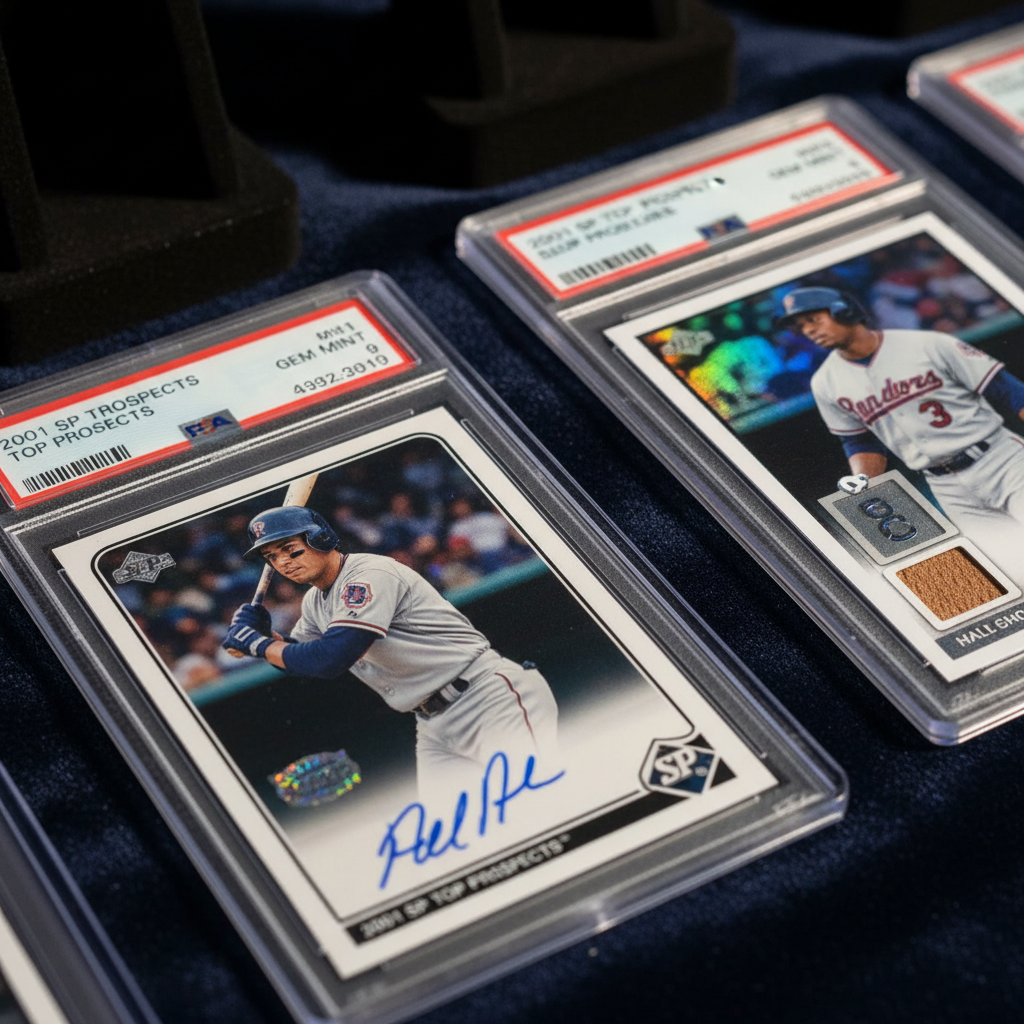
Twenty-four years after it hit shelves, a box of 2001 SP Top Prospects Baseball still has something to say. Beckett's Cheap Wax Wednesday series cracked one open, and the results serve as a useful reminder of why this particular Upper Deck release occupies a quiet but respectable corner of the early-2000s minor league card market.
This wasn't a splashy product when it dropped. SP Top Prospects was a niche offering aimed at the prospect-obsessed collector — the kind of buyer who wanted ink and leather on players before they reached The Show. That positioning has aged surprisingly well.
What the Product Was Built to Deliver
The 2001 SP Top Prospects checklist was constructed around the minor league system, featuring autographs and bat relics from prospects who ranged from can't-miss to never-heard-from-again. Upper Deck leaned into the dual appeal of the SP brand — premium feel, low print runs — while keeping the price point accessible enough to move volume at the hobby shop level.
Box configuration for the set ran roughly 24 packs per box, with hits distributed across autograph cards and bat relics. The autograph program was on-card for the most part, which matters enormously to today's collector. Sticker autos were already creeping into the hobby by 2001, making SP Top Prospects a cleaner product by comparison.
The Hall of Famer pull in the Beckett break is the headline, and rightly so. A certified autograph or relic from a player who went on to Cooperstown immortality transforms a box's entire return profile. Without knowing the specific player, context is everything: if the HOFer in question is someone like Albert Pujols, whose 2001 minor league-era cards have seen sustained demand since his 2022 retirement and Hall eligibility clock started ticking, the ceiling on that card is meaningfully higher than it was even three years ago.
The Secondary Market Reality in 2024
Early-2000s minor league and prospect sets occupy a complicated space right now. The broader vintage market has cooled from its 2020–2021 peaks, but products with genuine on-card autographs from confirmed stars have held their floor better than almost any other segment. A PSA 9 or BGS 9.5 on-card auto from a Hall of Fame-caliber player out of a 2001 SP set can still command anywhere from $75 to several hundred dollars depending on the name and population report.
Population counts on these early SP autos tend to be thin — many collectors never submitted them, and the ones that did often got back 8s due to surface wear on cards that spent years in binders. That scarcity, combined with renewed nostalgia for early-2000s product, has created a slow but real appreciation curve for the right pulls.
The bat cards from this era are a different story. Game-used memorabilia from 2001 has faced persistent skepticism in the market — chain of custody on minor league bat chips from two-plus decades ago is essentially unverifiable, and collectors have largely priced that uncertainty in. A bat relic from a star player might fetch $20–$40 raw, sometimes less, unless it carries an additional autograph or is tied to a particularly compelling rookie-year narrative.
Why Cheap Wax Breaks Still Work as Market Intelligence
There's a reason Beckett has kept the Cheap Wax Wednesday format running. Beyond the entertainment value, these breaks function as informal price discovery for products that don't move through Heritage or Goldin on a regular basis. When a box of 2001 SP Top Prospects surfaces, it's a data point — what pulls are still in these boxes, what condition the cards come out in, and whether the hit rate holds up to the original box odds.
For dealers and patient collectors, that information is genuinely useful. A box that can be sourced for $30–$60 on the secondary market — a reasonable range for a 2001 SP product in today's environment — still offers legitimate upside if the autograph checklist delivers. The math only works if you know the product, which is exactly the kind of institutional knowledge Beckett's format rewards.
The 2001 SP Top Prospects break won't move markets. But it's a clean example of what makes early Upper Deck SP product durable: on-card signatures, a prospect-first philosophy, and just enough star power on the checklist to justify the dig. Sometimes the cheap wax surprises you. Sometimes it reminds you why it ended up cheap. This one, by all accounts, leaned toward the former.