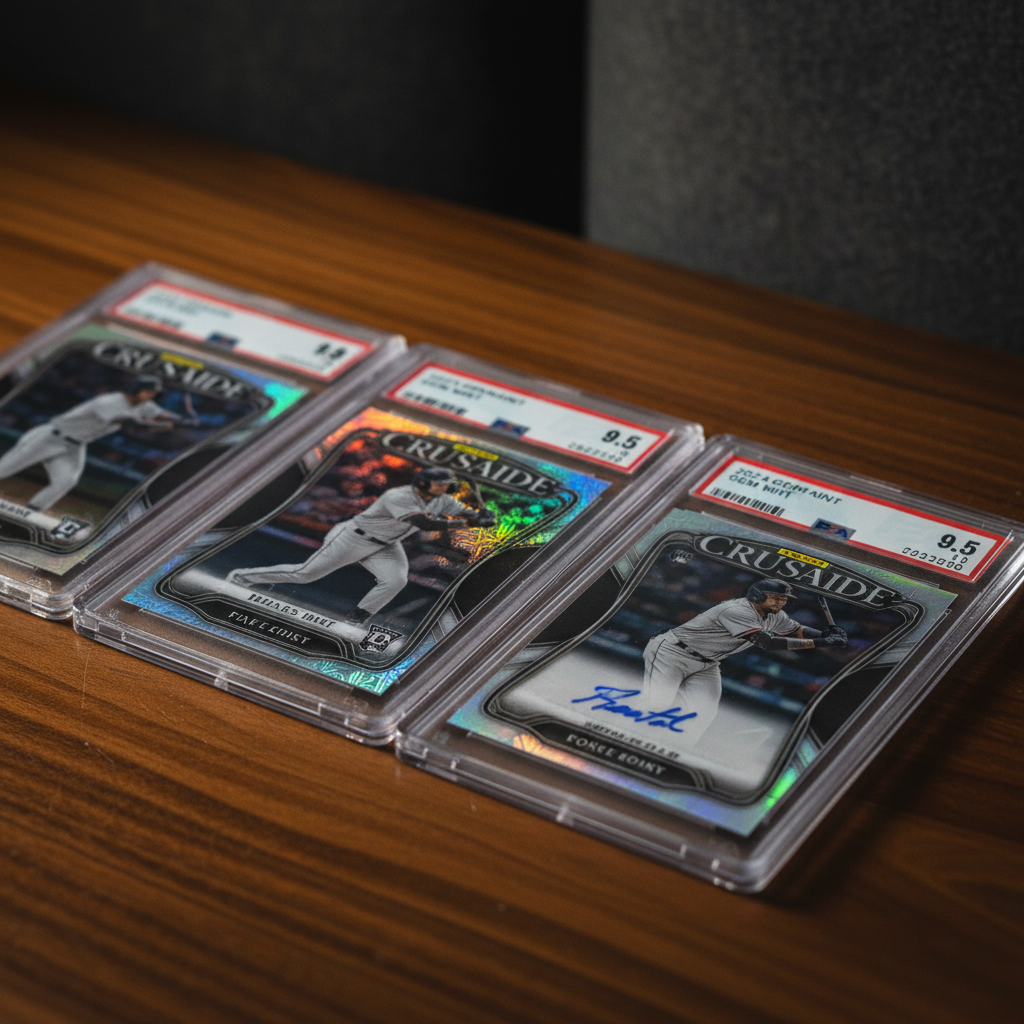
2024 Panini Crusade Baseball is the kind of mid-tier release that doesn't generate headline auction results or PSA population hysteria — but it doesn't have to. Crusade has always been about delivering a clean, autograph-anchored experience at a price point that doesn't require a second mortgage, and this year's edition holds that line with reasonable consistency.
Beckett's Cheap Wax Wednesday series put a box under the knife recently, pulling two autographs alongside a nostalgic base card mix that leans hard into the product's aesthetic identity. The results are instructive — not because they're spectacular, but because they reveal exactly what kind of collector this product is built for.
What Crusade Is — and Isn't
Panini's Crusade line has occupied a specific niche in the baseball card market for years: chrome-adjacent aesthetics, color parallel structures, and autograph odds that justify the box price without demanding premium-tier investment. The 2024 edition continues that formula. Base cards feature the product's signature jewel-toned foil backgrounds, and the parallel rainbow — running from standard color variants up through low-numbered finishes — gives set builders and player collectors alike a reason to chase.
The nostalgia factor is real. Crusade's design language has always skewed retro-modern, and the 2024 checklist mixes active stars with veteran names in a way that appeals across collector generations. That's deliberate product architecture, and Panini executes it competently here.
What Crusade is not is a high-ceiling investment vehicle. The autograph checklist, while solid, doesn't carry the kind of prospect depth you'd find in a dedicated rookie-focused release. If you're hunting the next generational pull, this isn't your box. But that framing misses the point entirely.
Breaking Down the Box Economics
At typical retail and hobby shop pricing — boxes have been moving in the $60–$90 range depending on the vendor — the math on two guaranteed autos is straightforward. The question is always whether those two hits can return value above box cost, and with Crusade, the answer is honestly: sometimes, but not reliably.
Crusade autos of established veterans tend to plateau quickly on the secondary market. A mid-tier name on a base auto in this product typically clears $15–$35 on eBay, with numbered parallels pushing higher depending on the player and the color. The real upside lives in the low-numbered parallels — anything numbered to 25 or below starts attracting genuine collector interest, and a Gold or Black parallel auto of a current All-Star can clear $100–$200+ without much trouble.
The Beckett break pulled two autos, which is par for the format. Without confirmed player names and parallel numbers from the break, projecting exact return is speculative — but the broader pattern holds: Crusade boxes are break-even propositions at best when bought strictly for investment, and genuinely enjoyable experiences when bought for the hobby of it.
- Hobby box configuration: typically 2 autographs per box
- Base parallel structure: color variants running from numbered /199 down to single-digit Black parallels
- Autograph parallel ceiling: numbered Gold and Black autos command the strongest secondary prices
- Target market: mid-range hobbyists, player collectors, break participants
The Unlicensed Elephant in the Room
Any honest assessment of 2024 Panini baseball has to acknowledge the context: Panini lost its MLB license at the end of 2022, and all product released since has operated without official team logos or uniforms. The 2024 Crusade set, like everything in Panini's current baseball lineup, uses airbrushed imagery and logo-free photography. It's a limitation that suppresses collector enthusiasm across the board — and it's reflected in secondary market pricing relative to licensed Topps product from comparable years.
For Crusade specifically, the impact is somewhat muted. The product's design-forward aesthetic means the card art carries more visual weight than raw photography anyway. But the unlicensed stigma is real, and it creates a ceiling on how aggressively even strong pulls can appreciate. Collectors who prioritize authenticity — the actual uniform, the actual logo, the actual stadium — are simply shopping elsewhere.
Panini's baseball window is closing. The company's NFL and NBA licenses remain intact, but its foothold in baseball has been eroding since the Topps exclusivity deal kicked back in. Products like Crusade are, in a real sense, a countdown clock — which gives them a peculiar collector appeal as eventual artifacts of a specific transitional era in the hobby. Whether that translates to long-term value appreciation is an open question, but stranger things have happened in this market.