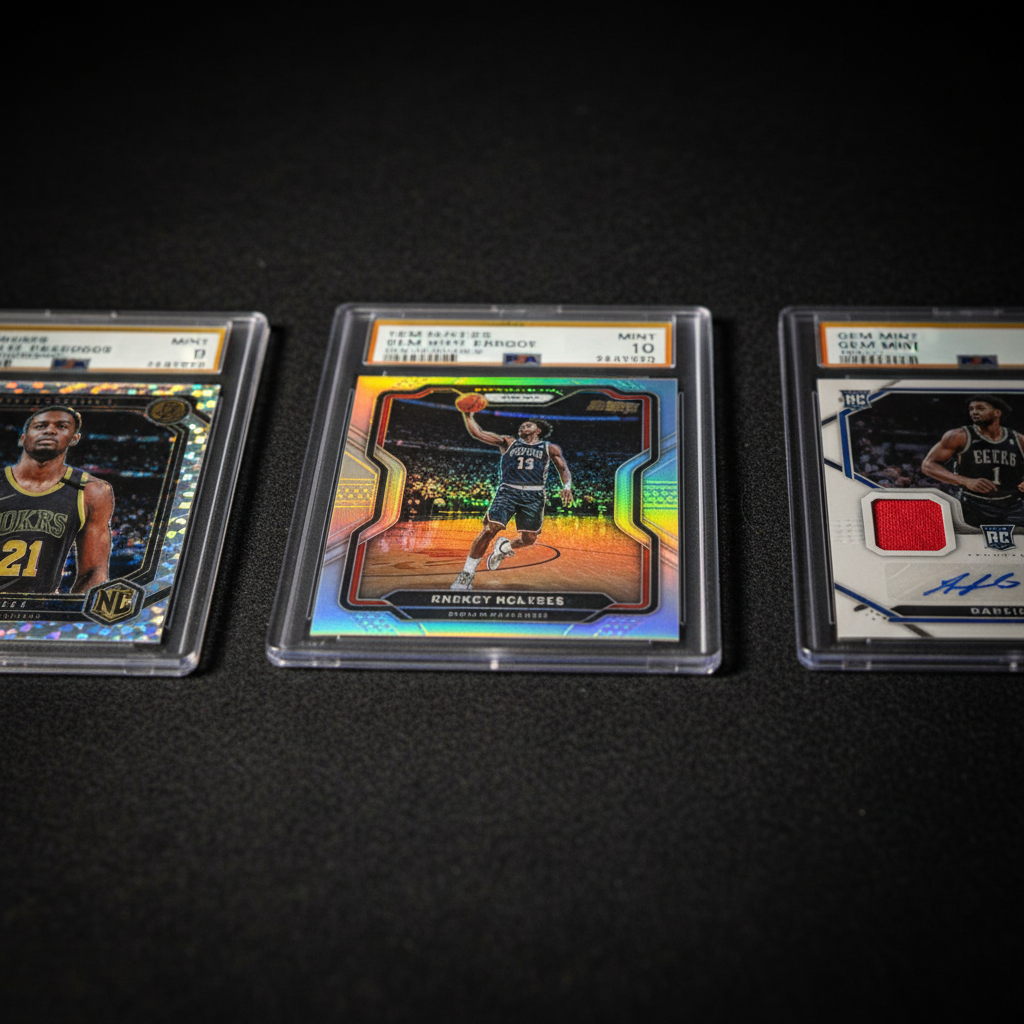
The 2025-26 basketball card season is taking shape, and for dealers, collectors, and investors trying to allocate budget and box breaks across a crowded product calendar, having a consolidated view of what's coming — and when — is half the battle. Panini and Fanatics are both positioning heavily for a season that carries significant rookie class anticipation, with several high-profile prospects expected to drive early hobby demand the moment wax hits shelves.
This is the planning season. Pull lists get built. Case breaks get reserved. And the collectors who move with a schedule rather than reacting to drops tend to come out ahead on allocation and secondary market timing.
What the 2025-26 Release Calendar Tells Us
Release calendars for a new basketball season typically begin rolling out in late summer and extend well into the following spring, with flagship products like Hoops and Donruss landing earlier in the cycle and premium offerings — National Treasures, Flawless, Impeccable — arriving in the back half. That cadence matters because it shapes the rookie card timeline.
First-year players don't get their officially licensed rookie cards until the NBA season is underway and product releases begin. Collectors who buy early-season products are, in effect, betting on which rookies will matter by the time the high-end releases drop months later. It's a long game, and the release calendar is the map.
For the 2025-26 cycle, the structure is expected to follow recent precedent: budget-accessible products first, hobby and jumbo configurations layering in through winter, and the ultra-premium tier closing out the calendar in mid-to-late 2026. Checklists for the early releases will confirm which rookies received short-print treatment and which base rookie cards will anchor the set — details that directly influence PSA and BGS submission volumes and, downstream, population-driven pricing.
Rookie Class Demand and the Grading Pipeline
The 2025-26 rookie class will define the season's collectible ceiling. Strong draft classes — think 2003-04 with LeBron James, or 2018-19 with Luka Dončić and Trae Young — can elevate an entire year's worth of product. Weak classes do the opposite, suppressing hobby interest regardless of how well the sets are designed.
Early signals on the incoming class will drive pre-release speculation on platforms like eBay and PWCC Marketplace, where graded rookie cards from prior seasons serve as comp anchors. A PSA 10 Luka Dončić 2018-19 Prizm base rookie, for instance, has traded in the $400–$600 range in recent months after peaking well above $4,000 during the 2020-21 hobby bubble — a reminder of just how violently rookie card values can swing when market sentiment shifts.
Graders will be watching checklist confirmations closely. Short-printed rookies, numbered parallels, and autograph configurations all affect submission strategy. When a set releases with a deeply tiered parallel structure — as Prizm consistently does, with parallels running from base Silver through Gold Vinyl /10 and Superfractors 1/1 — the grading calculus gets more complex. A raw PSA 10 candidate in a high-pop parallel tier is worth far less than the same grade in a low-pop, numbered variant.
How to Use the 2025-26 Hub Effectively
Beckett's 2025-26 basketball hub is designed as a running reference — release dates, checklists as they become available, and price guide integration once the products are in the market. For serious collectors, that's a workflow tool, not just a reading destination.
A few practical applications:
- Cross-reference release dates against your grading turnaround windows. If you're submitting to PSA at standard service levels, a product releasing in October 2025 may not return graded until late winter — potentially after peak hobby buzz has faded.
- Use checklist confirmations to identify short-print tiers before retail hits. Knowing the SP and SSP structure in advance lets you prioritize pulls or secondary market buys with more precision.
- Track parallel population data as it builds. Early in a product's lifecycle, PSA and BGS pop reports are thin — which means grades assigned in the first 60 days carry outsized pricing power before the market normalizes.
The 2025-26 season hasn't fully revealed its hand yet. But the collectors who treat the release calendar as a strategic document — rather than a passive reading list — are the ones who tend to find value before the rest of the market catches up.