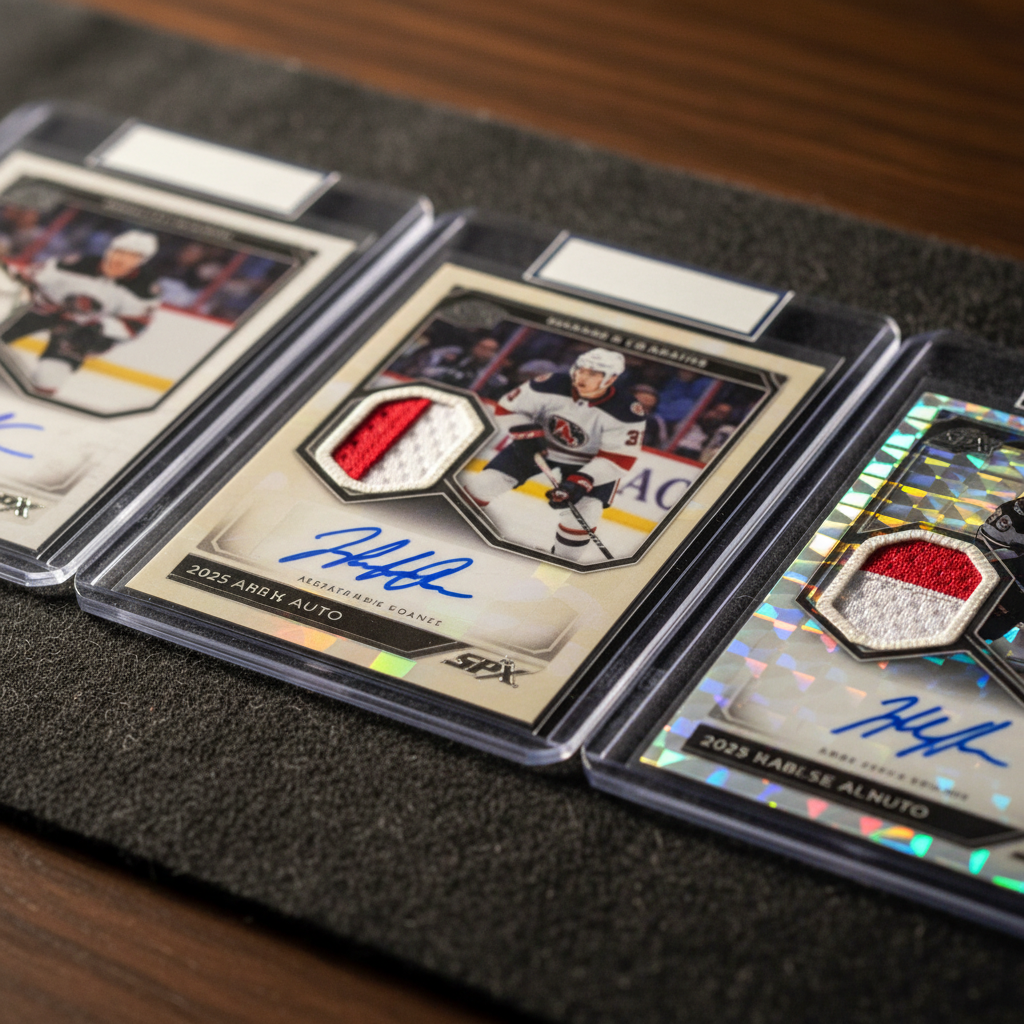
Upper Deck's 2025-26 SPx Hockey is locked in for release, and the checklist confirms what the brand has always done best: stack autographed content into a hobby box format that punches above its price point. This isn't a flagship set chasing casual buyers — SPx has always been a product built for the collector who wants ink on cardboard, and this year's configuration doesn't deviate from that mandate.
SPx sits in an interesting tier of the Upper Deck hockey ecosystem. It's not the prestige ceiling of The Cup or SP Authentic, but it consistently delivers signed content at a volume that makes it one of the more practical hobby boxes in the hockey calendar. For dealers building case breaks and collectors hunting specific players, the math tends to work.
What's Inside the Box
Hobby boxes for 2025-26 SPx Hockey are structured around guaranteed autograph content, consistent with prior years. The checklist spans the full NHL roster landscape — veterans, rookies, and the kind of multi-layer parallel structure that creates tiered chase targets across every price point.
Rookie autographs anchor the set's long-term value proposition, as they always do in SPx. The 2024-25 class produced legitimate chase cards in products like this, and with a strong incoming rookie class headlined by players who generated significant draft capital, the 2025-26 version has real upside if the right names hit. Parallel print runs — numbered to 99, 49, 25, and lower — create the scarcity ladder collectors have come to expect from Upper Deck's mid-to-premium tier releases.
The insert and parallel architecture includes:
- Base set with tiered parallel rainbow
- Rookie autographs with multiple numbered parallel levels
- Veteran autograph content across several named insert programs
- Finite print runs on top-tier parallel variants, including 1-of-1 designations
- Team-specific set construction that supports team collector builds
The presence of 1-of-1 variants matters for auction ceiling conversations. When a Connor McDavid or Sidney Crosby 1/1 surfaces from a product like this, Heritage Auctions and Goldin both have the audience to push it. SPx 1-of-1s from prior years have cleared four figures consistently when the subject is right.
The SPx Market Context
SPx hockey has maintained a dependable secondary market floor precisely because it doesn't oversaturate. Compare it to some of Upper Deck's higher-volume releases and the per-box autograph ratio holds up well. Hobby boxes from recent SPx vintages have traded on the secondary market in the $80–$140 range depending on timing and retailer, which puts the expected autograph content in a reasonable cost-per-hit window for most collectors.
The rookie class driving 2025-26 products deserves particular attention. Hockey's rookie card market has historically lagged baseball and basketball in raw dollar volume, but the gap has been narrowing. Matvei Michkov and Connor Bedard rookie cards from 2023-24 products demonstrated that hockey RCs can move markets when the player justifies the hype — Bedard autos from SP Authentic were clearing $500–$2,000+ depending on grade and parallel tier within months of release.
The incoming 2025-26 class won't necessarily replicate that kind of immediate heat, but SPx's numbered parallel structure means low-pop cards can appreciate quietly over a player's first few seasons. A /25 rookie auto that grades PSA 10 from a player who develops into a top-six forward has a longer runway than most collectors price in at the point of pull.
Team set collectors — an underserved but highly active segment — will find SPx's team-specific construction useful. The set historically includes enough team representation to make team-based registry builds viable, and those collectors tend to be persistent buyers on the secondary market regardless of broader card market conditions.
Release Timing and What to Watch
With the 2025-26 NHL season as its backdrop, SPx will land in a competitive product window. Upper Deck typically staggers its hockey releases across the calendar year, and SPx historically drops in a slot that gives it breathing room from both SP Authentic and the flagship Series releases. That timing matters — products that hit without immediate competition from a bigger sibling tend to generate cleaner case break economics.
The autograph checklist depth will be the deciding factor for most buyers. SPx lives or dies on whether the signed content skews toward marketable names or gets buried in depth-chart filler. Upper Deck's recent track record on SPx has been solid on that front, and the 2025-26 checklist structure suggests the same philosophy holds.
For collectors building autograph collections rather than speculating on rookie upside, SPx remains one of the more honest value propositions in the hobby. It doesn't promise the moon. It just tends to deliver what it says on the box — and in this market, that's rarer than it should be.