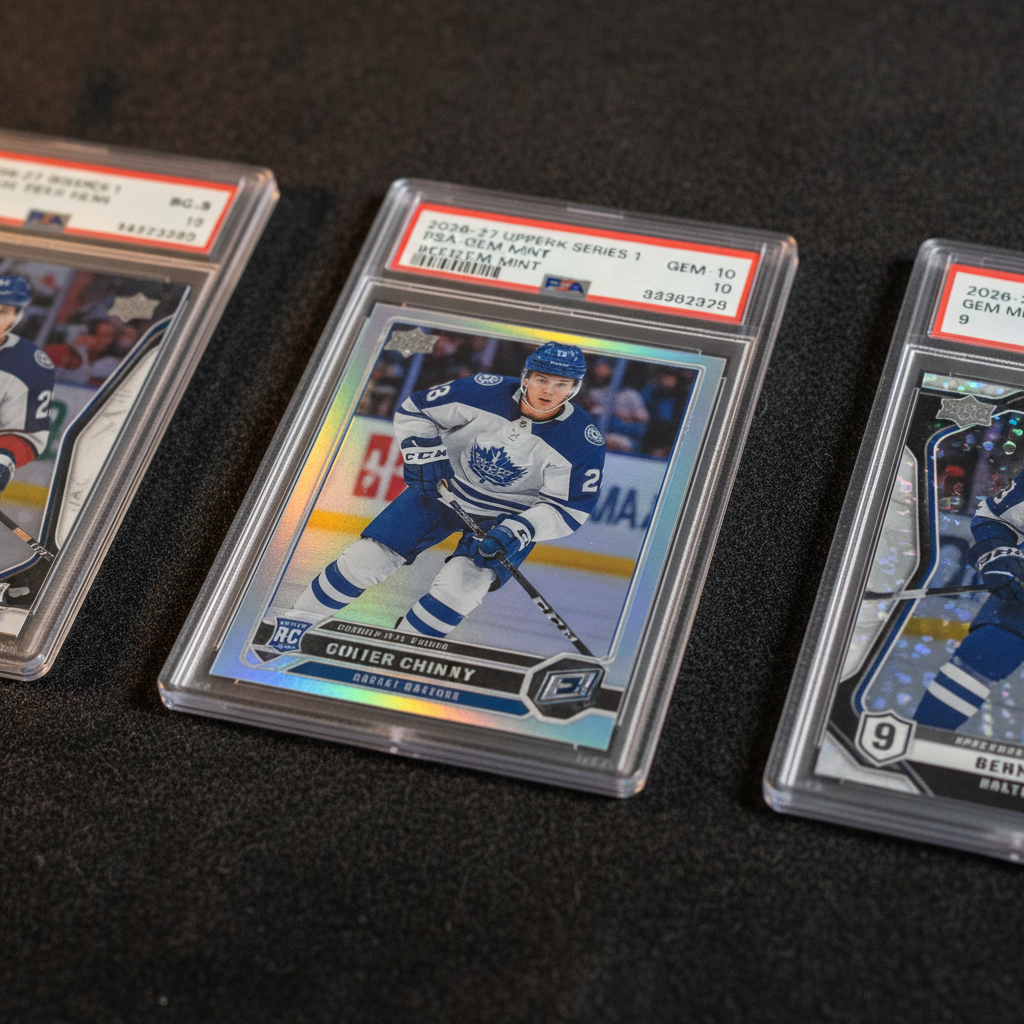
Upper Deck's annual hockey flagship is back, and the 2026-27 Series 1 Hockey release is shaping up to carry the same structural DNA that has made this product a cornerstone of the hobby for three decades — Young Guns, tiered parallels, and a checklist built to reward patient case breakers and patient single-card hunters alike.
For collectors who've tracked this product cycle year over year, the rhythms are familiar. But familiarity isn't a knock. Series 1 remains the most-watched NHL card release on the calendar, and its Young Guns subset is still the primary venue where the next generational rookie card gets minted. That matters enormously right now, given the current state of the NHL prospect pipeline.
What's Inside the Hobby Box
Hobby boxes for 2026-27 Upper Deck Series 1 are configured in the traditional format collectors have come to expect: multiple packs per box with a fixed hit structure built around Young Guns and insert pulls. The checklist spans base veterans, short-printed Young Guns rookies, and a layered parallel system that runs from Canvas variants all the way up to the high-gloss, low-population Exclusives tier.
Young Guns remain the engine of this product. They always have been. A raw Young Guns RC of a consensus top prospect can trade anywhere from $20 to $200-plus in the days after release, depending entirely on who's on the card and how the player's draft narrative has aged. The 2021-22 Series 1 YG of Owen Power moved briskly at release; the 2022-23 Juraj Slafkovsky YG had a rockier debut given the early expectations versus on-ice reality. Market timing on these cards is everything.
The parallel structure in Series 1 follows a tiered approach:
- Canvas — the most accessible parallel, printed on textured stock, with a strong secondary market for star players
- UD Exclusives — serialized parallels that represent the top of the base card hierarchy
- Young Guns Exclusives — the chase within the chase, numbered copies of the YG rookies that command serious premiums at auction
- Inserts — a rotating cast of themed subsets that vary by series year
Pack odds will determine how aggressively the market prices sealed product at launch. In recent years, hobby boxes for Series 1 have landed at retail between $120 and $160 depending on the vendor, with case pricing reflecting the usual bulk discount from authorized distributors. Secondary market box prices tend to spike in the first two weeks post-release before settling once the hit-rate reality sets in.
The Young Guns Market — Still the Only Conversation That Matters
Let's be direct: the long-term investment thesis for Series 1 boxes lives or dies with the Young Guns checklist. Everything else is noise.
PSA and BGS grading activity on Young Guns spikes immediately after each Series 1 release. Gem Mint copies of star rookies from strong draft classes have a track record of holding value — and in some cases appreciating significantly. A PSA 10 Connor McDavid Young Guns from 2015-16 Series 1 still trades north of $3,000 on the open market. A PSA 10 Auston Matthews YG from 2016-17 has cleared $1,500 at Heritage Auctions. The ceiling is real, but it requires the right player on the card.
The 2026-27 class will be scrutinized under that same lens the moment the checklist is confirmed. Which prospects made the cut? Which players logged enough NHL games to qualify for YG status? Those answers will determine whether this release generates the kind of sustained secondary market activity that keeps dealers and flippers engaged well past the initial break frenzy.
One structural note: Upper Deck's exclusive NHL license — locked in through a long-term agreement — means Series 1 has no competition for official rookie card status. Panini can produce NBA rookies. Topps owns MLB. But in hockey, Upper Deck is the only game in town for RCs that carry the official NHL shield. That exclusivity is baked into every Young Guns price you'll ever see.
Release Timing and What to Watch
Series 1 historically drops in the fall, aligned with the start of the NHL regular season — a deliberate calendar move that ties the product launch to peak fan engagement. Expect the release window to follow that same pattern, with hobby boxes hitting authorized distributors and local card shops in the late fall 2026 timeframe.
For graders, the submission calculus on Series 1 YGs hasn't changed much: bulk economy submissions to PSA or BGS make sense for a full YG set if you're targeting a top prospect, but the economics only work if you're disciplined about which names you chase. Grading fees on a $25 raw card only pencil out if the PSA 10 pop is manageable and the player's trajectory is pointing up.
The 2026-27 NHL season will produce its own storylines — new stars, breakout players, franchise pivots — and Series 1 will be the first place those stories get told in cardboard. That's been true since 1990. It's still true today.