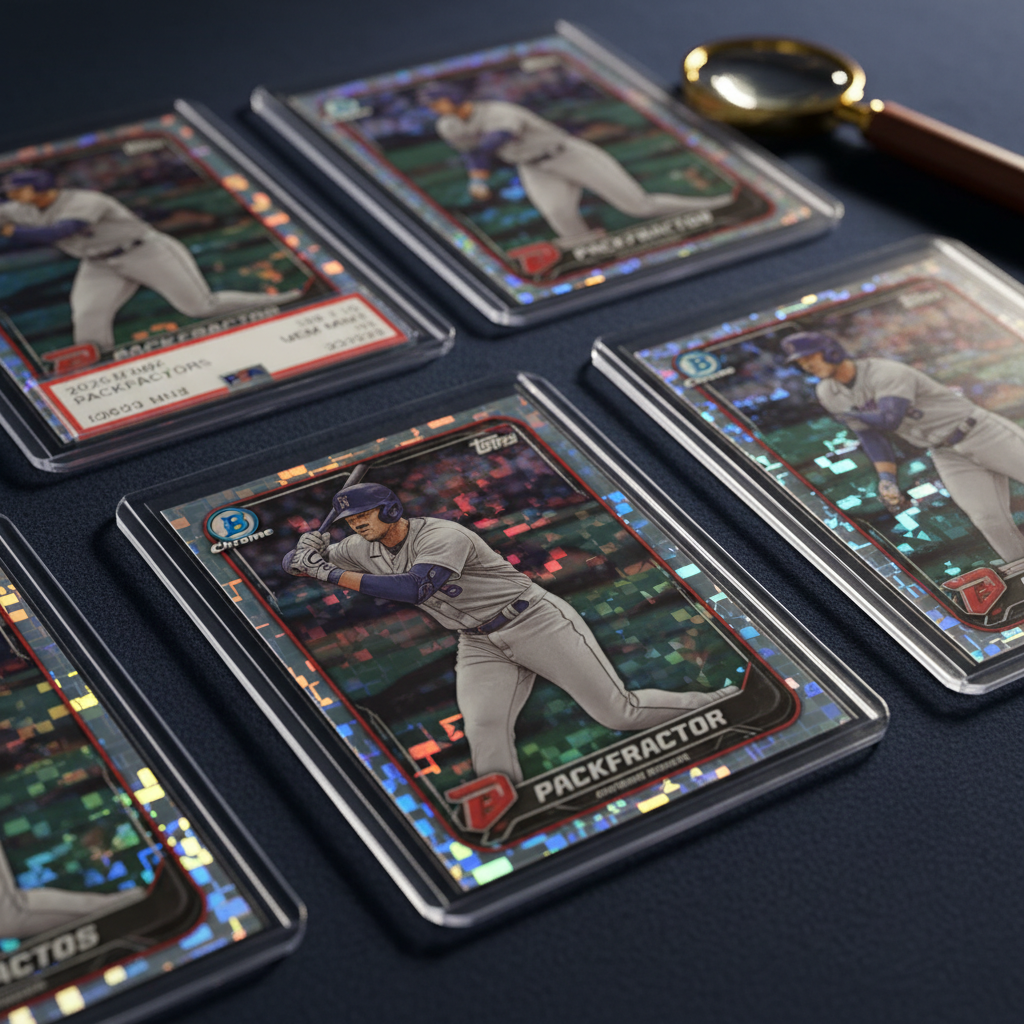
Topps is leaning hard into collector nostalgia with the 2026 Bowman Chrome Prospect Packfractor Variations — a new parallel concept that wraps modern Chrome technology in the unmistakable aesthetic of the 1989 Bowman Baseball pack design. It's a smart move, and the market history behind retro-themed parallels suggests it could be a very profitable one.
The premise is elegant in its simplicity: take a current Bowman Chrome prospect card, apply the refractor treatment collectors have chased since Chrome's debut in 1993, and skin the card's design with the vintage pack imagery from Bowman's modern comeback year. The result is a hybrid that functions as both a prospect investment vehicle and a nostalgia piece — two of the most reliable demand drivers in the hobby right now.
Why 1989 Bowman Still Carries Weight
The 1989 Bowman set isn't beloved because of its star power, though it does house a Ken Griffey Jr. rookie that still commands four figures in high grade. It's beloved because it represented Topps reactivating the Bowman brand after a 36-year dormancy — a genuine moment in the hobby's timeline. The pack design from that release has a retro-within-retro quality now: it's nostalgic for a year that was itself a revival.
That layered history gives the Packfractor concept more narrative depth than a typical design throwback. Collectors who pulled 1989 Bowman packs as kids are now in their 40s and 50s, with real purchasing power. Topps knows its audience.
Retro-design parallels have a strong comp record. The 2020 Topps Heritage Chrome inserts, which blended vintage 1971 design with Chrome refractor stock, saw immediate secondary market premiums of 30–60% over their base Chrome counterparts at launch. Short-printed retro parallels from 2023 Topps Archives Signature Series routinely outperform population expectations at auction — Heritage Chrome autos of top prospects have cleared $500–$2,000 depending on the subject and grade, even for players outside the top-10 prospect rankings.
The Packfractor in the Context of Bowman Chrome's Parallel Ecosystem
Bowman Chrome's parallel structure is already one of the most complex in the hobby. A single prospect card can exist across Refractors, Blue Refractors, Gold Refractors, Orange Refractors, Red Refractors, SuperFractors, and numerous retail-exclusive variants — each with its own print run, some numbered as low as 1/1. Layering in a Packfractor variation adds another collectible tier, but it also adds genuine visual differentiation rather than just a color swap.
That distinction matters to serious collectors. Color refractors are essentially the same card in a different hue. The Packfractor is a design-level change — closer in spirit to a 1/1 printing plate or a superfractor in terms of its uniqueness as an object, even if the print run doesn't reflect that rarity. Whether Topps limits these tightly or distributes them broadly will determine their ceiling on the secondary market.
- Base Bowman Chrome Refractor — standard parallel, unnumbered
- Colored Refractors — numbered variations (Gold /50, Orange /25, Red /5, etc.)
- SuperFractor — 1/1, the hobby's most recognized one-of-one
- Packfractor — 1989 Bowman pack design overlay on Chrome stock
Print run details for the Packfractor haven't been confirmed at time of publication, and that ambiguity is itself a market signal. Topps has historically used unnumbered retro variants to drive pack-ripping volume while reserving numbered versions for premium configurations. If Packfractors land unnumbered, expect the market to price them closer to base refractors until population data clarifies scarcity. If they're numbered — particularly sub-/25 — the conversation changes entirely.
Prospect Targeting Will Define the Market
Packfractors live or die by the names on the front. Bowman Chrome's value proposition has always been prospect speculation, and the 2026 class will feature the usual mix of consensus top-100 talents alongside the sleeper names that make the product genuinely exciting to break.
The high-ceiling scenario here is a Packfractor auto of a consensus top-5 prospect grading PSA 10 or BGS 9.5 with a 10 sub. If print runs are tight, those cards could realistically challenge the $1,000–$3,000 range at auction depending on the player's trajectory — consistent with what Heritage Chrome autos of elite prospects have done in recent cycles. The floor scenario is an unnumbered, non-auto Packfractor of a mid-tier prospect, which would likely settle in the $20–$75 range on the secondary market.
The design concept is genuinely compelling. Whether it becomes a lasting collectible category or a one-cycle curiosity depends entirely on how Topps structures the print runs and, more importantly, which prospects end up on the checklist. In a hobby where nostalgia and prospect fever are the two most reliable price drivers, combining them in a single card is either a masterstroke or a very obvious play. Either way, collectors will be ripping packs to find out.