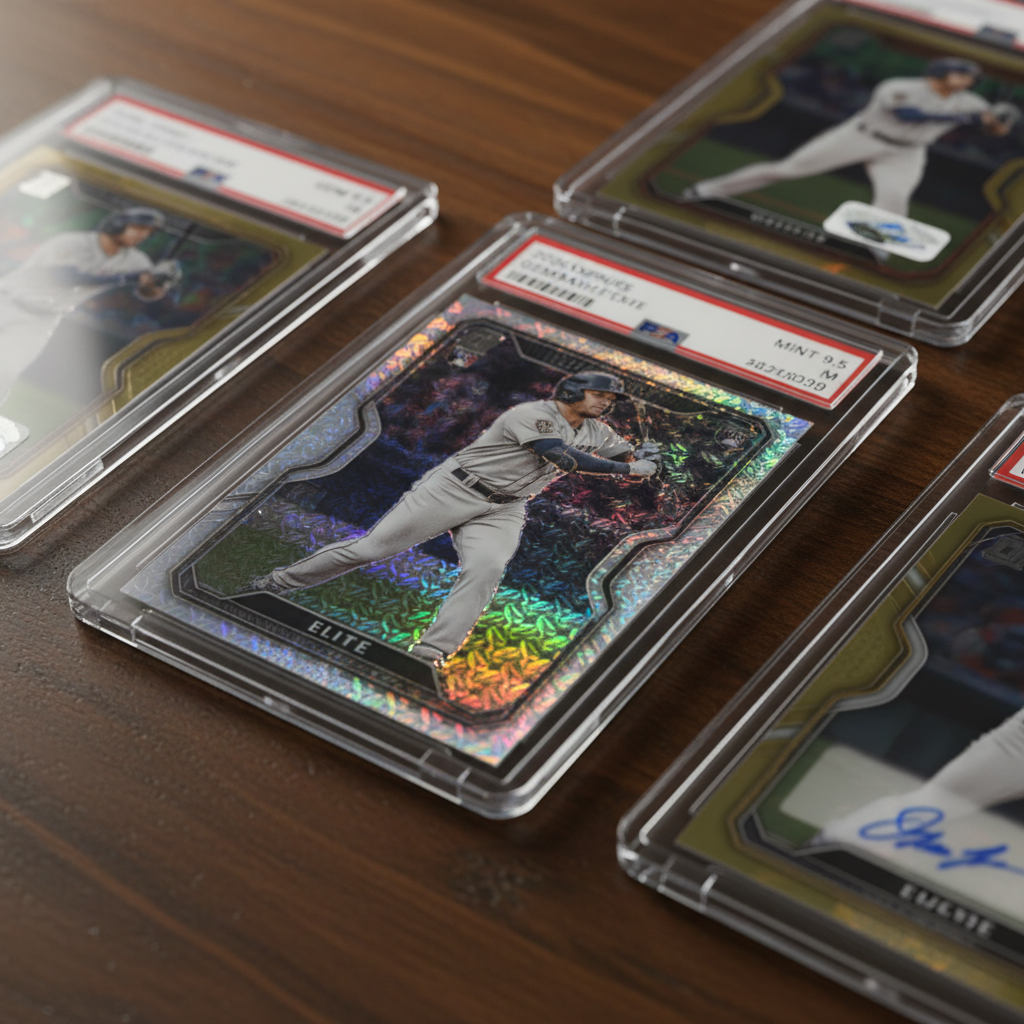
Panini's 2026 Donruss Elite Baseball is locked in and headed to hobby shops, and the early details paint a product that's leaning hard into what made Elite a staple in the first place — tiered autographs, sharp parallels, and enough insert variety to keep set builders and case crackers both engaged. Here's what collectors need to know before it hits.
Box Configuration and What You're Paying For
Hobby boxes for 2026 Donruss Elite are structured around the mid-tier price point that the brand has historically occupied — not a high-end product, but not a blaster filler either. Each hobby box delivers a focused hit count designed to make the per-box math pencil out for dealers and collectors alike. The configuration targets the sweet spot between accessibility and chase-card density that Elite has reliably delivered since its relaunch in the modern Panini era.
The base set carries the clean, foil-board aesthetic that Elite collectors expect. Parallels run across multiple color tiers with print runs that tighten as you climb — a structure that rewards patient collectors hunting specific players across the rainbow while keeping entry-level copies attainable.
Autograph content spans both veteran stars and prospects, which is where Elite has historically generated its secondary market action. A well-placed rookie auto from a breakout player can move a product's entire aftermarket profile in a single spring. That dynamic is very much in play here.
Inserts, Parallels, and the Checklist Architecture
The insert program for 2026 Elite follows the brand's established framework — aspirational sets built around legacy players and current stars, with serial-numbered parallels doing the heavy lifting on value. Elite Series inserts return, as do the die-cut and foil-heavy subsets that have become visual signatures of the product.
Parallel structure is tiered across the checklist:
- Base parallel colors with mid-range print runs for the player collector market
- Serial-numbered parallels tightening toward 10 or fewer copies at the top tier
- 1-of-1 printing plates — still the most universally understood trophy card in the hobby
- Autograph parallels layered across the same color spectrum
The prospect and rookie autograph portion of the checklist is where the real speculation begins. Elite has a reasonable track record of landing relevant names — the 2023 and 2024 editions both included early certified autos of players who later generated meaningful secondary market interest. Whether the 2026 crop delivers a similar breakout depends entirely on which prospects emerge during the season, but the structural setup is there to capitalize if they do.
One thing Elite does better than most mid-tier products: the autograph-to-base ratio feels considered rather than arbitrary. You're not drowning in sticker autos of depth roster players.
Where Elite Sits in the 2026 Baseball Card Market
The 2026 baseball card calendar is crowded — it always is — but Elite occupies a lane that doesn't have a ton of direct competition. Products like Topps Chrome and Bowman Chrome dominate the premium and prospect ends respectively, while Heritage and flagship Topps anchor the nostalgia and entry-level segments. Elite sits in the middle: foil-forward, autograph-dense, with a design language that reads as premium without the three-figure-per-pack pricing of true high-end releases.
For context on what that positioning can yield: 2024 Donruss Elite Baseball hobby boxes were moving at retail in the $80–$110 range at launch, with case prices settling depending on early box break results. Single autograph parallels of top-tier players — Aaron Judge, Shohei Ohtani, Gunnar Henderson — were clearing $150–$400+ on the secondary market depending on grade and print run. A PSA 10 Elite Series auto of a relevant star at a low serial number punches well above its product tier.
The grading play on Elite is legitimate, particularly for the foil parallels. BGS Black Labels on the cleanest copies of short-printed parallels have historically outperformed expectations at auction — Heritage Auctions and PWCC have both moved high-grade Elite parallels at prices that surprised even seasoned dealers.
Donruss Elite doesn't pretend to be something it isn't. It's a product that rewards collectors who know the checklist, understand the parallel structure, and can identify which autographs are worth grading before the rest of the market catches on. That's not a small thing.