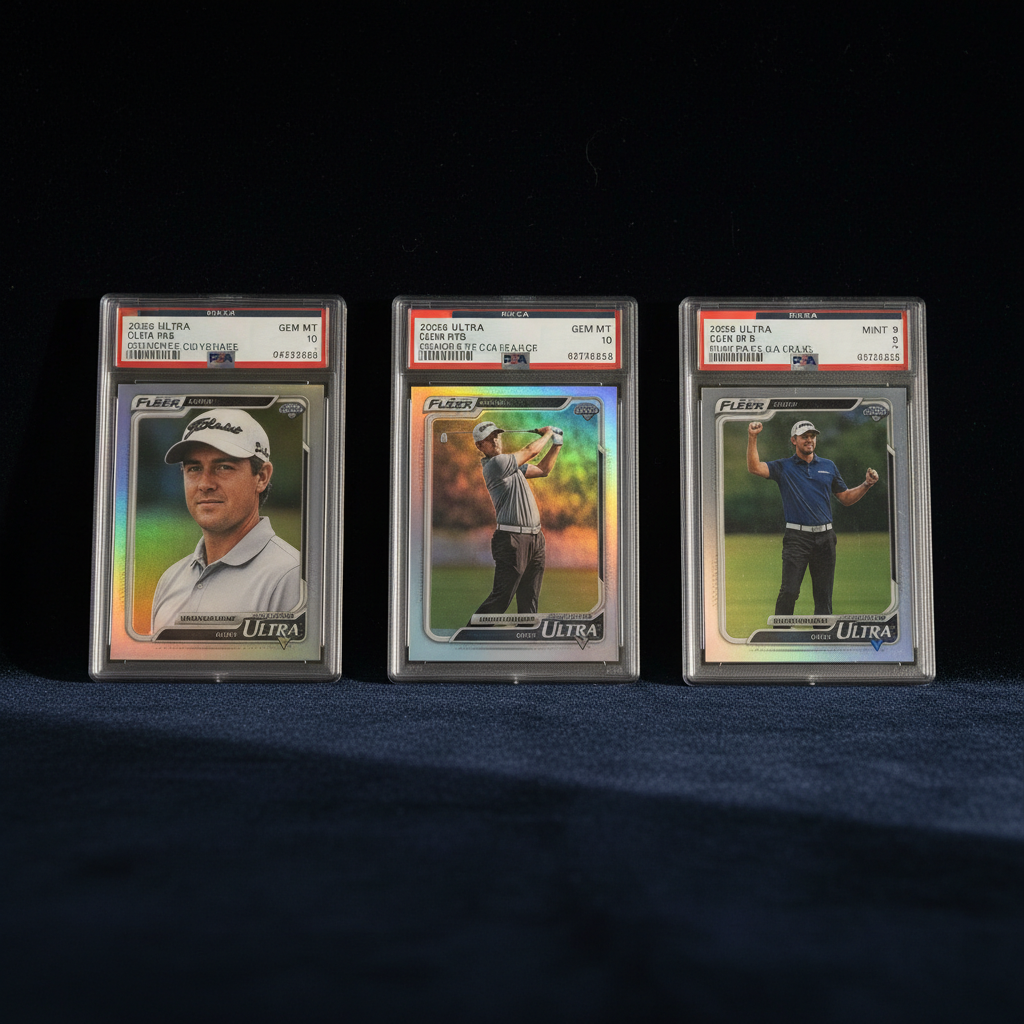
Fleer Ultra is returning to golf — and for a brand that spent decades defining the premium insert era across basketball and baseball, the move into the fairway deserves more than a passing glance. Upper Deck, which holds the Fleer licensing rights, is rolling out 2026 Fleer Ultra Golf with a full checklist built around autographs, tiered parallels, and the kind of box structure that should appeal to both golf collectors and crossover card investors who remember what the Ultra name meant in the '90s.
The product is positioned as a hobby-first release, and the configuration reflects that. Box breakdowns include multiple autograph hits per box, with odds structured to reward case buyers chasing the short-printed parallel tiers. Print runs on the top-tier autos are expected to be numbered to 25 or fewer, putting them squarely in the range where graded population scarcity starts to drive secondary market premiums almost immediately after release.
What's Inside the Checklist
The autograph checklist is the engine here. Golf card autographs have historically been tricky — the sport's licensing landscape is fragmented, and getting marquee names on sticker or on-card signatures requires navigating deals that baseball and basketball products don't face in the same way. That said, Upper Deck has deep roots in golf licensing, going back to its long-running Tiger Woods exclusives in the early 2000s, which still command serious money at auction. A PSA 10 2001 Upper Deck Tiger Woods rookie autograph has cleared over $3,000 at Heritage in recent years — context that matters when evaluating where a strong 2026 Ultra Golf auto could eventually land.
The insert lineup includes multiple parallel tracks, with base cards receiving the standard Ultra treatment: foil stamping, clean photography, and the kind of design language that made the original Ultra sets collectible in the first place. Numbered parallels cascade from mid-tier print runs down to low-numbered Gold and Black variants, with 1-of-1 superfractors rounding out the top of the pyramid.
- Base set with foil-stamped parallels
- Autograph cards numbered to 99, 50, 25, and 10
- Insert sets tied to career milestones and major championship history
- 1-of-1 printing plate cards
- Short-printed rookie and veteran variations
On-card signatures, if confirmed across the checklist, would be a significant selling point. The golf card market has shown consistent preference for on-card over sticker autos — a dynamic that mirrors what's happened in basketball and baseball grading, where on-card examples routinely grade higher and sell at a 20–40% premium over sticker equivalents.
The Golf Card Market Right Now
Golf cards have quietly built a credible secondary market over the past five years. The pandemic-era card boom lifted all boats, but golf held more of its gains than most non-major sports. Rory McIlroy, Scottie Scheffler, and Jon Rahm autos from recent Upper Deck releases have maintained steady demand on eBay and through PWCC's marketplace. Scheffler's 2022 SP Authentic auto, numbered to 99, has traded consistently in the $150–$300 range depending on grade — not explosive, but durable.
The Fleer brand adds a layer of nostalgia that pure golf-licensed products don't carry. Collectors who built their hobby identity around 1990s Fleer Ultra basketball sets — the ones with the holographic inserts and the first true tiered parallel systems — will recognize the branding instantly. That emotional equity is real, and it translates to opening-day box sales even when the checklist isn't fully revealed.
Upper Deck is also operating in a golf landscape that's more complicated than it was a decade ago. The LIV Golf split has divided the sport's top players between competing tours, and licensing access to LIV-affiliated players remains an open question for any card manufacturer. If the 2026 Ultra Golf checklist skews heavily toward PGA Tour-aligned players, it won't be by accident.
Release Timing and What to Watch
A 2026 release date puts this product in a calendar position that could benefit from major championship momentum — particularly if the Masters or U.S. Open produces a breakout star or a signature Tiger Woods moment in the months leading up to the product hitting shelves. Card products that land close to peak media attention for their sport consistently outperform on the secondary market in the first 90 days.
Dealers and case buyers should watch the confirmed autograph checklist closely once Upper Deck releases the full details. The difference between a product that moves cases at $150–$180 per box and one that stalls at $90 often comes down to three or four names on the auto checklist. In golf, those names are a short list: Woods, McIlroy, Scheffler, and — depending on licensing access — a handful of international stars with genuine crossover appeal.
Fleer Ultra Golf isn't a guaranteed slam dunk. But the brand has enough equity, and the golf card market has enough momentum, that dismissing it would be a mistake. The real verdict comes when the full checklist drops.