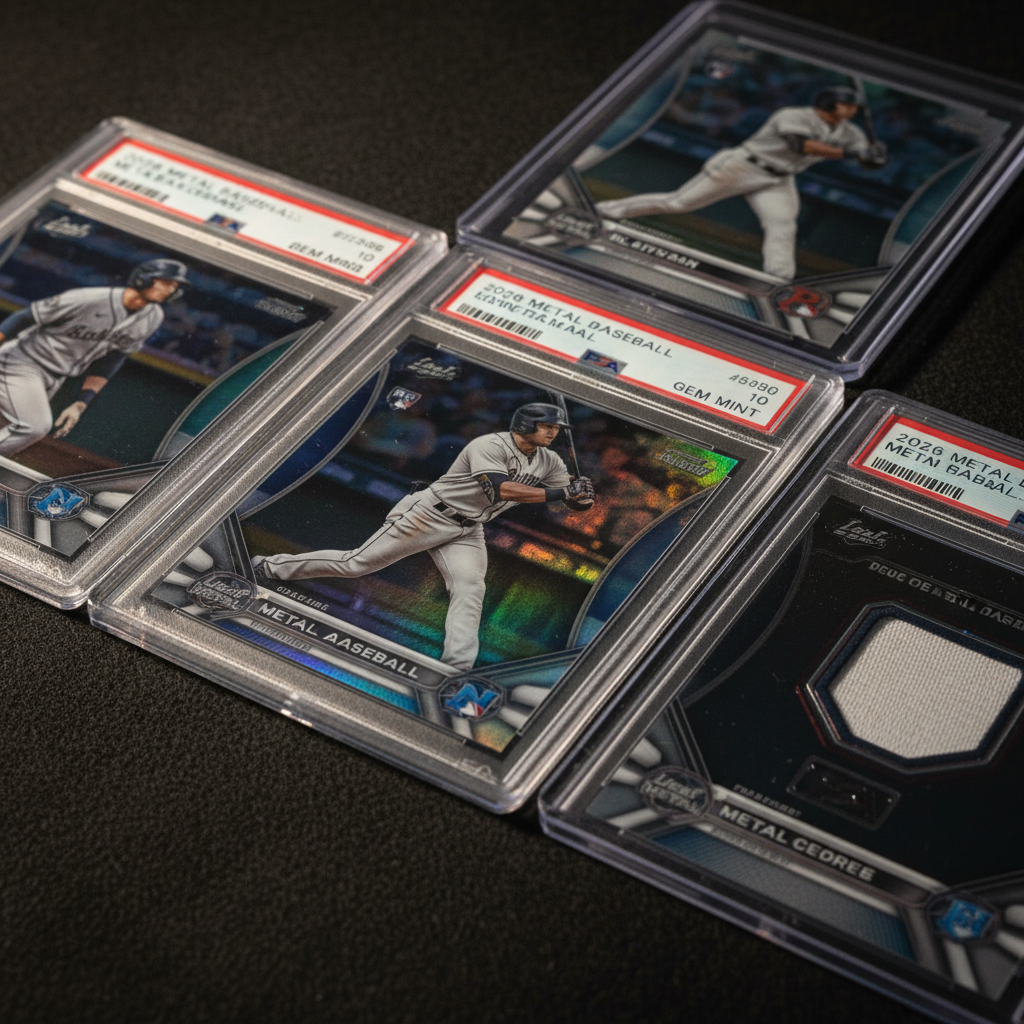
Leaf is coming in hot for 2026. The company's flagship metal product returns with a deep autograph checklist, aggressive parallel structures, and the kind of low-population print runs that have made previous Leaf Metal releases appointment shopping for prospect collectors. Here's everything you need to know before boxes hit shelves.
Box Configurations and What You're Pulling
The 2026 Leaf Metal Baseball ships in two formats: hobby boxes and jumbo boxes. Hobby boxes deliver a focused hit count aimed squarely at the prospect and amateur autograph market — the same lane Leaf has owned for years while Topps and Panini fight over licensed product territory.
Jumbo boxes, as expected, push the autograph count higher and give collectors deeper parallel access. The distinction matters because Leaf Metal's value proposition has always lived in its parallels. Base autos are the floor, not the ceiling. The real action starts with the numbered parallels, where print runs drop into the single digits on the top-tier variants.
Leaf's parallel architecture for 2026 follows the tiered structure collectors have come to expect from the brand:
- Gold parallels — numbered to 25
- Red parallels — numbered to 10
- Blue parallels — numbered to 5
- Purple parallels — numbered to 3
- Black parallels — 1-of-1 printing plates and true superfractors
Those print runs are not typos. A 1-of-1 Leaf Metal auto of a top-flight prospect is genuinely rare in a way that licensed products — with their massive print runs and retailer exclusives diluting the market — often aren't. That's the argument Leaf has been making for years, and the secondary market has largely validated it.
The Prospect Checklist: Where the Real Value Lives
Leaf Metal's checklist is built around amateur and pre-rookie talent — players who haven't yet appeared on a licensed Topps or Panini card. That structural advantage is the entire reason the product exists, and 2026 continues that tradition with a mix of high-profile draft picks and under-the-radar prospects who surface months before anyone else has them on cardboard.
This is the product that gave early collectors their first autographed cards of players who went on to become stars. That track record is baked into how the hobby treats Leaf Metal PCs. A low-numbered parallel of a prospect who breaks out can move from a $40 pull to a four-figure sale inside 18 months — and that ceiling is what keeps the case-breaker community deeply invested in this release every year.
The 2026 checklist includes a broad mix of position players and arms, with pitching prospects carrying particular attention given the current draft class composition. Leaf's autograph authentication process runs through their in-house program rather than a third-party service, which is worth understanding before you submit to PSA or BGS — authentication provenance matters on high-value parallels.
On the grading front, BGS has historically been the preferred service for Leaf Metal cards among serious collectors, largely because the subgrades reward the clean, bright stock that metal-style cards tend to exhibit. A BGS 9.5 on a low-numbered Leaf Metal auto carries real market credibility. PSA's Auto grade adds a separate layer of value verification for the signed portion of the card.
Market Context: Where Leaf Metal Sits in 2026
The unlicensed card market has faced headwinds over the past 24 months. Collectors who chased speculative prospect autos during the 2020-2021 boom and held through the market correction absorbed real losses. But Leaf Metal's core audience — patient, prospect-savvy buyers who understand the product's mechanics — has remained relatively stable.
The product's ceiling cases at Heritage Auctions and Goldin have included Leaf Metal 1/1s crossing $2,000–$5,000 for legitimate top prospects, and the floor on a hobby box has historically held better than comparably priced licensed product. That's partly because the print runs are genuinely constrained, and partly because the collector base for Leaf Metal skews toward people who actually know what they're buying.
The 2026 release arrives at an interesting moment for the unlicensed segment. With Fanatics consolidating licensed rights and the Topps and Panini landscapes shifting under new ownership structures, Leaf's ability to operate outside that ecosystem is arguably more valuable now than it was five years ago. They don't need a license to sign a 17-year-old shortstop who just went in the first round.
Whether the 2026 checklist delivers the breakout name that defines the release — the way certain prior editions had their signature prospect — won't be known until the draft class develops. But that's always been the gamble, and for a certain kind of collector, that uncertainty is the entire point.