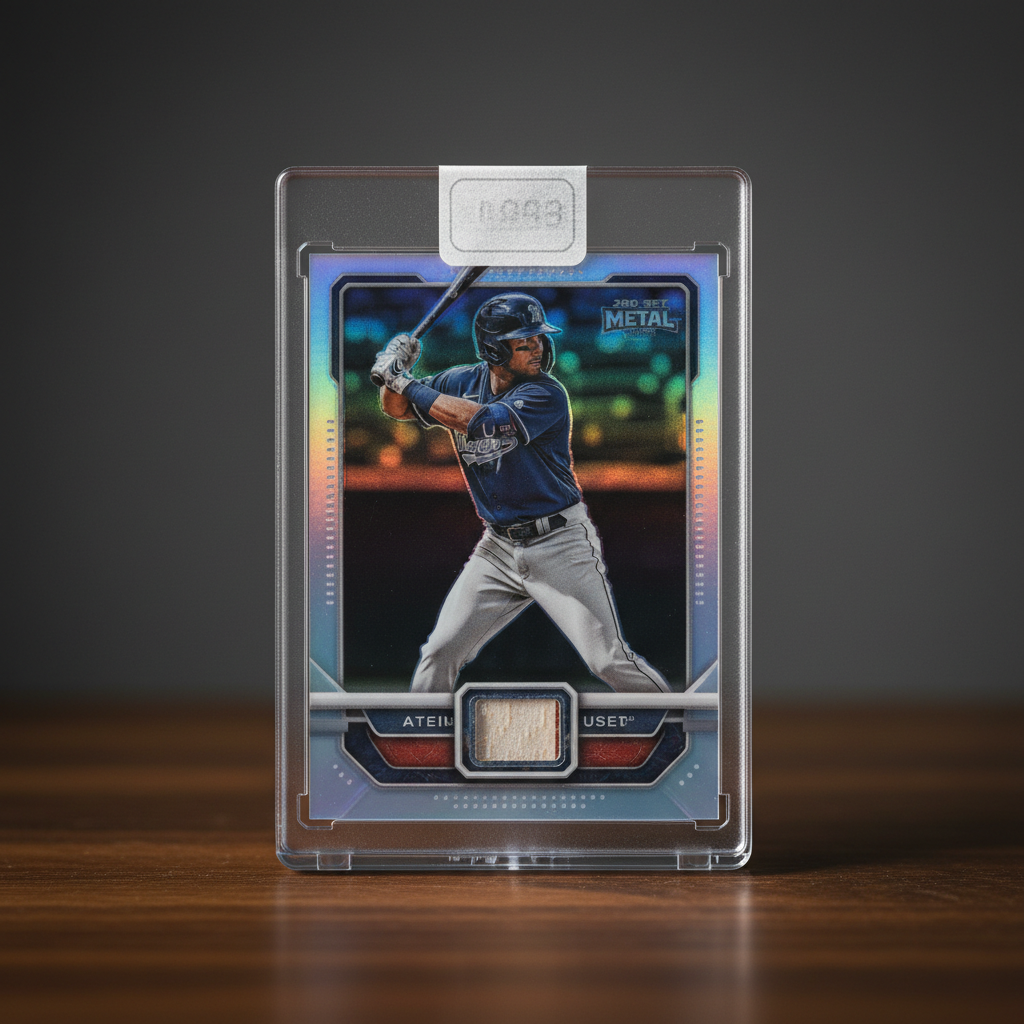
Pro Set Metal is coming back for 2026, and the early checklist details paint a picture of a product that's leaning hard into the metal card format's core appeal — low print runs, heavy autograph content, and a parallel structure designed to keep case breakers chasing.
The brand, which Leaf relaunched to considerable collector interest in recent years, has carved out a legitimate niche in the mid-to-premium hobby segment. Metal cards carry a tactile premium that resonates with a certain buyer: they photograph well, grade distinctly, and tend to hold visual appeal on secondary market listings. Whether that translates to long-term value retention is a different conversation — but for the 2026 edition, the structural details suggest Leaf is doubling down on what's worked.
Box Configuration and What You're Pulling
Both hobby and jumbo box configurations are confirmed for the 2026 release. Jumbo boxes, as expected, carry deeper hit counts and will be the preferred entry point for dealers and group breakers. Hobby boxes offer a more accessible price point for single-box collectors who want exposure without committing to a full case.
The autograph checklist is the engine here. Pro Set Metal has historically featured a mix of current stars, retired legends, and prospect-tier signers — a deliberate spread that lets the product serve multiple collector audiences simultaneously. A case breaker pulling a low-numbered legend auto gets a headline card; someone pulling a prospect auto is playing a longer game on potential upside. It's a smart construction if the signers deliver.
Parallels are tiered by print run, with the lowest-numbered variants expected to land in the single digits. That scarcity structure is now table stakes for any metal card product competing for shelf space, but execution matters. A 1/1 Black parallel in a product with weak base checklist names is still a hard sell. The strength of the 2026 autograph roster — not yet fully confirmed — will ultimately determine whether the parallel ladder generates real secondary market heat or just theoretical scarcity.
Market Context: Where Pro Set Metal Sits in 2026
The metal card segment has gotten more crowded. Leaf, Onyx, and a handful of smaller manufacturers have all leaned into the format over the past several years, which means 2026 Pro Set Metal enters a market where collectors have options and comparison shop aggressively. Heritage Auctions and Goldin both regularly move high-grade metal card autos from recent Leaf releases, but realized prices have shown meaningful variance depending on subject — a PSA 10 auto of a first-round pick can swing from $40 to $400+ based purely on prospect momentum at time of sale.
That volatility is baked into the product category. Metal cards don't have the vintage comp structure that anchors something like a 1989 Upper Deck Ken Griffey Jr. rookie. They live and die by the current market temperature of the athlete on the front. Collectors who understand that dynamic can find real value; collectors who treat low print runs as an automatic value signal often get burned.
For 2026 specifically, baseball's prospect pipeline is genuinely compelling. Several high-ceiling names are approaching or entering their first full major league seasons, which means a well-timed autograph checklist could catch real momentum. The product's release date will matter — a spring drop ahead of the season carries more energy than a fall release when rosters have already sorted themselves.
The Grading Angle
Metal cards present a specific grading challenge that's worth understanding before you crack a box. PSA and BGS both grade metal cards, but population counts for high-grade examples tend to be thinner than comparable paper stock — not necessarily because the cards are harder to produce cleanly, but because the collector base submitting them is smaller. That can work in your favor if you pull a clean example of a high-demand subject and move quickly.
BGS grading is particularly relevant here. The subgrades — centering, corners, edges, surface — apply to metal cards the same as paper, but surface issues read differently on a metallic finish. Fingerprints, micro-scratches, and handling marks show up under examination in ways that aren't always visible to the naked eye at the pack-fresh stage. Handling raw metal cards with care before submission isn't optional; it's the difference between a BGS 9.5 and a BGS 8.5 on a card that might otherwise be a slam dunk.
Full checklist details, confirmed box pricing, and the complete autograph roster are still rolling out ahead of the official release. When the signer list drops, that's when the real calculus begins — because in 2026, the metal is only as good as the name on it.