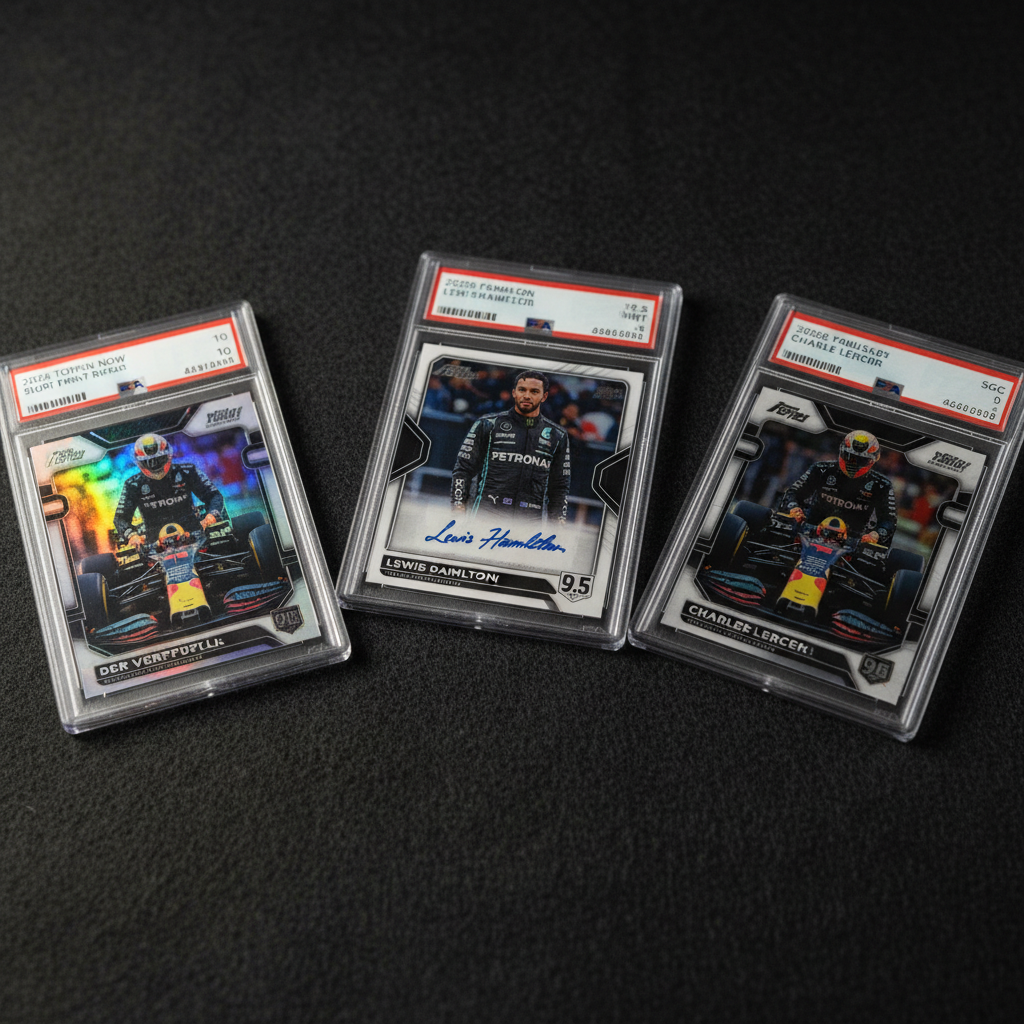
Topps Now's Formula 1 program is back for 2026, and the on-demand model that turned fleeting race-weekend moments into limited cardboard is getting another full season run. The checklist is live, the ordering windows are open, and for collectors who've been tracking this product since its early days, there's enough here to warrant a close look before print runs lock in.
The format remains fundamentally the same: cards are available for a limited window after each race weekend, and the final print run is determined entirely by how many orders come in. No artificial scarcity caps on the base cards — the market sets the number. That transparency is one reason the program has built a legitimate secondary market. A card from a dominant performance weekend with a print run under 200 trades very differently than one from a mid-season race that drew 900 orders.
What's in the 2026 Checklist
The 2026 lineup covers the full grid, with base cards issued for podium finishers and select race storylines throughout the season. Short prints — typically featuring rookie standouts or dramatic in-race moments — are embedded in the checklist at reduced print runs, and they're the cards that tend to move fastest on the secondary market once windows close.
Autograph parallels are the headline chase. Topps has structured the auto tier with on-card signatures from select drivers, and the print runs on those are genuinely tight — historically, signed versions of top-tier drivers have landed in the 25-to-50 copy range, sometimes lower for championship-contending names. Given where the F1 trading card market has moved since Max Verstappen's dominance drove a broader collector surge into the sport, those autos carry real weight at auction.
- Base cards: open print run, demand-determined
- Short prints: embedded at reduced availability windows
- Autograph parallels: on-card signatures, print runs typically 25–99
- Color parallels: tiered by print run, mirroring standard Topps Now parallel structure
The driver pool spans the full 2026 grid, which means rookie cards are in play. Any first-year driver who lands a podium or generates significant race-weekend buzz will have Topps Now cards issued within days — that immediacy is the product's core value proposition, and it's what separates it from base Topps F1 releases that go through a traditional production cycle.
The Secondary Market Reality
Topps Now F1 has had a complicated secondary market life. The on-demand model means collectors who missed an ordering window are entirely dependent on the aftermarket, and prices can swing hard depending on how a driver's season unfolds. A card ordered at $9.99 during a forgettable mid-grid weekend can sit below cost for months. But a card from a race where a championship narrative crystallized — a first win, a title-clinching moment, a dramatic crash that reshapes the standings — those are the ones that hold and appreciate.
The 2023 and 2024 Topps Now F1 runs produced several cards that now trade at multiples of their original price. Cards from Carlos Sainz's 2024 Australian GP win, issued at the standard base price, were fetching $40–$60 on eBay within weeks of the window closing, driven partly by the storyline and partly by a print run that came in lower than expected. That's the dynamic collectors are chasing here.
PSA grading of Topps Now cards has increased significantly over the past two years as the F1 collector base has matured. Population counts on notable cards are still relatively thin compared to flagship baseball products, which means early graded copies of key 2026 issues could carry a premium simply by virtue of being among the first slabbed examples in the registry.
Timing and Strategy
The ordering window typically runs five days after each race weekend concludes. Miss it, and you're paying secondary market prices — sometimes a modest premium, sometimes a significant one depending on the race result. The strategic play for serious collectors is to order broadly during the season and make grading decisions post-season once the championship picture clarifies which cards carry the most narrative weight.
For dealers and investors, the calculus is different. Buying multiple copies of potential breakout cards during the window is low-risk given the base price point, but storage, grading fees, and the unpredictability of a 24-race season mean the returns require patience and a strong read on which drivers are positioned to dominate the storyline.
The 2026 F1 season is shaping up to be one of the most competitive in years under the new technical regulations, and competitive seasons — ones without a single dominant narrative until late in the year — historically produce more varied and collectible Topps Now runs than a runaway championship does. More drama means more moments worth capturing. That's good for the product, and it's good for collectors willing to pay attention all season long.