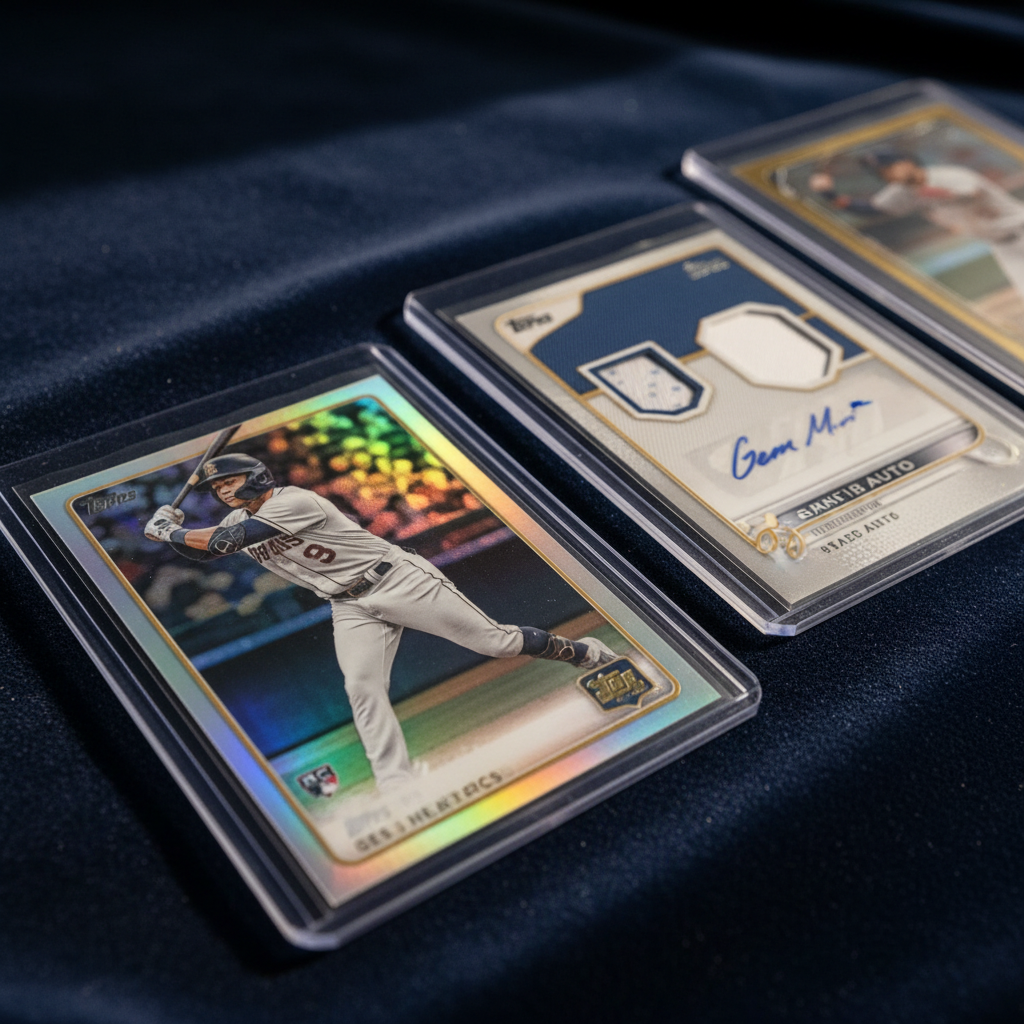
Topps is moving forward with its flagship calendar, and 2026 Topps Series 2 Baseball is now on the horizon — bringing with it the full suite of parallels, autographs, inserts, and relics that define the mid-year release collectors have anchored their summers around for decades. Pre-order details are in circulation, and the checklist framework is taking shape.
For context: Series 2 has historically been the stronger of the two flagship drops, carrying the update-season energy of late roster additions and the deeper insert programs that Topps reserves for its second wave. That tradition appears intact here.
What the Checklist Looks Like
The base set follows the established Series 2 structure, with a deep roster of current players, rookies, and veterans filling out the numbered checklist. Parallels run the familiar spectrum — from the high-volume Gold and Rainbow Foil tiers down to the short-printed Platinum 1/1 that generates the auction headlines every cycle.
Autograph content is anchored by on-card signatures where Topps has secured them, with the sticker autos filling the gaps on higher-volume names. The relic program includes the standard single-swatch cards alongside the multi-relic and manufactured variants that have become a fixture of modern flagship.
Inserts are where Series 2 tends to flex. Expect the continuation of any running insert sets launched in Series 1, plus standalone programs unique to this release. Topps has consistently used Series 2 to introduce some of its more design-forward insert concepts, and the 2026 edition should follow that pattern.
The Market Case for Flagship
Flagship Topps isn't where the big money lives — that's Chrome, Bowman Draft, and the high-end stuff from Topps Dynasty or Transcendent. But dismissing Series 2 as a casual product misreads how the market actually works.
The 1/1 Platinum parallels of breakout rookies consistently draw four-figure results at auction. A Platinum Auto of a mid-season call-up who turns into a September story? That card gets repriced fast. Heritage, which draws from the flagship base design lineage, has shown that the Topps flagship ecosystem still commands serious secondary market attention when the right player is attached.
The parallel rainbow chase also drives sustained box-break demand. Collectors building player rainbows — every parallel of a single card for a single player — treat Series 2 as essential inventory. That consistent demand base keeps box prices from collapsing the way some mid-tier products do post-release.
Grading economics matter here too. PSA 10 copies of short-print variations and photo variation SPs from flagship sets have historically outperformed raw copies by multiples. A PSA 10 SP of a star player from a recent Series 2 drop regularly fetches three to five times the raw equivalent on PWCC or Goldin — the centering lottery on flagship cards makes a clean grade genuinely scarce.
Pre-Order Timing and What to Watch
Pre-orders are live now through major hobby distributors and box break operators. Hobby boxes and blaster configurations are both expected, with the retail footprint likely mirroring Series 1's distribution strategy.
A few things worth tracking as the release approaches:
- Rookie presence: Which 2025 draft class members or 2026 call-ups make the checklist cut will define the product's long-term value ceiling. A breakout rookie SP in flagship can carry an entire release.
- Photo variation SPs: Topps has leaned harder into these in recent years, and they've become legitimate chase cards. The checklist of confirmed variations will matter to set builders and player collectors alike.
- Auto checklist depth: On-card versus sticker ratio is a real quality signal. Products that lean heavily sticker tend to see faster secondary market depreciation on the auto cards.
- Insert design: A strong insert program can give a flagship release staying power. Weak inserts get pulled and discarded; strong ones become their own mini-market.
The 2026 Topps flagship calendar is running on schedule, and Series 2 arriving with a full checklist framework already in circulation suggests Topps is keeping its production timeline tight. For the hobby's largest mainstream product line, that kind of operational consistency is exactly what the dealer and break community needs to plan inventory.
Flagship isn't glamorous. But it's the backbone — and Series 2 is where that backbone shows its range.