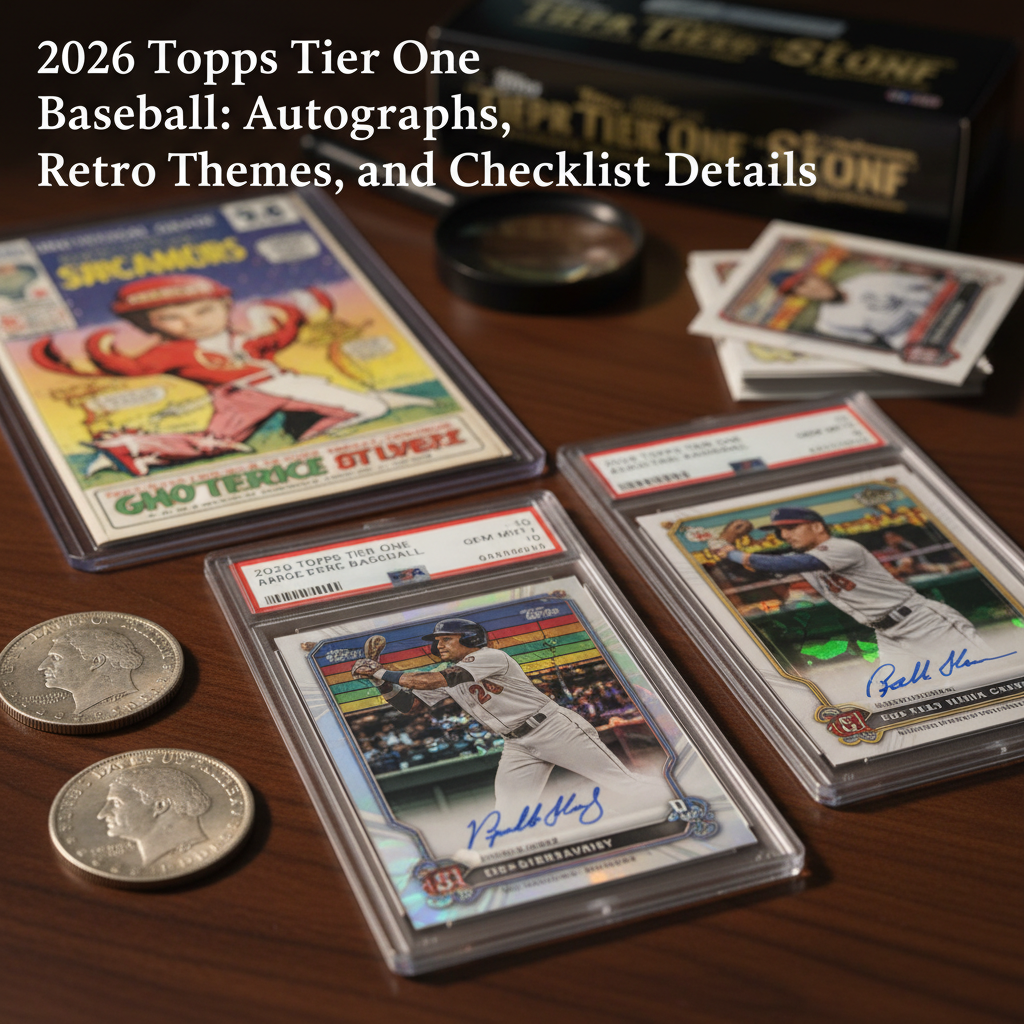
Topps is bringing back one of its most collector-friendly premium annual releases, and the early details on 2026 Topps Tier One Baseball suggest the brand isn't resting on its laurels. With autograph-heavy configurations, retro-themed memorabilia inserts, and a checklist built around marquee names, Tier One continues to position itself as the go-to mid-to-high-end option for the on-card signature crowd.
The product has carved out a reliable niche since its relaunch era — not quite the stratospheric price point of Topps Dynasty or Transcendent, but well above the noise of retail. That sweet spot has kept Tier One relevant in a market that increasingly punishes products without a clear identity.
What's Inside the 2026 Configuration
The 2026 edition leans into what Tier One collectors have come to expect: a checklist anchored by on-card autographs across multiple tiers of scarcity, with memorabilia cards that incorporate retro design themes as a central aesthetic hook. The retro angle is smart positioning. Vintage-adjacent aesthetics have driven outsized secondary market premiums across the hobby over the past three years — from the throwback parallels in Topps Heritage to the design callbacks embedded in products like Bowman Chrome's anniversary sets.
Autograph configurations are expected to include:
- Base on-card autos with tiered print runs
- Dual and triple autograph combinations featuring active stars and legends
- Autographed memorabilia cards with retro-themed patch windows
- Short-printed rookie autographs with numbered parallels
The memorabilia component — particularly the retro-themed relic cards — will be worth watching closely. When Tier One has executed this well in prior years, those cards have held value better than comparable relics in mass-market products. When the theme feels forced or the swatches are generic, the secondary market notices immediately. Execution matters here more than concept.
Market Position and Collector Expectations
Tier One has historically sold in the $150–$250 per box range at hobby shops, with single-box configurations that guarantee hits. That price point puts it in direct competition with products like Topps Five Star and Panini Immaculate — both of which have their own loyal followings and design philosophies. The difference Tier One has consistently pushed is on-card authentication over sticker autos, a distinction that genuinely moves the needle on resale value.
On the secondary market, on-card autographs from Tier One's better checklists have graded well. A PSA 10 on-card auto of an elite active player from a recent Tier One release can command a meaningful premium over its sticker-auto equivalent from a competing product — sometimes 30 to 50 percent more, depending on the player and print run. That's not a trivial gap.
The 2025 edition of Tier One saw solid hobby box performance, with key autographs of top-tier MLB talent moving briskly through platforms like PWCC and Goldin in the weeks following release. If the 2026 checklist delivers comparable star power — and the retro memorabilia cards land visually — there's no reason to expect a different result.
Pre-Order Window and Release Timing
Pre-order details are expected to be confirmed through authorized hobby distributors in the coming weeks. Tier One traditionally releases in the mid-season window, giving the checklist time to incorporate early-season performance narratives and rookie breakouts — a structural advantage over products that lock checklists before spring training.
For collectors building player collections or chasing specific autograph targets, the pre-order phase is the time to lock in box prices before any checklist hype drives secondary market premiums on sealed product. Tier One boxes don't typically spike dramatically pre-release, but a high-profile checklist reveal can shift that calculus fast.
The retro theme threading through the 2026 memorabilia cards is the wildcard here. Done right, it gives the product a visual coherence that photographs well, grades well, and holds collector attention beyond the initial break. Done wrong, it's just another relic card with a vintage font slapped on it. Topps knows the difference — the question is whether 2026 delivers on the concept or just gestures at it.