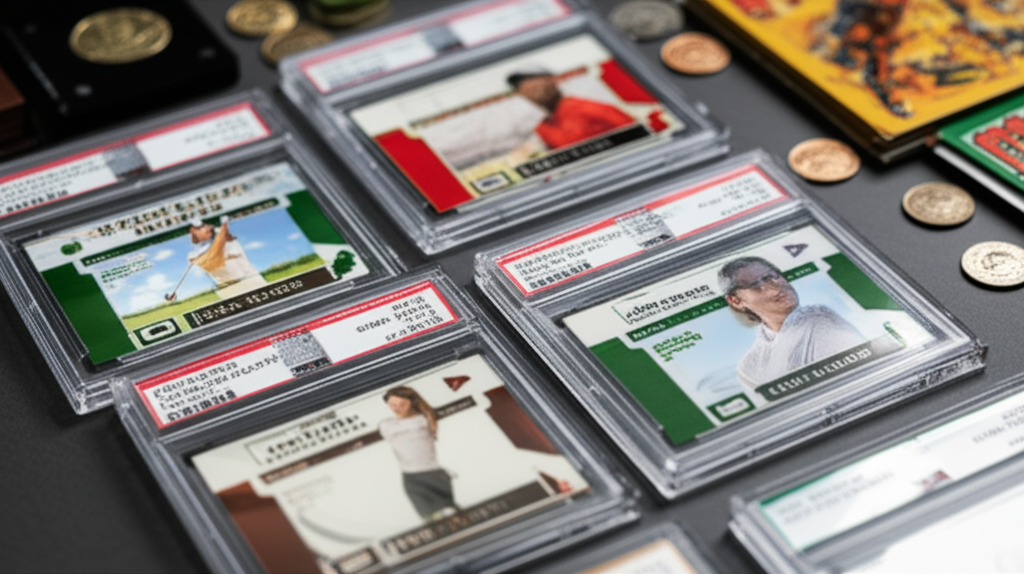
Upper Deck is bringing its Allure Golf brand back for 2026, and the product configuration signals a clear bet on the premium mid-tier golf card market — a segment that has quietly outperformed expectations since Allure's debut run introduced on-card autographs and short-printed parallels to a collector base hungry for alternatives to Topps-dominated formats. With golf card values surging on the back of Rory McIlroy's 2024 Masters win and sustained demand for Tiger Woods autos — which routinely clear $500–$2,000+ at Heritage and Goldin depending on grade and scarcity — the timing of this release is anything but accidental.
What's Inside: Checklist, Box Configuration & Autograph Breakdown
2026 Upper Deck Allure Golf arrives with a checklist built around the sport's biggest names, featuring both active tour stars and legacy legends. Each hobby box is structured to deliver a consistent autograph hit alongside a mix of insert and parallel content — a format Upper Deck has refined across its hockey and basketball Allure releases to maximize per-box value perception without diluting the pull experience. While full odds sheets are still being finalized ahead of the official release date, early details confirm on-card autographs as the flagship pull, a distinction that matters enormously to the graded card market where sticker autos carry a measurable discount at auction.
The checklist spans multiple tiers of autograph signers, with print runs expected to range from numbered /99 on base-level autos down to 1/1 superfractors and logoman-style premium cuts for the product's top-tier inserts. Parallel structures — a hallmark of the Allure brand — will layer across base cards and inserts, giving set builders and player collectors multiple entry points at varying price levels. Key insert programs include rookie-focused content spotlighting the latest wave of PGA Tour talent, alongside veteran-anchored sets designed to capture the nostalgia segment that drives significant secondary market volume for golf cards specifically.
Collectors should note that Upper Deck holds the exclusive trading card license for several marquee golfers, making Allure one of the only legitimate avenues for certified autograph cards of those athletes. That exclusivity is a structural advantage that directly supports long-term secondary market floors on key pulls — a dynamic that doesn't apply equally across all sports card categories.
Why the Golf Card Market Makes This Release Matter
Golf cards have evolved from a niche afterthought into a legitimate collecting category with real auction infrastructure behind it. PSA population reports for top-tier golf autos remain thin compared to basketball or baseball equivalents — a low-pop environment that historically supports price stability and upside for high-grade examples. A PSA 10 Tiger Woods auto from a limited Upper Deck release, for instance, can carry a population of fewer than a dozen copies, a scarcity profile that serious investors recognize immediately. Allure's numbered parallel architecture is designed precisely to create those kinds of registry-worthy, low-pop targets.
The broader golf card market has also benefited from a generational shift in the collector base. Younger collectors who came into the hobby during the 2020–2021 boom and gravitated toward golf as a premium lifestyle category have matured into buyers with real budgets. Meanwhile, the sport itself is in a commercial renaissance — LIV Golf's disruption, the continued global expansion of the PGA Tour brand, and a pipeline of compelling young talent have kept golf in the sports media conversation consistently. Product releases that align with that cultural momentum tend to outperform those that don't, and 2026 Allure is positioned squarely in that window.
Comparably structured Upper Deck golf releases have shown strong initial sell-through at the hobby box level, with box prices historically ranging from $80–$150 at release depending on retailer and configuration. Secondary market box prices tend to hold or appreciate modestly when the autograph checklist includes confirmed high-demand signers — a pattern worth tracking once the full odds sheet and signer list are confirmed closer to release.
Collector Takeaway: Watch the Signer List, Move Early on Key Autos
The actionable play here is straightforward: wait for the confirmed autograph checklist before committing to case or box purchases, but move quickly once it drops. Allure releases historically see their sharpest single-card price appreciation in the first 30–60 days post-release, before population reports fill in and the market recalibrates. If the signer list includes confirmed on-card autos from Tiger Woods, Rory McIlroy, or Scottie Scheffler in numbered tiers below /25, those cards warrant aggressive pursuit at release-window prices — the PSA 10 population on those will be small, and the buyer pool is deep enough to support strong auction results at Heritage or Goldin within a single selling cycle.
For set builders and player collectors working tighter budgets, the parallel structure offers legitimate value: numbered base parallels of rising PGA Tour stars acquired at release pricing have historically offered the best risk-adjusted return in this product category, particularly when those players go on to win majors or Ryder Cup glory in the following season. Allure Golf 2026 isn't a slam dunk until the full checklist confirms the star power — but the structural setup is right, the market timing is favorable, and Upper Deck's track record in this format earns it a watchlist spot for every serious golf card collector.