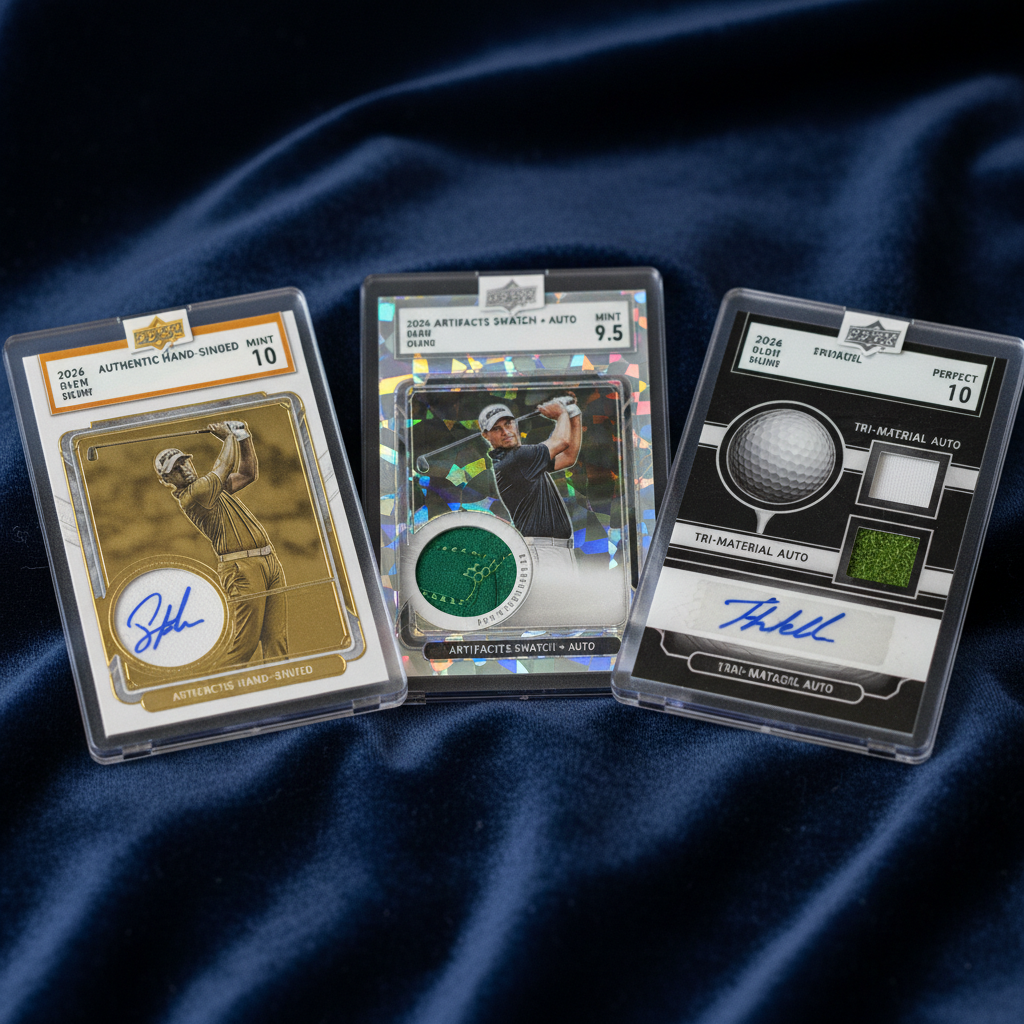
Upper Deck is returning to the golf card market in a meaningful way. The company's 2026 Artifacts Golf release is shaping up as one of the more ambitious golf card products in recent memory — structured around on-card autographs, tiered parallel chases, and the kind of low-box-count hobby format that serious collectors have come to expect from the Artifacts brand.
Golf cards have always occupied a peculiar corner of the trading card market. Demand spikes hard around major tournament cycles and Tiger Woods content, then softens just as quickly. The question with any new golf release isn't whether the checklist is interesting — it usually is — but whether the product can hold secondary market value once the initial box-break frenzy subsides. Artifacts, as a brand, carries enough collector equity from its hockey and baseball runs to at least enter the conversation credibly.
What's Inside the Box
The configuration leans into the premium hobby format. Each box is built around delivering autograph content, with the checklist anchoring around current tour stars and legends of the game. Parallels are tiered by print run, with the lowest-numbered versions — think single-digit and 1-of-1 printing plates — serving as the primary case-hit targets that drive group break demand.
Inserts follow the Artifacts template collectors know from other sports: clean design language, foil-heavy stock, and a clear hierarchy from base to short print to auto to auto parallel. The odds sheets reflect a product priced for the serious buyer, not the casual retail shopper. This is a hobby-box-or-bust configuration, and Upper Deck isn't pretending otherwise.
Autograph subjects span active PGA Tour players alongside historical names — the kind of checklist architecture that gives the product legs beyond a single news cycle. A Tiger Woods autograph, if present in meaningful quantity, would be the obvious market anchor. Woods autos in graded form have commanded anywhere from $500 to well into five figures depending on the issue, grade, and scarcity. Even a mid-tier numbered parallel of a current major winner can clear $200 to $400 at auction when the market is warm.
The Golf Card Market Right Now
Context matters here. Golf cards never fully replicated the basketball or baseball card boom of 2020-2021, but the category found a durable collector base. Products like Upper Deck's own SP Authentic Golf and Leaf's various golf offerings have demonstrated that there's genuine appetite for the format — particularly among collectors who follow the sport and want something beyond a jersey swatch from a mid-90s set.
The Rory McIlroy generation of collectors is real. So is the Scottie Scheffler wave following his dominant 2024 season. First-year autographs of players who go on to major wins tend to age well in this market, and a product releasing in 2026 will almost certainly include subjects whose careers are still ascending. That's the speculative upside Artifacts Golf is quietly selling alongside the nostalgia play.
Parallel structures in modern golf products have also gotten smarter. The days of flooding a checklist with 500-copy rainbow parallels that nobody tracks are largely behind us. Tighter print runs — /25, /10, /5, 1/1 — create genuine scarcity and give Heritage Auctions and Goldin something to work with when these cards hit the block six to twelve months post-release.
Where This Product Fits
Artifacts as a brand has historically rewarded patient collectors. The hockey version built a reputation for clean autograph execution and parallel structures that held value better than many contemporaries. Translating that to golf is a reasonable bet, but the sport's narrower collector base means print runs need to stay disciplined for the secondary market to function properly.
Box pricing will be the critical variable. If Upper Deck prices hobby boxes aggressively — anywhere north of $150 to $175 — the math gets hard unless autograph checklist depth is genuinely strong. Golf collectors are sophisticated enough to run expected value calculations, and they will.
The release is positioned for 2026, which gives Upper Deck runway to finalize the autograph roster and potentially align the launch with early-season PGA Tour momentum. Smart timing, if they execute it. Golf card products that drop during Masters week or in the lead-up to the U.S. Open have historically outperformed those that land in the calendar dead zones.
Artifacts Golf isn't reinventing the category. It's applying a proven premium hobby framework to a sport that has earned a real collector following — and betting that the combination is enough. Given the brand equity and the current state of golf fandom, that's not a bad bet at all.