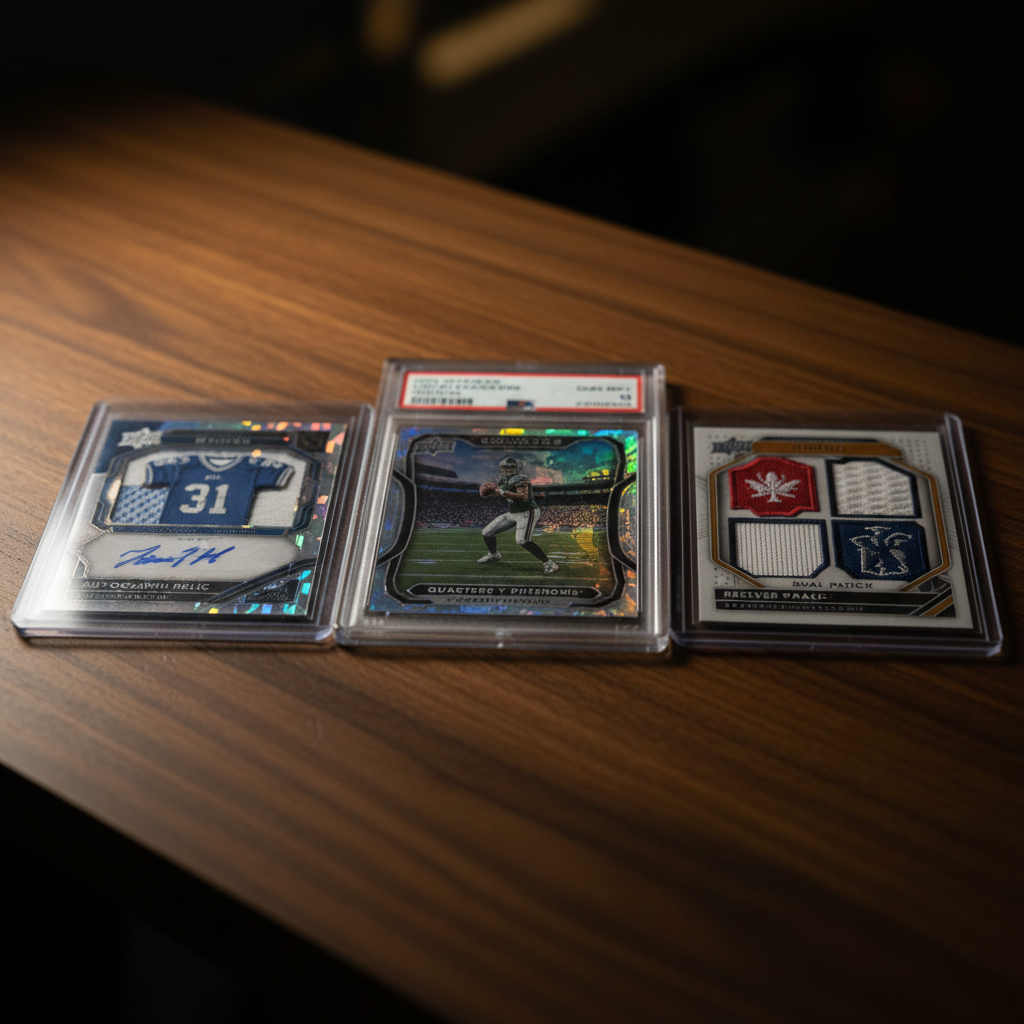
Upper Deck is returning to the Canadian Football League for 2026, and the product spec sheet suggests the company is treating this release with more structural ambition than the CFL has seen from a licensed trading card set in years. Hobby boxes are confirmed, autographs are in, and the Star Rookies program — Upper Deck's signature rookie card format — anchors the checklist.
For a league that has historically lived in the shadow of NFL cardboard, that matters. The CFL collector base is smaller but genuinely passionate, and Upper Deck has held the league's exclusive license long enough to understand what moves product north of the border.
Box Configuration and What's Inside
Each hobby box delivers a structured hit configuration built around autographs and parallels — the two levers Upper Deck has always pulled hardest in its hockey and football releases. While exact pack-per-box and card-per-pack counts are still being finalized ahead of the release window, the confirmed presence of hobby-exclusive content signals this isn't a retail-only, low-investment product. Upper Deck is building a box experience designed to reward case buyers and set collectors alike.
Parallels are tiered across the base set, with short-print variations expected to chase at meaningful odds. The odds sheet — which Upper Deck typically publishes in full on the box panel — will be the real tell for how aggressively the company has seeded the high-end pulls. Collectors who've worked through recent Upper Deck NHL releases know the company tends to run parallel ratios tighter than competitors, which keeps secondary market prices on premium variants elevated.
The Star Rookies subset is the checklist's commercial spine. Upper Deck has used this designation across its hockey flagship for decades, and its migration into CFL product gives 2026 draft class prospects a standardized rookie card format that the grading market can anchor to. PSA and BGS both recognize Upper Deck CFL sets, meaning Star Rookies from this release will be gradeable and registry-eligible — a detail that matters more than casual observers might assume when it comes to long-term value retention.
The CFL Card Market: Niche, But Not Negligible
The honest market context here is that CFL cards trade at a significant discount to NFL equivalents. A PSA 10 rookie of a top CFL draft pick might move for $40–$150 on the secondary market depending on the player's profile, compared to hundreds or thousands for comparable NFL prospects. Population counts on graded CFL cards are thin — most Upper Deck CFL Star Rookies see fewer than 50 graded copies across all grades in PSA's database — which creates a double-edged dynamic: low demand, but also genuinely low supply on high-grade examples.
That scarcity argument has driven a quiet but real collector segment that targets CFL cards specifically because the entry cost is low and the upside on breakout players is disproportionate. When a CFL player crosses over to the NFL — as several have in recent years — their Canadian rookie cards tend to spike hard and fast, precisely because nobody was hoarding them at release.
The autograph component of the 2026 set is where Upper Deck can genuinely move the needle. On-card signatures of CFL veterans and incoming rookies have historically been the most liquid cards from these releases on platforms like eBay and COMC. If Upper Deck secures signatures from marquee names in the 2026 CFL draft class, those cards will be the ones dealers watch at launch.
Release Timing and Collector Strategy
Upper Deck has not confirmed a street date as of this writing, but CFL product typically releases in alignment with the league's season calendar — meaning a mid-to-late 2026 window is the working assumption. Hobby shops that carry Upper Deck hockey product are the most reliable pre-order channel; Canadian retailers in particular tend to allocate CFL boxes aggressively given domestic demand.
For collectors approaching this as a speculative play rather than a set build, the calculus is straightforward: identify the top two or three incoming CFL rookies with legitimate NFL crossover potential, target their Star Rookies and any autograph parallels at release pricing, and hold. The market is illiquid enough that patience is required, but the ceiling on a breakout player's early CFL cardboard is real.
For the pure set collector, Upper Deck CFL has always rewarded completionists willing to dig through hobby boxes rather than wait for singles — the parallel structure means certain short-prints simply don't surface on the secondary market in volume. That's a feature, not a bug, if you're building a master set.
The CFL doesn't need to compete with the NFL for this product to find its audience. It just needs Upper Deck to execute — and based on the spec details confirmed so far, 2026 looks like a release built with intention rather than obligation.