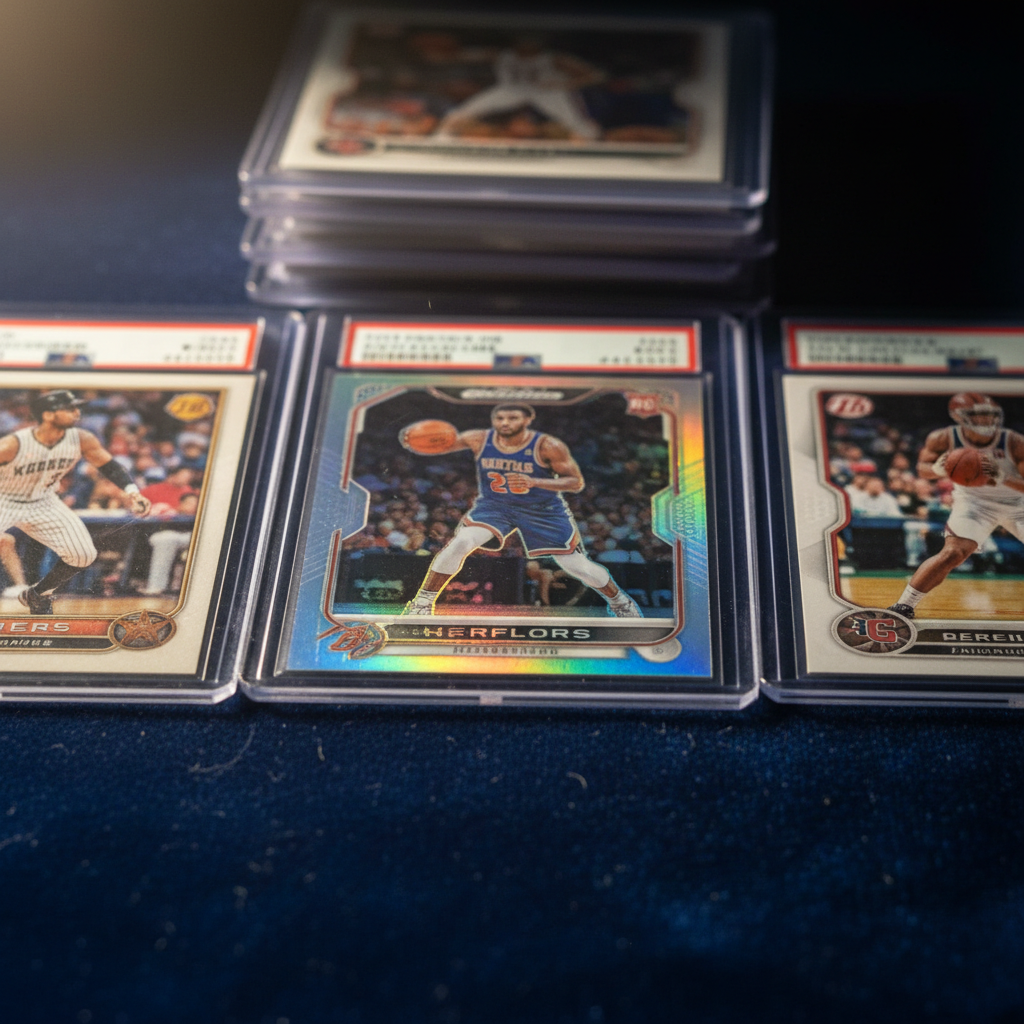
Russell Savage-Fink's origin story is as old as the hobby itself: a kid tears open a pack of 1984 Topps Baseball, pulls a Mike Schmidt and a Rollie Fingers, and four decades later he's running one of the Mid-Atlantic's most talked-about card show circuits. The 757 Card Shows aren't an accident. They're what happens when a childhood obsession never lets go.
That's not a romantic oversimplification — it's the actual market dynamic driving regional show growth right now. While the national hobby conversation fixates on seven-figure Mantle slabs and PSA 10 population wars, the grassroots infrastructure underneath it all — the local shows, the regional dealers, the community tables — is quietly booming. Savage-Fink is building in exactly that space.
From Wax Breaks to Weekend Shows
Savage-Fink started collecting in 1984, a year that matters more than casual observers might realize. The mid-80s Topps era predates the junk wax explosion by just a few years — meaning collectors who cut their teeth on '84 and '85 Topps developed taste before the market got flooded. They learned to chase cards with actual scarcity, not the artificially inflated print runs that would define the late-80s and early-90s. That formative experience tends to produce serious collectors, not speculators.
The leap from personal collecting to show promotion is a well-worn path, but most who attempt it underestimate the logistics. Venue sourcing, vendor coordination, marketing, foot traffic — regional shows live and die on execution. The 757 Card Shows, operating across Virginia's Hampton Roads corridor and the broader Mid-Atlantic footprint, have clearly figured out the formula. Wildly successful is a descriptor that gets thrown around loosely in this hobby, but sustained regional traction is harder to fake than a single blowout event.
The timing isn't coincidental. The post-2020 hobby surge brought millions of new collectors into the market, and while the speculative froth has cooled — 2022 and 2023 saw broad price corrections of 20–40% on modern rookies across most major platforms — the underlying collector base expanded permanently. Those new entrants need somewhere to go. They want to handle cards, meet dealers, learn the grade differentials between a PSA 7 and a PSA 9 in person. Regional shows provide exactly that, and operators who got their infrastructure right during the boom are now reaping the stability on the other side of it.
Why the Mid-Atlantic Market Is Worth Watching
The Hampton Roads and broader Virginia market doesn't get the same ink as Chicago, Dallas, or Southern California — but it probably should. The region has a dense concentration of military families, a demographic that historically indexes high on nostalgia-driven collectibles and has disposable income structured around steady government pay. Add in proximity to the Baltimore-Washington corridor, and you have a collector population that's both large and underserved by national-level show infrastructure.
Heritage Auctions, Goldin, and PWCC dominate the high-end transaction layer, but they don't serve the collector who wants to spend $50 to $500 on a Saturday morning and walk out with something tangible. That's the 757 Card Shows' lane, and it's a wide one.
The vintage segment is particularly relevant here. Collectors who started in 1984 — Savage-Fink's cohort — are now in their 50s, hitting peak earning years, and increasingly circling back to the cards of their childhood. 1984 Topps Don Mattingly rookies, Fleer and Donruss sets from that era, and pre-junk-wax commons that carry genuine sentimental weight are all seeing renewed interest. PSA has reported consistent submission volume growth in the vintage segment even as modern card submissions have leveled off post-boom. Regional shows with roots in that era are well-positioned to serve that demand.
The Bigger Picture for Regional Operators
What Savage-Fink has built matters beyond Virginia. The national hobby needs a healthy middle layer — between the kitchen-table collector and the Heritage auction consignor — and regional show operators are that layer. They're where dealers move mid-grade inventory, where new collectors get their first education, and where the hobby's social dimension actually lives.
The National Sports Collectors Convention draws tens of thousands annually, but it's one week in one city. The 757 Card Shows model — recurring, regional, community-rooted — compounds over time in ways a single marquee event never can. Vendors build relationships with buyers across multiple shows. Collectors develop trust with specific dealers. The market gets more efficient, not less.
Forty years after a kid cracked a Topps pack and found Schmidt and Fingers staring back at him, that same impulse is filling vendor tables across the Mid-Atlantic. The hobby's foundation was never the seven-figure slabs. It was always this.