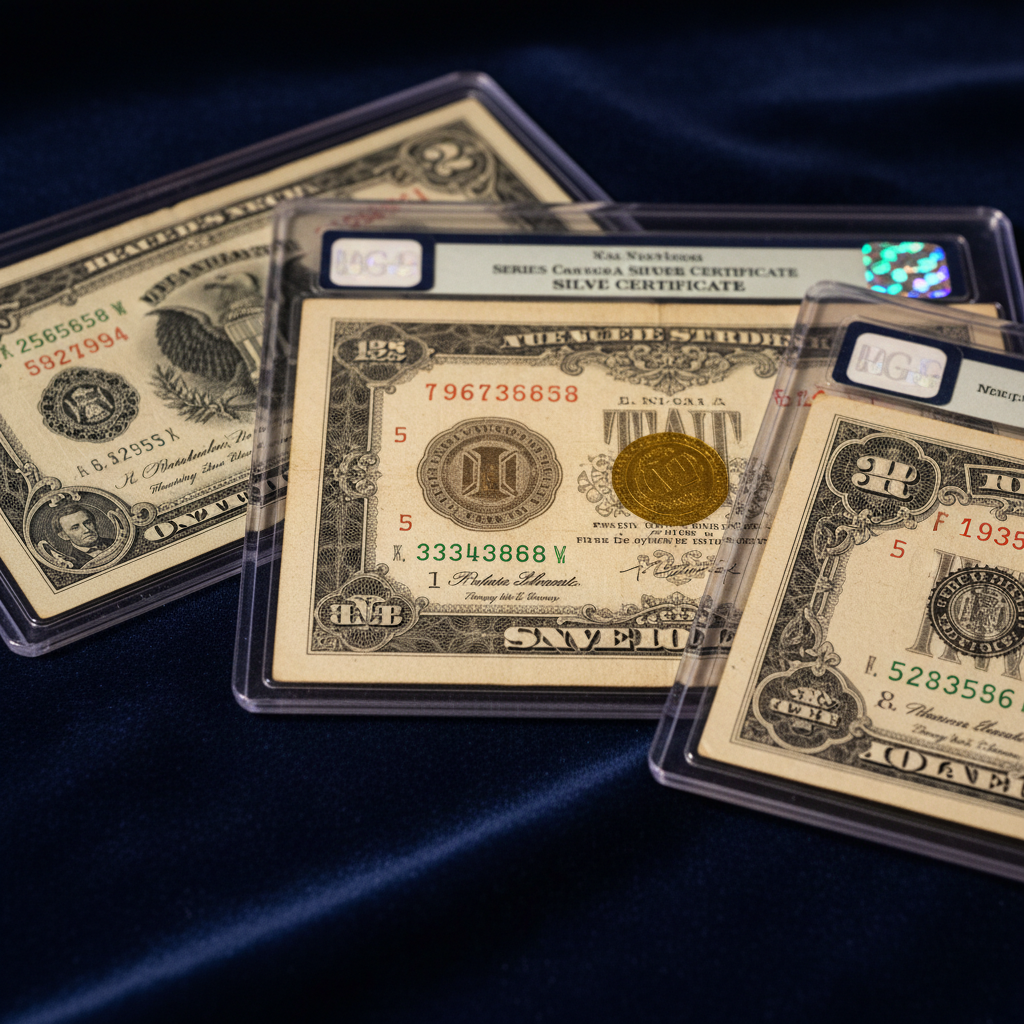
The American Numismatic Association's National Money Show rolled into the Savannah Convention Center this spring, and for three days, the Georgia port city became the unlikely center of the numismatic universe. Rare notes, historic coinage, hands-on educational programming, and a bourse floor buzzing with serious buying and selling activity made this one of the hobby's more complete regional showcases in recent memory.
The ANA's National Money Show sits a tier below the flagship World's Fair of Money in scale, but serious collectors have long known it punches above its weight. Savannah, with its historic architecture and deep ties to colonial-era commerce, turned out to be an inspired venue choice — a city literally built on the movement of goods and currency.
What Was on the Floor
Exhibit halls featured once-in-a-generation display pieces — the kind of material that doesn't surface at local coin clubs or even most regional shows. Early American coinage, colonial currency, and rare federal-era notes drew sustained crowds throughout all three days. These aren't items that regularly appear in Heritage or Stack's Bowers auction catalogs, which makes their physical presence at a public show genuinely significant for collectors who study the material but rarely see it in hand.
The bourse floor, where the real commerce happens, offered the full spectrum: raw coins, freshly cracked slabs, PCGS and NGC certified material, world coins, paper money, and bullion. Dealers from across the country set up tables, and the mix of inventory reflected the current market's bifurcated nature — ultra-high-grade certified material commanding strong premiums, while mid-tier raw coins faced softer demand as buyers grow increasingly grade-conscious.
That dynamic is worth watching. As NGC and PCGS population reports grow denser and price guides tighten around certified grades, the premium for slabbed coins over raw equivalents has widened measurably over the past 18 months. A show like the National Money Show is a real-time market thermometer — and the Savannah edition suggested that knowledgeable buyers are still spending, just spending more selectively.
Education and the Next Generation
The ANA leaned hard into family programming, a strategic priority that reflects the organization's longer-term concern about hobby demographics. Hands-on activities for younger attendees — coin identification, basic grading exercises, historical context sessions — ran throughout the weekend. It's the kind of infrastructure investment that doesn't move the needle on any single auction result but matters enormously for where the hobby is in 20 years.
Numismatics has an age problem that the broader collectibles market shares. The average serious coin collector skews older than their counterparts in sports cards or vintage toys, categories that have benefited from a documented surge of millennial and Gen Z buyers since 2020. The ANA's educational push at events like this is a direct response to that gap.
Whether it's working is a harder question. Attendance figures for regional ANA shows have been inconsistent post-pandemic, and Savannah — while a compelling destination — isn't a major numismatic hub the way Baltimore, Chicago, or Philadelphia are. But anecdotal reports from dealers on the floor pointed to meaningful foot traffic and genuine transactional activity, not just tire-kicking.
The Broader Market Moment
The Savannah show arrived at an interesting inflection point for rare coins and currency. Heritage Auctions and Stack's Bowers have both posted strong results for top-tier certified material through early 2025, with key date Morgan dollars, early American copper, and high-grade type coins continuing to attract competitive bidding. The floor beneath that peak, however — the MS-63 and MS-64 range for common-date material — has softened as collectors chase condition rarities rather than filling sets.
Paper money has its own momentum. Large-size nationals, rare territorial notes, and high-denomination federal currency have all seen renewed collector interest, partly driven by a cohort of crossover buyers from the broader alternative assets market who are drawn to the historical narrative embedded in early American currency. A well-documented Fr. 2221-G or a crisp territorial national can carry a story that a generic bullion coin simply cannot.
That storytelling premium — the idea that provenance, rarity, and historical context command a measurable price differential — was on full display in Savannah. The show didn't produce a single headline auction result or a record-breaking sale. It didn't need to. What it delivered was something arguably more valuable for the long-term health of the hobby: three days of engaged collectors, serious dealers, and curious newcomers sharing the same floor.
The next major ANA event is the World's Fair of Money, scheduled for August in Atlanta — a short drive from Savannah and a significantly larger stage. If the Savannah show is any indication, the market arrives there with momentum intact.