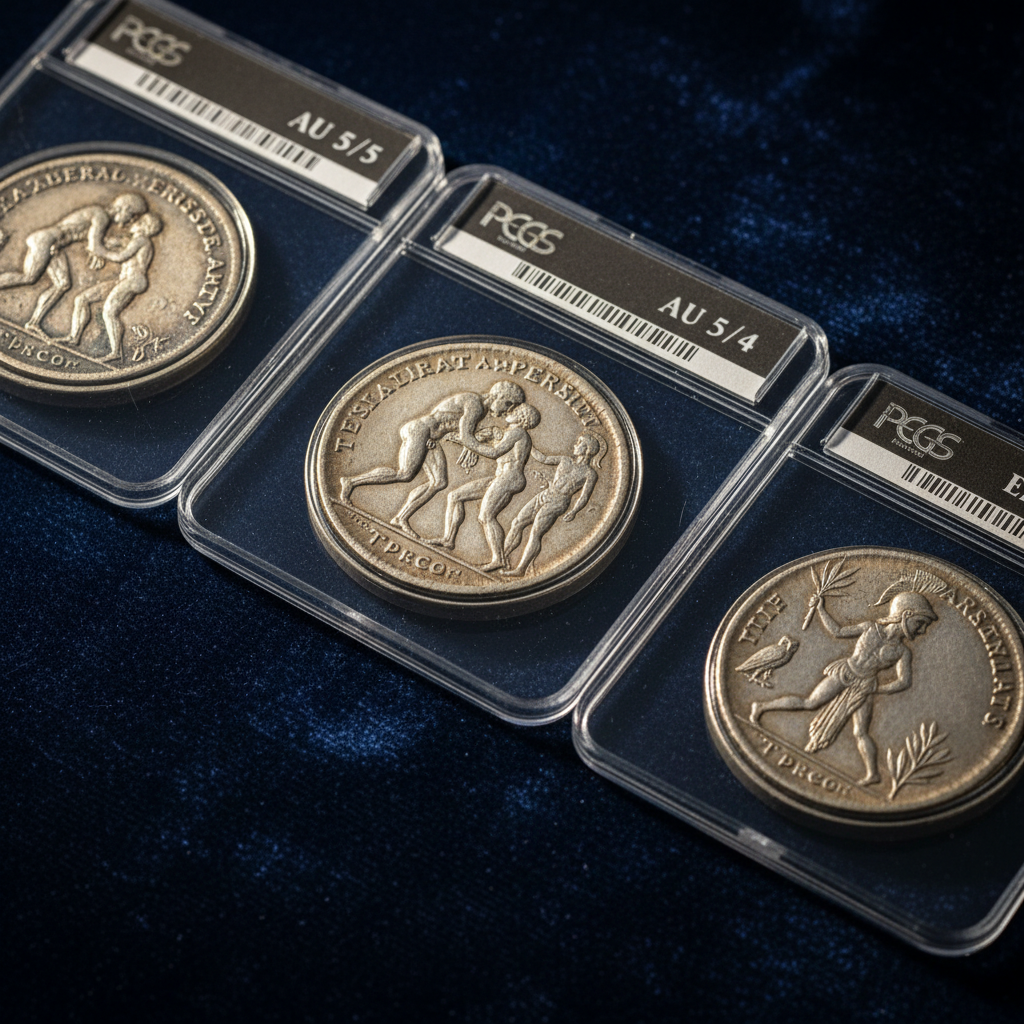
Before PSA slabs and Heritage auction paddles, the ancient Greeks had their own way of immortalizing athletic greatness — they struck it in bronze and silver. A focused look at coins depicting wrestlers from the cities of Pamphylia and Pisidia reveals one of the most visually compelling and historically resonant niches in ancient numismatics, and one that remains surprisingly accessible to collectors working with serious but not unlimited budgets.
The ancient Greeks didn't just tolerate wrestling — they venerated it. Cities across Asia Minor raised statues to champion wrestlers, wrote odes in their honor, and, crucially for collectors today, commemorated the sport on civic coinage. Wrestling was the prestige event of the ancient athletic world, the discipline that defined physical and moral virtue in Hellenic culture. That cultural weight is literally embedded in the metal.
Pamphylia and Pisidia: The Epicenter of Athletic Coinage
The regions of Pamphylia and Pisidia — located in what is now southern Turkey — produced some of the most dynamic wrestling imagery in the ancient coin record. Cities like Aspendos, Side, and Selge struck coins featuring wrestlers in active, identifiable poses: grappling, lifting, locked in holds that any modern coach would recognize. These aren't symbolic or static figures. They're athletes caught mid-contest.
The Aspendos stater is the flagship piece of this category. Struck predominantly in the 5th and 4th centuries BCE, these silver coins typically show two wrestlers facing each other in a clinch on the obverse, with a slinger on the reverse — a pairing that signals civic pride in both athletic and military prowess. Fine to Very Fine examples have sold at major auction houses including CNG (Classical Numismatic Group) and Roma Numismatics in the range of $800 to $3,500, depending on strike quality and surface preservation. Exceptional specimens with full, sharp wrestling figures and good centering have cleared $6,000 to $8,000 at auction.
Population data in ancient coins doesn't work like PSA census counts — there's no centralized registry — but the scholarly consensus, reflected in price guides like the Sylloge Nummorum Graecorum volumes and dealer catalogues, suggests that high-grade Aspendos staters with crisp athletic imagery are genuinely scarce. Worn, off-center, or tooled examples dominate the market. A well-struck, untouched coin is a different animal entirely.
Reading the Coin: What the Imagery Actually Tells Us
The wrestling scenes on these coins aren't decorative filler. They document specific holds and techniques from ancient pankration and pale (upright wrestling), some of which survive in the descriptions of writers like Pindar and Philostratus. The hip throw. The collar tie. The leg sweep. Modern wrestlers and martial arts historians have used coin imagery as primary source evidence for reconstructing ancient technique.
That scholarly dimension adds a layer of value that purely decorative ancient coins don't carry. When you're buying an Aspendos stater, you're acquiring an artifact that sits at the intersection of athletic history, civic identity, and monetary history simultaneously. That's a rare convergence.
Beyond Aspendos, collectors should know the Selge stater, which features wrestlers on the obverse alongside an astragalos (knucklebone) reverse — a design that's distinctly Pisidian and immediately recognizable to specialists. Selge pieces tend to run slightly less expensive than Aspendos staters, with solid VF examples available in the $500 to $2,000 range, making them an attractive entry point for collectors building a thematic athletic coinage set.
Building a Collection in This Niche
Thematic ancient coin collecting — coins organized around a subject like athletics, mythology, or portraiture — has been gaining traction among younger collectors crossing over from other hobby segments. The appeal is obvious: you can build a focused, intellectually coherent collection without needing to chase one-of-a-kind rarities. The wrestling coin niche is deep enough to sustain a serious collection of 15 to 25 pieces spanning multiple cities and time periods, at a total investment that might range from $10,000 to $40,000 depending on grade ambitions.
Authentication is the central concern. Ancient coin forgery is a real and persistent problem, and wrestling coins — being among the more recognized and desirable types — attract fakes. Collectors should prioritize coins certified by NGC Ancients, which grades and authenticates ancient coins with the same rigor applied to U.S. coinage, or buy exclusively from established dealers who offer guarantees of authenticity. Auction provenance from reputable houses like Stack's Bowers, Heritage Auctions, or the major European specialists adds another layer of confidence.
The ancient world had no trading card market, no grading boom, no speculative flips. What it had was civic pride expressed in precious metal — and two wrestlers locked in a hold that has survived, legible and alive, for 2,400 years. That's not a bad return on investment.