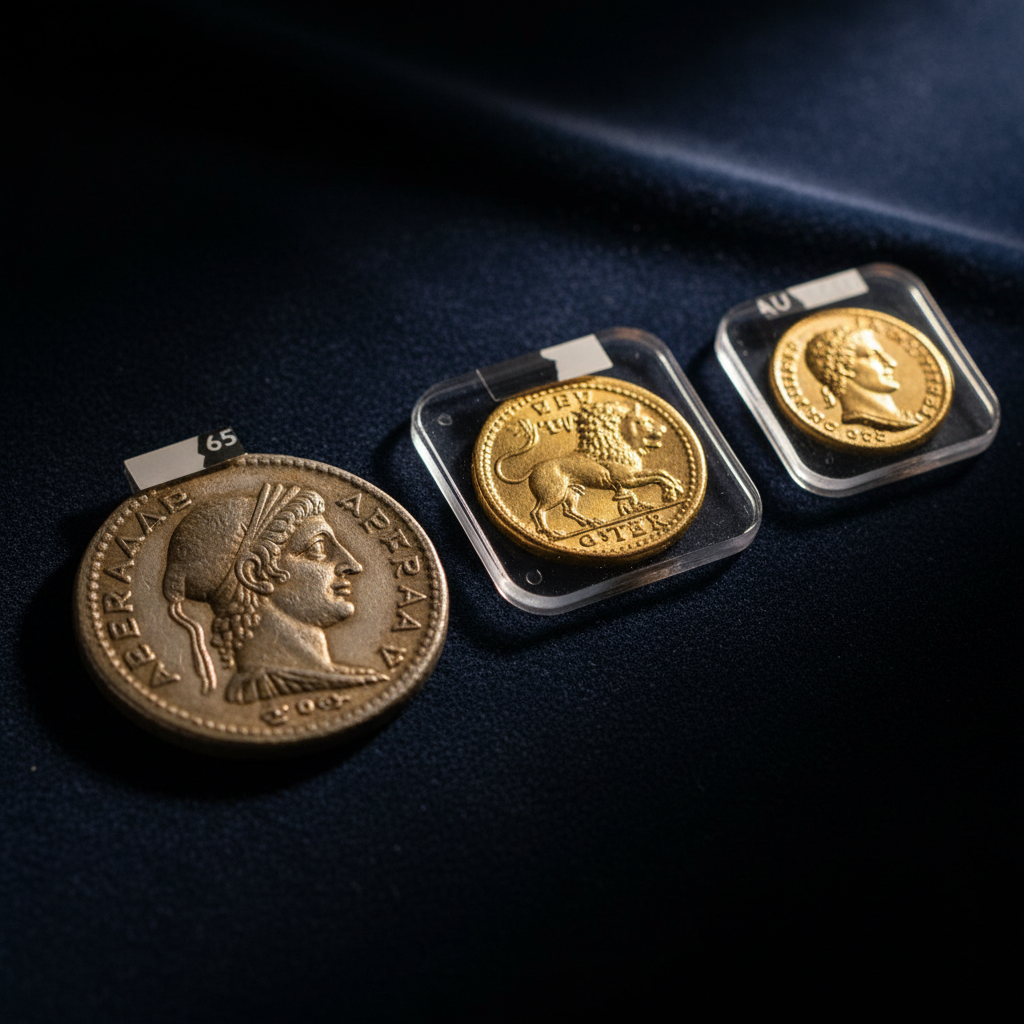
Fixed-price lists rarely generate excitement in the numismatic world. Most read like inventory dumps — bulk lots, common dates, filler material. Atlas Numismatics' latest release is not that. The firm just posted 589 coins, medals, and tokens to its website in a single update, and the breadth and caliber of the material puts it closer to a curated auction catalog than a dealer price list.
The inventory spans ancient Greek coinage, early modern European issues, and rare world gold — three categories that rarely overlap in a single release at this density. That's not an accident. Atlas has built its reputation on sourcing deeply, and this drop reflects a deliberate effort to serve collectors across multiple specialties simultaneously.
What's Actually on the Table
Ancient Greek material anchors the high end of the list. Greek bronzes and silver from the classical and Hellenistic periods have seen sustained demand over the past three years, driven partly by institutional collectors and partly by a new generation of buyers who entered through Roman coins and worked backward chronologically. The finest pieces in this category routinely benchmark against Heritage and Stack's Bowers auction results, and Atlas's fixed-price model offers something those venues don't: certainty. No bidding wars, no buyer's premiums eating 20% off the top.
The early modern European section is where things get particularly interesting for specialists. Gold ducats from the 15th through 18th centuries occupy a market segment that has quietly outperformed many more glamorous collectibles categories. Venice, the Habsburg territories, the Dutch Republic — these issues carry both numismatic significance and genuine art-historical weight. A high-grade Venetian ducat isn't just a coin; it's a primary source document for the economic history of the Mediterranean world. The collector base for this material skews knowledgeable and patient, which tends to support prices even in softer broader markets.
Certified, high-grade examples appear throughout the list. For world coins, third-party grading through NGC and PCGS has become increasingly standard on material above a certain value threshold, and the presence of slabbed coins here signals that Atlas is positioning this release toward serious buyers rather than casual browsers.
The Fixed-Price Advantage in a Volatile Market
Timing matters here. The broader rare coin market has been navigating a period of recalibration since the peak frenzy of 2021-2022, when pandemic-era liquidity drove prices on everything from Morgan dollars to ancient bronzes to levels that looked, in retrospect, unsustainable. The correction has been uneven — blue-chip ancients and top-tier world gold have held better than mid-grade U.S. type coins — but uncertainty remains.
In that environment, a fixed-price list from a reputable dealer carries real informational value. Atlas's prices function as a public statement about where the firm believes the market actually sits. Dealers who price aggressively in a soft market move inventory; dealers who price to the 2022 peak don't. The fact that Atlas is releasing 589 pieces at once suggests confidence that the material is priced to sell, not to sit.
For collectors who've been waiting on the sidelines, fixed-price inventory also eliminates the auction premium problem. At major houses, buyer's fees now typically run 20-25% on top of the hammer price. On a $5,000 coin, that's $1,000-$1,250 in fees alone. Dealer fixed-price — even at a seemingly higher sticker — often represents better all-in value once the math is done.
Museum-Level Is Not Marketing Language Here
The phrase gets thrown around carelessly in collectibles marketing. In this context, it's defensible. Ancient coins of genuine rarity and historical significance — pieces that in another era would have ended up in the cabinets of European institutions — do surface through the private dealer market, and Atlas has a track record of handling that tier of material.
The distinction matters because it affects how collectors should approach the list. This isn't a shopping cart experience. Pieces at the top end of a release like this reward research: checking auction archives on Coin Archives and acsearch.info, reviewing NGC and PCGS population reports for certified examples, and understanding where a specific type sits in the broader collecting hierarchy. The work is part of the value proposition.
589 lots. Ancient masterpieces to world gold. Fixed prices, no buyer's premium, and a firm with a reputation to protect. For collectors who specialize in any of these categories, this list deserves a serious look before the best pieces disappear — and on a release of this quality, the best pieces always disappear first.