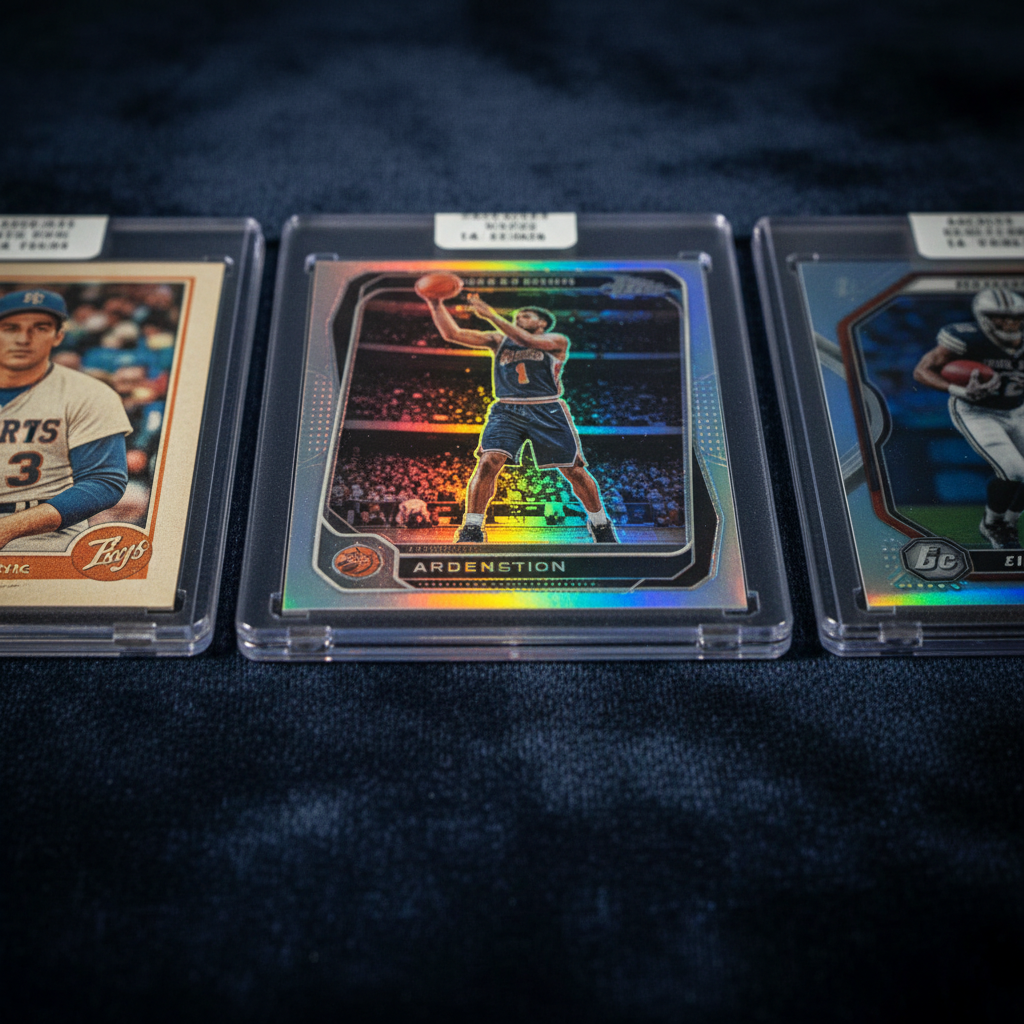
Every week, the market tells a story. Beckett's Hot/Cold list for the week of April 13, 2026 is the hobby's most-watched pulse check — a snapshot of which athletes are driving card demand and which are watching their cardboard cool in real time. For dealers and portfolio collectors alike, this list isn't just editorial flavor. It's a leading indicator.
What Moves the Needle
Beckett's weekly rankings are driven by a combination of on-field performance, off-field news, and raw transaction volume across the secondary market. A player who drops 40 points in a playoff game on Sunday will almost certainly appear on Monday's hot side. A star nursing an injury, sitting out a series, or mired in a slump gets the cold shoulder — sometimes brutally fast.
The April 13 window lands squarely in the heart of the MLB regular season's early stretch, the NBA and NHL playoff races, and the NFL offseason's most active transaction period. That convergence makes mid-April one of the most volatile weeks on the hobby calendar. Multiple sports competing for collector attention simultaneously tends to compress price movement — winners spike hard, losers get abandoned quickly.
Basketball rookie cards, in particular, have been hypersensitive to performance data this spring. The gap between a PSA 10 and a PSA 9 on a first-year player's Prizm base card can represent hundreds of dollars when that player is trending — and can evaporate just as fast if the news turns.
Reading the Cold Side Carefully
The cold list deserves as much attention as the hot one. Experienced collectors know that a player landing on the cold side isn't always a sell signal — sometimes it's a buy window. If a veteran with a deep, established card market hits a two-week slump and their Prizm autos drop 20%, that's not a collapse. That's an entry point.
The distinction matters. A rookie on the cold list is a different animal entirely. Early-career players haven't built the collector base that sustains prices through adversity. When a first- or second-year player underperforms and lands in the cold column, the downside can be sharp and prolonged. There's no nostalgia floor to catch the fall.
Seasoned dealers tend to cross-reference the Beckett Hot/Cold list against PSA and BGS population reports before making any moves. A hot player with a thin pop — say, fewer than 50 copies of their key rookie graded BGS 9.5 — represents a fundamentally different opportunity than a hot player whose cards exist in the thousands. Scarcity amplifies the momentum in both directions.
The Broader Market Context
The sports card market in spring 2026 is operating in a more disciplined environment than the froth of 2020–2021. Buyers are more price-conscious. Auction results on platforms like Goldin and Heritage Auctions have shown tighter bid spreads over the past two quarters, with fewer blowout results on mid-tier cards. The days of a raw, ungraded base card tripling its book value overnight are largely behind us.
What that means for the Hot/Cold list is that the signal is cleaner now. When a player genuinely moves the market in April 2026, it's because collectors with real conviction are buying — not because speculation is washing everything upward indiscriminately. A hot designation this week carries more informational weight than it did four years ago.
Conversely, the cold side stings more too. In a tighter market, liquidity dries up faster on names that lose momentum. A player who falls out of favor can see their cards sit unsold for weeks on platforms like PWCC or eBay's auction format, with sellers eventually cutting prices just to move inventory.
For the week of April 13, the smart play is the same as it always is: treat the hot list as a temperature gauge, not a buy order. Treat the cold list as a research prompt, not a panic button. The collectors who consistently outperform the market are the ones who use Beckett's weekly data as one input among many — not as the final word.
The market doesn't reward the fastest reaction. It rewards the most informed one.