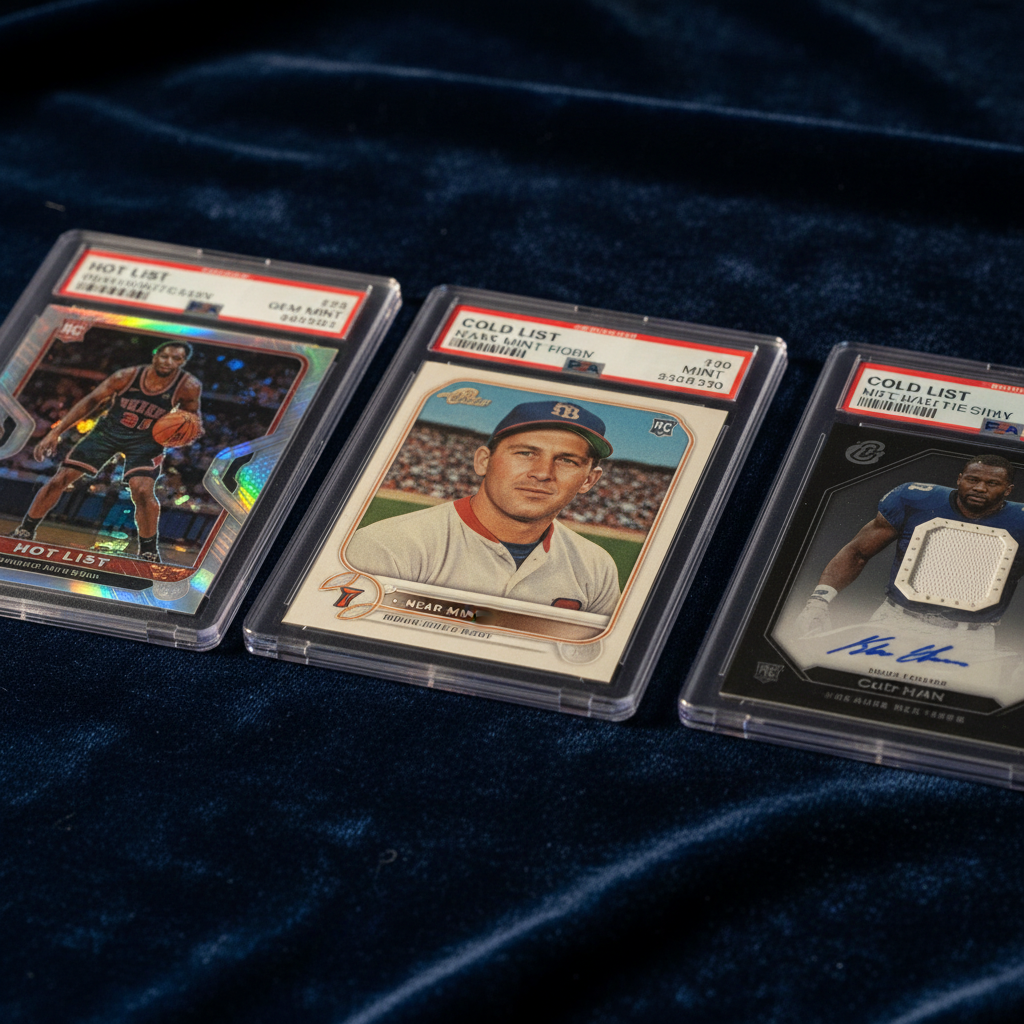
Every week, the Beckett Hot/Cold list functions as a real-time pulse check on the sports card market — and the edition dated March 30, 2026 is no exception. What moves onto the hot side isn't random. It tracks the intersection of on-field performance, mainstream media attention, and collector sentiment, which means savvy dealers can read these lists the way traders read pre-market indicators.
The list doesn't just reflect what happened last weekend. It predicts where speculative money flows next.
Reading the Heat: What the Hot Side Signals
When a player lands on Beckett's hot list, the downstream effect on raw and graded card prices is measurable and often immediate. A rookie who posts a breakout week — or a veteran who suddenly becomes a championship narrative — can see their PSA 10 population report become a battleground within 72 hours of the list dropping.
The March 30 edition arrives at a particularly volatile moment in the sports calendar. MLB Opening Day buzz is colliding with the tail end of the NBA regular season push, while NFL draft speculation is already injecting speculative energy into prospect cards. That's three major sports markets running simultaneously, and Beckett's editors have to make judgment calls about which storylines have actual card-market legs versus which are just social media noise.
Historically, players who appear on the Beckett hot list during a multi-week performance streak — rather than a one-game outlier — tend to sustain price elevation longer. A single viral moment might spike a card on eBay for 48 hours. A genuine hot streak, paired with Beckett validation, tends to hold value through a full grading cycle, which at current PSA turnaround times can run 30 to 60 days for standard service.
That lag matters enormously for collectors deciding whether to submit now or sell raw.
The Cold Side Is Where the Real Opportunity Hides
Contrarian collectors have known for years that the cold list is often more useful than the hot list. When a star player hits a slump, gets injured, or simply falls out of the news cycle, their cards cool — and that cooling creates entry points.
Consider the pattern: a player lands cold, their BGS 9.5 comps drop 15 to 25 percent on the secondary market over two to three weeks, and then — if the underlying talent is real — they recover. The collectors who bought during the cold window capture that recovery. The ones who chased the hot list paid peak prices and are now waiting out the correction.
This isn't speculation. It's a pattern that's played out with enough regularity across the past several years of Beckett hot/cold cycling that experienced dealers treat the cold list as a shopping guide.
The March 30 list, covering a week when several high-profile athletes are navigating injury reports and roster uncertainty, likely features some names whose card values have already softened at auction. Heritage and Goldin both run weekly and bi-weekly auctions where you can track real-time comp data — and cross-referencing those results against Beckett's cold designations reveals the discount window pretty clearly.
How Serious Collectors Should Use This Data
The Beckett Hot/Cold list is a starting point, not a conclusion. Treating it as gospel is a mistake. Treating it as one data layer among several — alongside PSA and BGS population reports, recent auction comps from PWCC and Goldin, and injury or performance news — is how professional dealers actually operate.
For the week of March 30, the broader market context matters too. The sports card market has been navigating a recalibration since the speculative peak of 2020 through 2021, and while blue-chip vintage has largely held its ground, modern rookie cards remain sensitive to short-term narrative swings. A player on this week's hot list who is a first- or second-year player in a contract year deserves more scrutiny than a ten-year veteran with an established collector base.
Population scarcity still drives long-term value more than any weekly sentiment list. A PSA 10 of a short-printed rookie parallel with fewer than 20 graded copies doesn't need Beckett's endorsement to hold value. But for mid-tier cards — the ones where supply is plentiful and demand is performance-driven — the hot/cold signal matters more than most collectors admit.
The March 30 list is live. Pull up your want list, cross-reference the cold names, and start doing the math. The window on cold-list discounts tends to close faster than it opens.