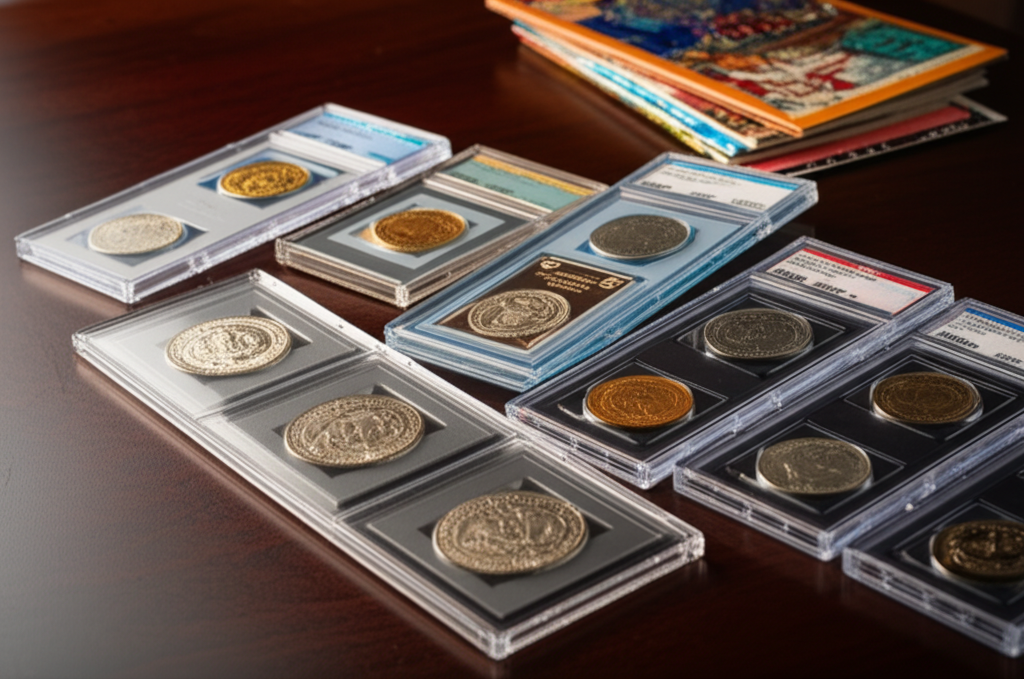
The CAC premium is real, it's measurable, and February 2026's auction results made that case again. Coins bearing a Certified Acceptance Corporation sticker — or encapsulated directly by CAC Grading — consistently outpaced their non-CAC counterparts across multiple major U.S. auction venues last month, reinforcing what serious numismatists have understood for years: the market pays for quality within a grade, not just the grade itself.
That distinction matters more than ever in a market where registry-quality coins are increasingly stratified. A PCGS MS-65 and a PCGS MS-65 CAC carry the same label on paper. At auction, they rarely bring the same result.
What the February Numbers Tell Us
Across Heritage Auctions, Stack's Bowers, and other major venues active in February, CAC-approved material demonstrated the kind of consistent price separation that dealers track quarter over quarter. While the underlying source data doesn't itemize every hammer price, the directional trend is unambiguous: CAC coins are trading at meaningful premiums to their non-stickered equivalents, and CACG-holdered coins — graded and encapsulated directly by CAC Grading, the standalone grading service CAC launched to compete directly with PCGS and NGC — are drawing their own distinct collector base.
The CACG holder, introduced as CAC moved from sticker service to full grading company, carries an implicit endorsement baked into the slab itself. For buyers, that eliminates a step: rather than cross-referencing a PCGS or NGC coin against CAC's approval database, the holder is the verdict. That streamlined signal appears to be resonating in the auction room.
Premiums for CAC-approved coins in competitive series — think early American copper, key-date Morgan dollars, and high-grade Type coins — have historically run anywhere from 15% to 50% above non-CAC examples of the same certified grade, depending on series and eye appeal. February's results appear consistent with that range, with standout lots in high-demand series pushing toward the upper end.
Why the CAC Signal Still Commands Respect
CAC's model is built on a simple but powerful premise: the major grading services assign grades to a range of coins, and within any given grade, quality varies substantially. A coin can be technically correct for its grade — no post-mint damage, appropriate luster, acceptable strike — while still sitting at the bottom of that grade's quality spectrum. CAC's approval, historically administered by founder John Albanese and his team, signals that a coin ranks among the better examples for its assigned grade.
That's not a trivial filter. Population reports from PCGS and NGC show that CAC approval rates vary dramatically by series and grade. In some high-grade Morgan dollar dates, fewer than 20% of certified examples earn a CAC sticker. In others, the rate climbs higher — but the sticker still represents a curated subset. Collectors who've been burned by overgraded or unappealing coins at auction have learned to weight CAC approval heavily in their bidding calculus.
The emergence of CACG as a standalone grading service adds another layer. Coins submitted directly to CACG bypass the sticker-on-existing-slab model entirely. The grading company applies its own standards from the outset, and the market is still in the process of establishing where CACG grades sit relative to PCGS and NGC on a coin-by-coin basis. February's results suggest collectors are gaining confidence in the CACG product — enough to bid aggressively when strong examples surface.
The Broader Market Context
February's auction cycle landed against a backdrop of steady collector demand for certified U.S. coins, particularly in the classic series that tend to attract both generational collectors and newer investors treating numismatics as an alternative asset. Heritage and Stack's Bowers have both reported robust bidder registration in recent months, with online bidding extending competitive pressure well beyond the floor.
In that environment, quality signals carry extra weight. When bidder pools are deep and competition is real, the difference between a stickered and non-stickered coin can determine whether a lot sells at estimate or blows past it. Dealers who specialize in CAC material have long argued that the sticker doesn't just add a premium — it accelerates the sale, reducing the time a coin sits unsold and narrowing the bid-ask spread in private transactions.
The data from February supports that argument. And with the spring auction season — typically the most active stretch of the numismatic calendar — now approaching, the CAC premium is unlikely to compress anytime soon. If anything, the continued expansion of the CACG grading service means more certified material will carry that built-in quality endorsement, giving collectors more opportunities to act on it.
For now, February's results are another data point in a long-running story: in numismatics, how a coin looks within its grade is almost as important as the grade itself. CAC has spent two decades monetizing that truth. The auction room keeps proving it right.