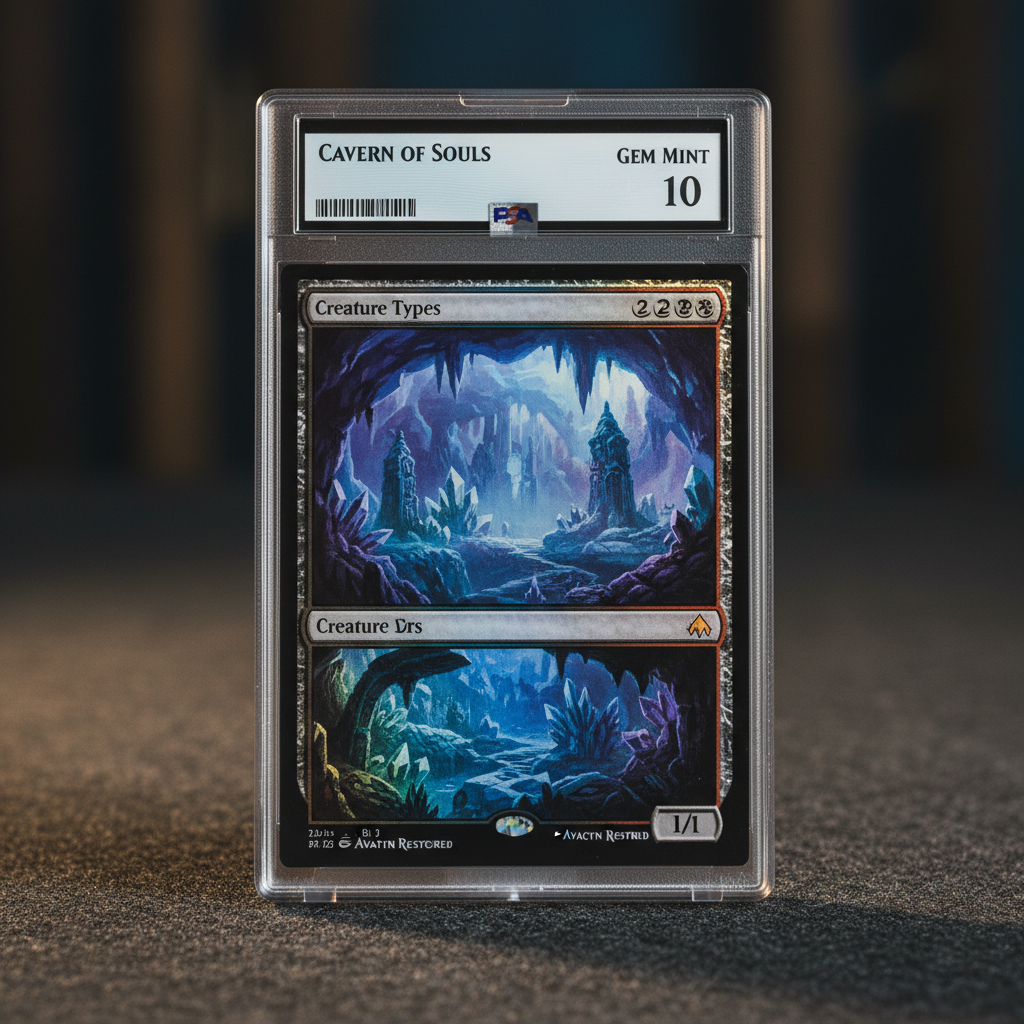
Nathan Steuer won Pro Tour Secrets of Strixhaven at MagicCon: Las Vegas last weekend with a Selesnya Landfall build that nobody had circled on their bingo card — and tucked inside that winning 75 was a single copy of Cavern of Souls, currently retailing around $55. One card. One tournament. Enough to remind the market exactly why this land has never stayed cheap for long.
The tournament narrative itself was a story of failed consensus. Izzet Prowess represented over 30 percent of the field entering the weekend, the kind of metagame dominance that typically writes its own ending. It didn't. Five of the Top 8 players were on base-green strategies, and Steuer's Landfall list was the last one standing. When a creature-heavy green deck wins the most-watched Magic tournament of the season, every card in that 75 gets a second look. Cavern of Souls — already a multi-format staple — is getting more than a second look right now.
Why Cavern Commands a Premium
For the uninitiated: Cavern of Souls enters the battlefield, you name a creature type, and mana spent on creatures of that type becomes uncounterable. In formats where blue counterspells define the competitive ceiling, that ability is not a luxury. It's a necessity. The card has been a four-of in creature-centric Modern and Legacy strategies for years, and its presence in Pioneer has grown steadily as that format matures.
The original Avacyn Restored printing from 2012 established the floor for this card's cultural weight, but collectors and investors are increasingly focused on the Ultimate Masters box topper version and the The List reprint, which have created a tiered market with meaningful price separation. A raw Avacyn Restored copy in Near Mint condition sits in the $50–$58 range across major marketplaces. A PSA 10 graded copy of the original has cleared $200 at auction — a premium that reflects both condition scarcity and the card's enduring tournament relevance.
Reprints have historically pressured Cavern's price ceiling without ever collapsing it. The card has been reprinted four times across various products, and it still trades above $50. That's a signal about demand depth, not reprint immunity.
The Budget Landscape Below $55
The real market story here isn't Cavern itself — it's the ripple effect. Every time a format-defining land spikes or reaffirms its value after a major tournament, budget-conscious players and collectors start hunting functional alternatives. And there are legitimate options worth understanding, even if none of them replicate Cavern's specific text.
Unclaimed Territory is the most direct comparison: same mana-fixing for tribal strategies, minus the uncounterability clause. It retails under $1 in most printings. For kitchen table Magic or budget Pioneer builds, it does most of the job at a fraction of the cost. Secluded Courtyard from Kamigawa: Neon Dynasty offers similar functionality and has barely registered above $0.50 despite seeing real tournament play.
Pillar of the Paruns occupies a narrower niche but deserves mention for multicolor creature-heavy builds in Legacy and Cube environments. Ancient Ziggurat is another tribal-specific land that predates Cavern by four years and still trades under $3 for its Conflux printing.
For collectors specifically — not players — the more interesting angle is whether Cavern's post-tournament momentum creates a buying window on graded copies before the next reprint announcement. The card was included in Double Masters 2022, which briefly softened prices before demand absorbed the supply. If Wizards of the Coast follows its recent pattern of reprinting high-demand staples in premium products, a PSA 10 original Avacyn Restored copy at current auction levels could look like a reasonable hold.
Reading the Tournament Card Market
Pro Tour results move Magic card prices faster than almost any other event in the hobby. The effect is usually sharpest in the 48-to-72-hour window after coverage ends, when retail sites update their buylist prices and speculators move first. By the time a card appears in mainstream collector coverage, the initial spike has often already happened.
Cavern of Souls didn't spike dramatically off this result — it was already expensive, and Steuer's list only ran one copy, which limits the perceived demand signal. What the tournament did was validate the archetype and remind the market that Cavern belongs in winning lists. That's a different kind of price pressure: slow, sustained, and harder to trade against.
For dealers, the practical implication is straightforward. Buylist prices on Cavern of Souls in high grades will likely firm up over the next few weeks. For collectors sitting on PSA 9 or 10 copies of the Avacyn Restored original, this is a reasonable moment to reassess whether you're holding a player card or an investment — because right now, it's functioning as both.
Steuer's trophy doesn't change Cavern's fundamental value proposition. It just reminded everyone that the card earns its $55 price tag every single time a creature deck wins a major event. And creature decks win major events with remarkable regularity.