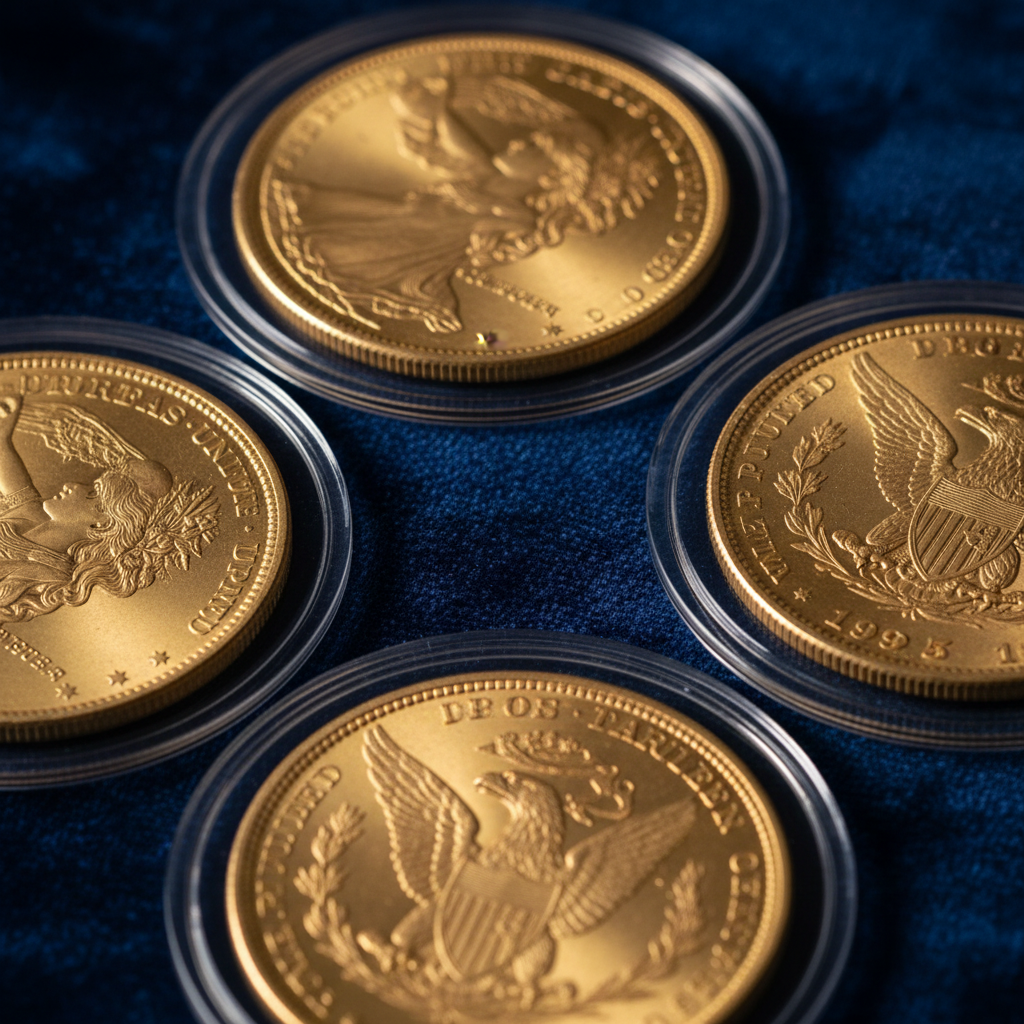
There are rare coins, and then there are Classic Proof US gold coins. Struck from 1821 through 1915, they represent one of the most demanding — and rewarding — collecting pursuits in American numismatics. Not because they're simply old or simply expensive, but because they sit at the intersection of extreme rarity, extraordinary artistry, and a historical record that forces even veteran specialists to stay humble.
Jeff Garrett, one of the most respected voices in rare U.S. coinage, has made the case that few areas of the hobby match this series for prestige and complexity. He's right. And the auction data backs him up.
What Makes Proof Gold So Different
The U.S. Mint produced Proof coins primarily for collectors, diplomats, and dignitaries — not for circulation. The production process involved hand-polished dies, carefully prepared planchets, and multiple strikes at slower press speeds to achieve that mirror-like field and frosted device contrast that defines a true Proof. The result was a coin built to be looked at, not spent.
For the gold series specifically, surviving populations are brutally thin. An 1821 Proof half eagle — one of the earliest in the classic series — may have a known population measured in single digits. Even the more commonly encountered late 19th-century issues, such as Proof double eagles from the 1880s and 1890s, rarely see more than a few dozen survivors across all grades. Compare that to a key-date Morgan dollar, where even the toughest issues often have populations in the hundreds at major grading services. Proof gold operates in a different universe entirely.
PCGS and NGC combined population reports for many Proof gold issues show total graded examples in the range of 10 to 50 coins — and that includes duplicates from resubmissions. For some dates, the entire known universe of survivors could fit comfortably around a dinner table.
The Market: Unforgiving, Uncompromising, Rewarding
Heritage Auctions and Stack's Bowers handle the lion's share of significant Proof gold transactions, and the prices realized at major sales reflect just how seriously advanced collectors treat this series. A PR65 Cameo Proof Liberty Head double eagle from a desirable late-19th-century date can clear $75,000 to $150,000 depending on eye appeal and provenance. Exceptional Cameo or Deep Cameo designations — which PCGS and NGC award to coins with pronounced contrast between fields and devices — can push prices well beyond that range.
The 1907 Ultra High Relief double eagle, while technically a pattern, illustrates the ceiling of what collectors will pay for extraordinary Proof-quality U.S. gold: examples in top grades have sold for well over $2 million at major auction. The classic Proof series doesn't reach those heights on every transaction, but the trajectory for premium-grade, problem-free examples has been consistently upward over the past two decades.
What drives the market isn't speculation — it's genuine scarcity meeting genuine demand. The collector base for this material is small, sophisticated, and patient. These are buyers who understand that a PR64 Cameo in a PCGS or NGC holder with solid provenance — say, a Pittman Collection or Eliasberg pedigree — is a generational asset, not a flip.
Pedigree matters enormously here. The Louis Eliasberg Collection, dispersed by Bowers and Merena in 1982, remains the gold standard against which all Proof gold collections are measured. Eliasberg assembled the only complete collection of U.S. coins by date and mint mark ever put together. Coins traced back to that sale carry a premium that has only appreciated over time.
Building a Collection: Strategy Over Speed
For collectors approaching this series, the challenge isn't just financial — it's logistical. Many dates simply don't appear at auction for years at a stretch. A collector targeting a complete set of Proof Liberty Head eagles, for instance, might wait three to five years for a single key date to surface in acceptable condition. Patience isn't a virtue in this hobby; it's a prerequisite.
Grade standards are unforgiving. A Proof coin with any trace of cleaning, improper wiping, or environmental damage will be body-bagged or net-graded by PCGS and NGC — and rightly so. The difference between a PR63 and a PR65 in this series can represent a price gap of 300% to 500% on the same date. Eye appeal — the intangible that no grading number fully captures — is everything.
The practical advice for serious buyers: work with a specialist dealer who handles Proof gold regularly, study the major auction archives at Heritage and Stack's Bowers to internalize what premium examples actually look like, and resist the temptation to settle for a problem coin just to fill a hole. In a series this thin, a compromised example rarely becomes a stepping stone — it becomes a permanent regret.
Classic Proof US gold coins have humbled some of the most accomplished collectors in the hobby's history. That's not a warning. That's the appeal.