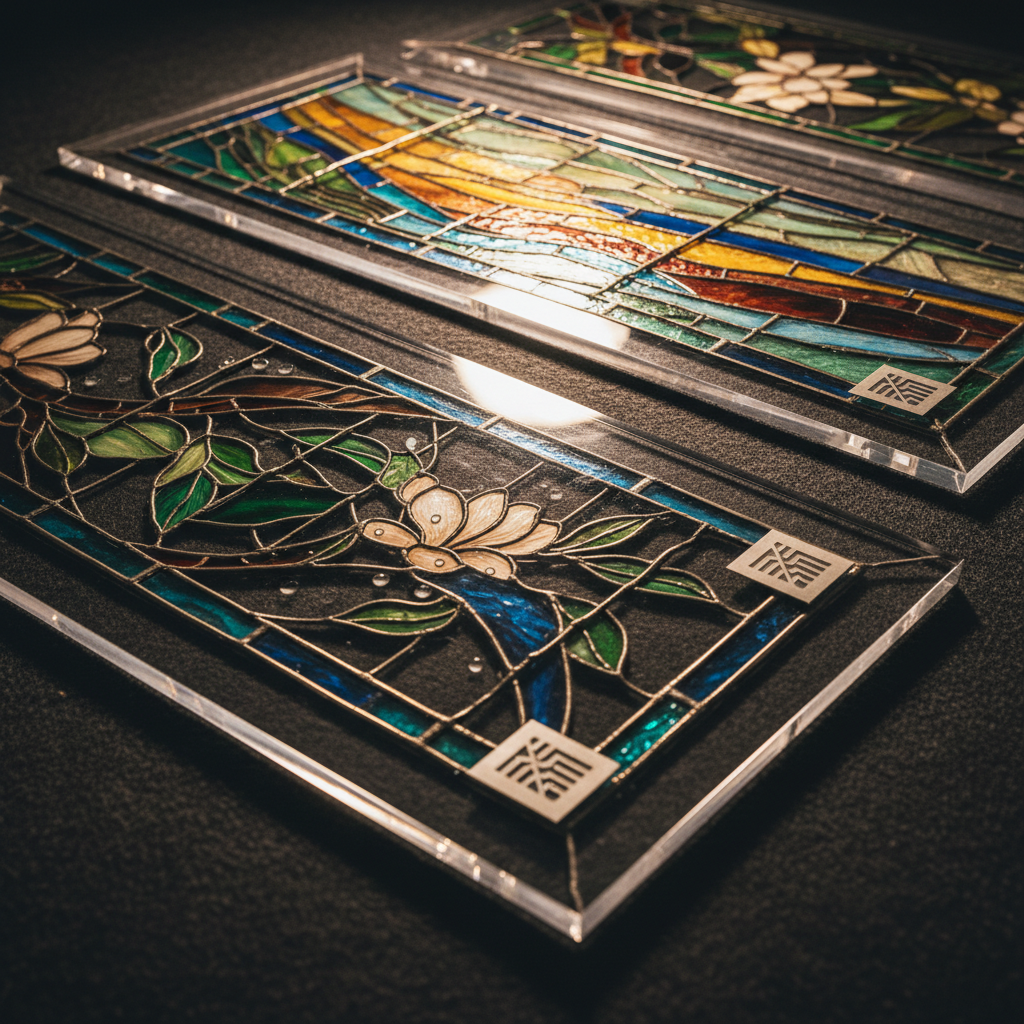
Two Tiffany Studios stained-glass windows are now permanently installed at Crystal Bridges Museum of American Art in Bentonville, Arkansas — a quietly significant acquisition moment that signals where the museum's curatorial ambitions are heading as it prepares for a broader gallery expansion.
Tiffany glass doesn't sit still on the market for long, and it doesn't come cheap. Windows from Tiffany Studios — the workshop Louis Comfort Tiffany operated from 1902 until its bankruptcy in 1933 — have commanded staggering sums at auction for decades. A monumental Tiffany window sold through Christie's for over $2 million as far back as the early 2000s, and the floor on museum-quality architectural pieces has only moved higher since. The secondary market for Tiffany decorative works remains one of the most liquid in American antiques, with Heritage Auctions and Sotheby's regularly fielding six- and seven-figure results on major leaded glass panels.
Why Tiffany Still Commands the Room
The cultural weight of Tiffany Studios work is difficult to overstate. At the height of the Gilded Age and into the early 20th century, a Tiffany window wasn't decoration — it was a statement of institutional permanence. Churches, mausoleums, libraries, and private estates commissioned them as legacy objects. That context is exactly what makes them so compelling as museum acquisitions: they arrive pre-loaded with narrative.
For collectors and dealers tracking the decorative arts market, Tiffany glass occupies a tier alongside Arts and Crafts furniture and American Impressionist painting — works where provenance, condition, and documentation drive value more than almost any other variable. A window with intact original leading, documented studio provenance, and no restoration to the glass itself can carry a premium of 40–60% over comparable pieces with repair history. Condition here is everything, and museums have the conservation infrastructure to maintain it properly.
Crystal Bridges, funded by Walmart heiress Alice Walters and opened in 2011, has built one of the more aggressive American art acquisition programs in the country over the past decade. The museum's collection spans Hudson River School landscapes, American modernism, and contemporary work — a deliberately wide net that positions Tiffany's decorative arts tradition as a natural connective thread between 19th-century craft and early 20th-century design philosophy.
Placement in the Visions of America Galleries
The two windows have been installed in the museum's Visions of America galleries, which serve as the interpretive spine of Crystal Bridges' permanent collection. Placing architectural glass in that context is a deliberate editorial choice — it frames Tiffany not merely as a decorative curiosity but as a central figure in how American visual culture developed between the Civil War and World War I.
That framing matters. The collectibles and antiques market has long treated Tiffany Studios work as a blue-chip category, but museum placement reinforces institutional validation in ways that affect downstream auction values. When a comparable work surfaces at Bonhams or Heritage and the catalog notes that similar pieces reside in major museum collections, bidders respond. Institutional acquisition doesn't just preserve objects — it anchors their market position.
The timing is deliberate. Crystal Bridges has signaled an upcoming gallery expansion, and installing the Tiffany windows now establishes a visual and thematic anchor for whatever programming follows. Museums don't make these moves casually. Architectural glass of this scale requires custom mounting infrastructure, climate and light management, and long-term conservation planning. The investment in installation alone suggests these windows are intended as centerpieces, not footnotes.
What the Collector Market Should Take From This
For serious collectors of American decorative arts, this installation is a data point worth filing. Institutional interest in Tiffany Studios work has never really waned, but moments like this — a well-capitalized, nationally prominent museum making a public commitment to the category — have a way of pulling fence-sitters off the sidelines at auction.
The supply side is structurally constrained. Tiffany Studios produced windows for roughly three decades before closing, and a meaningful percentage of surviving architectural pieces are already in churches, museums, or private collections with no near-term likelihood of coming to market. When significant examples do surface — through estate sales, church deaccessions, or the occasional private collection dispersal — the bidding tends to be fierce and the results tend to make headlines.
Crystal Bridges just reminded the market that the demand side is very much intact. The next time a Tiffany window of comparable quality hits the block, expect the room to remember that.