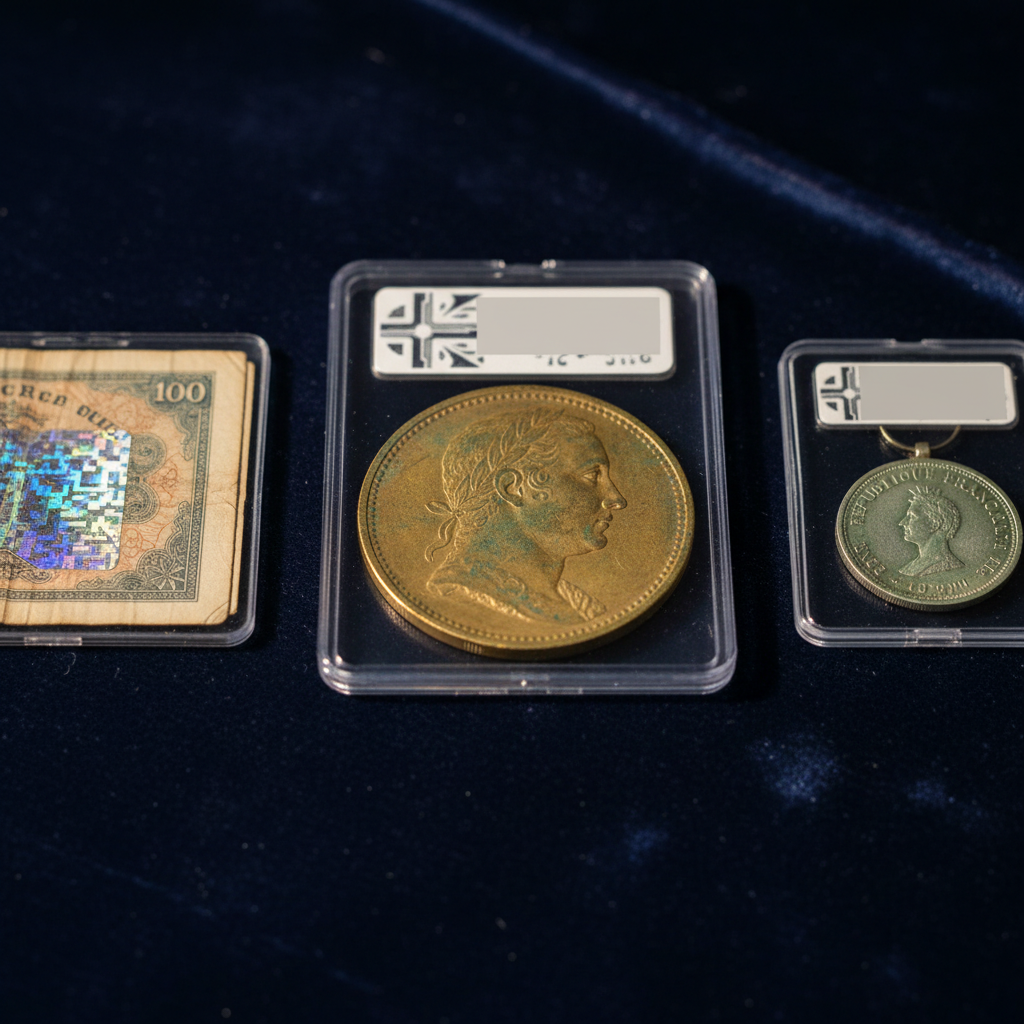
He had no printing press operation, no criminal syndicate, no offshore accounts funneling proceeds through shell companies. Czeslaw Bojarski worked alone — and that, more than anything else, is what made him one of the most dangerous counterfeit currency operators of the 20th century.
PMG (Paper Money Guaranty), the preeminent third-party grading service for world banknotes, has spotlighted Bojarski's story as part of its ongoing effort to educate collectors and dealers about the history of paper money fraud. For anyone who handles vintage currency — whether at auction, through a dealer network, or in a private collection — understanding how sophisticated forgeries enter the market is not academic. It is operational intelligence.
The Anatomy of a One-Man Forgery Operation
Most large-scale counterfeiting cases involve infrastructure: teams of engravers, distributors, and money launderers. Bojarski dispensed with all of it. His forgeries targeted French banknotes, and by working in isolation, he eliminated the single greatest vulnerability in any criminal enterprise — other people.
The tradecraft required to produce convincing period currency is staggering. Intaglio printing, paper composition, ink chemistry, serial number sequencing — every variable has to be right simultaneously. Professional counterfeiters working with full teams and industrial equipment have failed to clear that bar. Bojarski, operating without those resources, reportedly cleared it well enough to circulate his notes successfully before detection.
That achievement puts him in rare company historically. The most celebrated counterfeiting case in modern history remains Operation Bernhard, the Nazi-era program that forced concentration camp prisoners — many of them skilled printers and engravers — to produce forged British pound notes at scale. Even that operation, with its vast state resources, produced notes with detectable flaws under expert scrutiny. Bojarski's solo effort, by contrast, underscores how much individual skill can compensate for institutional backing.
Why PMG's Documentation Matters to Collectors
PMG grading holders are ubiquitous in the serious currency market. The service grades notes on a 70-point scale, with designations ranging from Poor (1) through Gem Uncirculated (65–70), and its authentication process is the primary line of defense against altered or counterfeit notes entering certified slabs. Heritage Auctions, Stack's Bowers, and virtually every major currency auction house require or strongly prefer PMG-certified material for high-value lots.
When PMG publishes historical content on counterfeiting — particularly cases involving the specific currencies it grades — it is sending a signal to the market. Collectors of French franc notes from the mid-20th century should be paying attention. Bojarski's forgeries, if they exist in collections today, may do so without anyone knowing it. Pre-certification notes purchased decades ago at estate sales, through private treaty, or at smaller regional auctions represent the highest-risk inventory.
The authentication challenge is compounded by age. Paper degrades. Ink fades. A note that looked suspicious in 1970 may look entirely period-correct in 2025 simply because genuine notes have caught up to it in wear. This is precisely the kind of nuance that separates PMG's expert authentication from a casual dealer inspection.
The Collector's Paradox — Forgeries as Collectibles
Here is where the story takes an unexpected turn for the currency collecting community: documented, authenticated forgeries carry their own market value. A Bojarski-attributed note, properly identified and certified as a period counterfeit, is a numismatic artifact in its own right. It represents a piece of criminal and monetary history that no legitimate mint ever produced.
PMG grades and encapsulates known forgeries with appropriate notations, and these pieces trade actively among specialists. The market for historical counterfeit currency is niche but real — driven by the same collector impulse that makes error coins and inverted stamps among the most sought-after pieces in philately and numismatics. Rarity plus story equals value, and Bojarski's notes carry both.
Stack's Bowers has handled authenticated forgeries at auction. Heritage's currency division has seen similar material move through its platform. Prices vary enormously depending on attribution quality, condition, and the historical documentation accompanying the piece — but a well-documented Bojarski note with PMG certification and clear provenance would represent genuinely scarce material.
The irony is not lost on anyone in this market: the man who spent his career trying to make his notes indistinguishable from the real thing would find that the most valuable versions of his work are precisely the ones that have been identified as his.