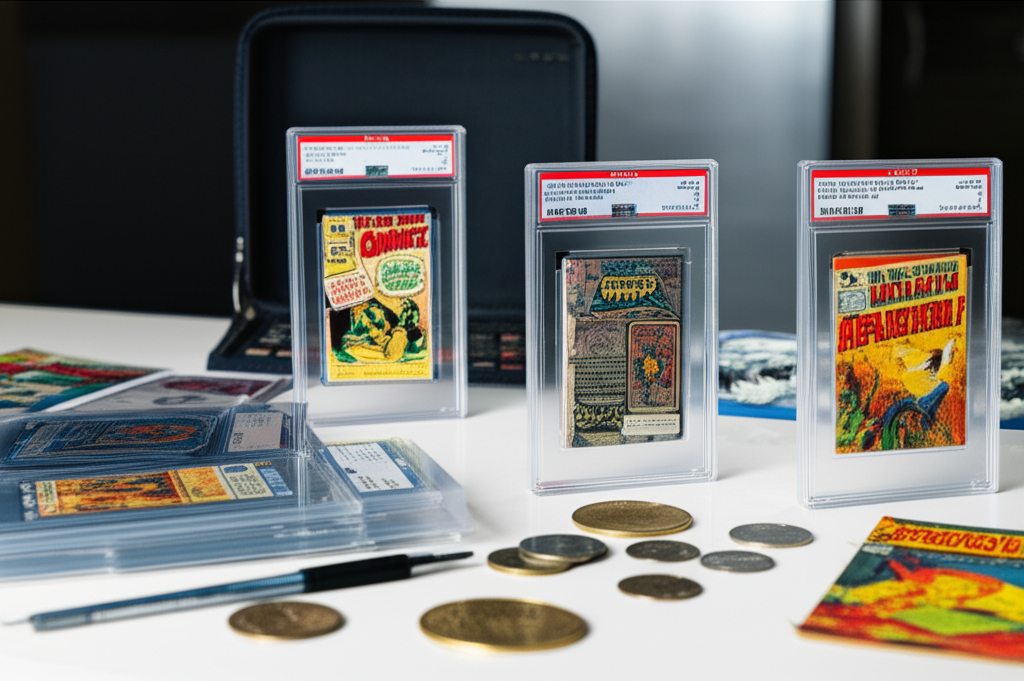
Mint-error attribution is never simple, but feeder mechanism damage occupies a particularly thorny corner of the discipline. For roughly 45 years — from 1945 through approximately 1990 — U.S. and foreign mints ran coining operations with overlapping press generations, multiple feeder system types operating simultaneously, and documentation practices that ranged from sparse to nonexistent. The result, as numismatic researcher Pete Apple details in a new technical study published by CoinWeek, is a category of die damage that remains stubbornly resistant to clean attribution even for experienced error specialists.
That ambiguity has real market consequences. A coin that can be definitively attributed to a specific feeder-related die failure commands a meaningful premium over one logged simply as die damage, cause unknown. The difference between a confident attribution and a shrug can easily swing a coin's realized value by 30 to 50 percent at auction — and for high-grade examples of scarce die-damage varieties, the spread can be far wider.
What Feeder Damage Actually Looks Like
Feeder mechanisms move planchets from a hopper into the coining chamber at high speed and high volume. When something goes wrong — a misaligned feed finger, a worn track, debris in the system — the die itself can bear the consequences. The damage patterns that result vary by press type and era, which is precisely what makes attribution so difficult.
Rotary feeders, common in the postwar period, tend to produce recurring contact marks in predictable radial patterns on the die face. Straight-line or reciprocating feeders generate a different signature: linear striations or impact marks that cluster near the die's working surface edge. On the struck coin, these translate to raised lines, recessed gouges, or repeating texture anomalies that appear consistently across multiple examples from the same die marriage — the key diagnostic indicator that separates a die-damage variety from a one-off post-mint scratch.
Consistency across multiple specimens is the evidentiary standard. A single coin with an unusual mark proves nothing. Find the same mark in the same die position on a dozen coins, and you have a variety worth cataloguing.
Why the 1945–1990 Window Is So Complicated
The postwar era was a period of significant mechanical transition at the major mints. Philadelphia, Denver, and San Francisco were not running uniform equipment. Press modernization happened in waves, not all at once, and older machines often ran alongside newer ones for years. The practical effect is that two coins struck in the same year, even at the same facility, could carry die-damage signatures from entirely different feeder architectures.
This is where Apple's research makes its most important contribution. Rather than attempting to build a universal feeder-damage taxonomy — which the incomplete documentation makes impossible — the study advocates for a press-specific, evidence-first approach. Attribute what you can confirm. Flag what you can't. Don't force a coin into a category just to give it a label.
For collectors and dealers, that methodological honesty is actually useful. The error coin market has a long history of overclaiming attribution, and coins with inflated or unverifiable designations have a way of correcting themselves at auction. A NGC MS-64 or PCGS MS-65 holder with a vague die-damage notation is not the same asset as one carrying a specific, documented attribution — and sophisticated buyers increasingly know the difference.
Market Implications for Error Collectors
The practical takeaway for anyone buying or selling feeder-damage varieties from this era is due diligence at the primary source level. Population reports from PCGS and NGC track die-damage designations, but the labels themselves vary in specificity. Some coins in these holders carry detailed attribution notes; others carry only the broadest possible description. Before paying a premium for a feeder-damage variety, examine die-position consistency across known examples and cross-reference against published die studies where they exist.
Heritage Auctions and Stack's Bowers both maintain searchable archives of realized prices for error coinage, and the spread between well-attributed and vaguely attributed examples in the same grade is instructive. For a mid-century Lincoln cent with a confirmed rotary-feeder die gouge, a PCGS MS-64 Red can push well past $500 in competitive bidding. The same coin with only a generic die-damage note in the same grade might clear $150 on a good day.
Apple's study doesn't resolve the attribution problem — the missing documentation from this era is simply gone. But it gives researchers and collectors a cleaner framework for working within the uncertainty rather than pretending it doesn't exist. In a market where confident-sounding but thin attributions have cost collectors real money, that kind of intellectual honesty is worth more than it might appear.
The error coin market rewards patience and specificity in equal measure. Feeder-damage varieties from the postwar decades are no exception — and the collectors who do the homework will keep outperforming the ones who don't.