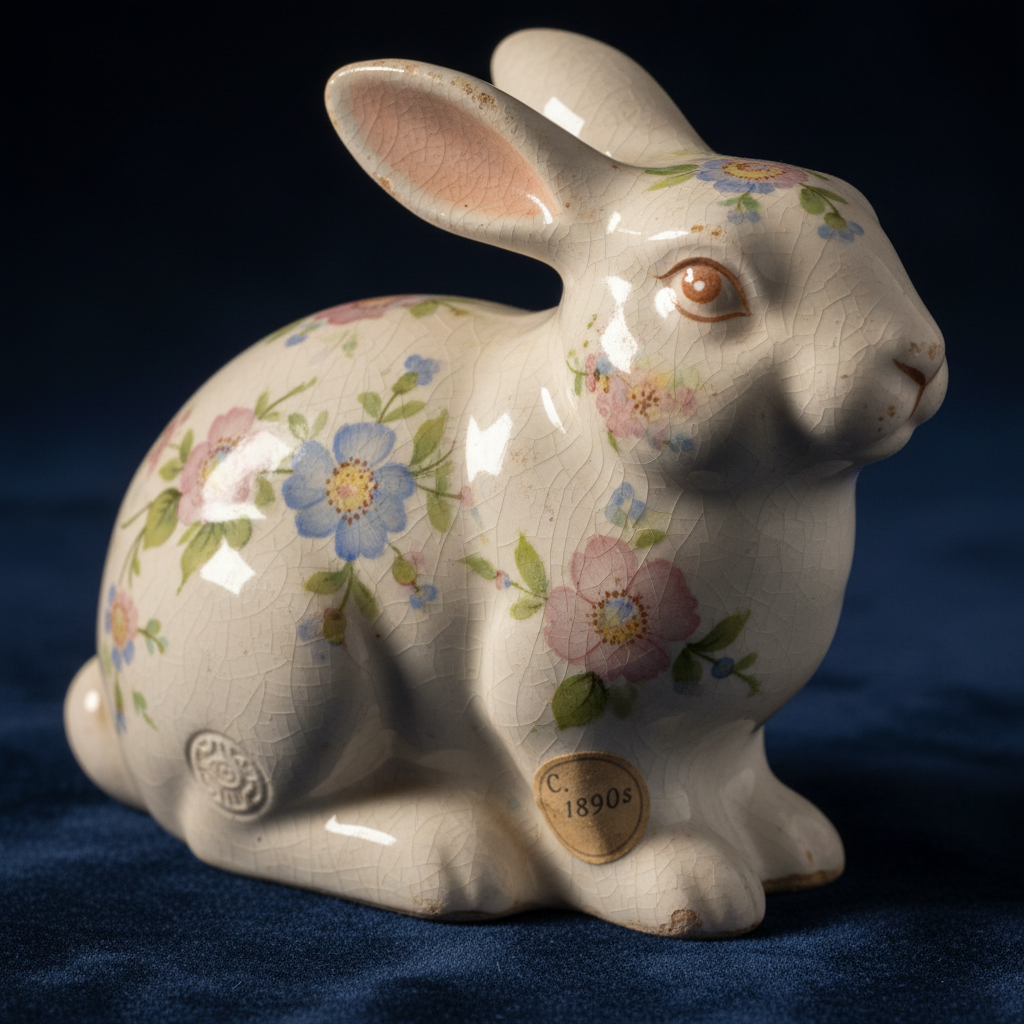
Easter ceramics occupy a peculiar and underappreciated corner of the antiques market — seasonal enough to keep prices accessible, decorative enough to attract serious buyers, and varied enough that a focused collection can span centuries of craft traditions. From German bisque rabbit figurines produced before World War I to mid-century American pottery in the chalky pastels that defined postwar domestic taste, the category rewards patience and specificity.
Dealers at major antique shows report consistent demand for quality Easter pieces in the $40–$400 range, with exceptional examples — particularly pre-1920 German and Austrian imports — regularly clearing $500 to $1,200 at regional auction. The ceiling climbs considerably for rare religious pieces or signed studio pottery.
The Hierarchy of Easter Ceramics
Not all Easter ceramics are created equal, and experienced collectors know exactly where the value lives. German bisque figures, produced primarily between 1880 and 1914 in the Thuringian and Bavarian regions, represent the gold standard. These hand-painted rabbit and chick figurines feature a matte, unglazed finish that distinguishes them immediately from later, shinier reproductions. Condition is everything — chips to ears or feet, the most vulnerable points, can slash value by 50% or more. A pristine 6-inch German bisque rabbit in original paint commands $300–$600; the same piece with a repaired ear might fetch $80.
Below bisque in the collector hierarchy sits majolica, the tin-glazed earthenware that surged in popularity during the Victorian era. Easter-themed majolica — egg cups, serving dishes, centerpiece bowls adorned with chicks and spring florals — was produced in quantity by English makers like Minton and George Jones, as well as by American potteries including Griffen, Smith & Hill. Signed Minton majolica Easter pieces in excellent condition regularly appear at Heritage Auctions and Morphy Auctions in the $200–$800 range. Unsigned American examples are more accessible, typically $75–$250.
Then there's the vast middle market: American art pottery from the 1920s through 1950s, including pieces from Shawnee, McCoy, and Hull. These are the workhorses of the Easter ceramics world — widely collected, relatively affordable, and still capable of surprising at auction when a rare colorway or form surfaces. A McCoy rabbit planter in standard yellow glaze might sell for $35–$60. The same form in an unusual green or blue? Closer to $150–$200.
Religious Iconography and the Overlooked Tier
The segment most casual collectors ignore entirely is Easter ceramics rooted in religious iconography — pieces depicting the Resurrection, the Lamb of God, or liturgical symbols like the Chi-Rho. These were produced primarily in Catholic-majority regions of Europe, particularly Poland, Italy, and southern Germany, and imported to the United States in significant quantities through the early 20th century.
Polish hand-painted ceramic eggs, known as pisanki, represent a distinct collecting category that bridges folk art and holiday decoration. Authentic antique examples — pre-1950, hand-painted rather than transfer-printed, with provenance suggesting European origin — can reach $100–$300 individually. Sets in original boxes command premiums. The challenge is authentication: the pisanki tradition remains alive, and contemporary pieces are produced in Poland and Ukraine at scale, making it easy for novice collectors to overpay for modern work.
Italian majolica religious pieces from the same era tend to be more formally decorated and more expensive, reflecting both the craftsmanship and the relative scarcity of pieces that made the Atlantic crossing intact. A well-preserved Italian majolica Agnus Dei plaque from the late 19th century is a serious antique, not a seasonal novelty — and it should be priced accordingly.
Buying Smart in a Niche Market
The Easter ceramics market has one significant structural advantage for buyers: it is deeply seasonal, which creates predictable pricing inefficiencies. Pieces listed in October or November — when holiday decorating is nowhere near anyone's mind — routinely sell for 20–40% less than identical examples offered in February or March. Savvy collectors shop off-season. Always.
Condition grading in this category is informal compared to the structured scales used in cards or coins, which means buyers need to develop their own eye. Surface crazing (fine cracks in the glaze) is generally acceptable and expected in older pieces. Repairs, repaints, and replaced parts are not — and they are not always disclosed. Under UV light, repairs and touch-ups in ceramics fluoresce differently than original glaze, a technique any serious buyer should employ before committing to a significant purchase.
The market for Easter ceramics isn't going to make anyone rich overnight. But as a collecting category, it offers genuine depth — historical range, regional variation, the interplay of folk tradition and commercial production — at price points that remain, for now, remarkably sane. In a hobby where a graded trading card can cost more than a car, that's not nothing.