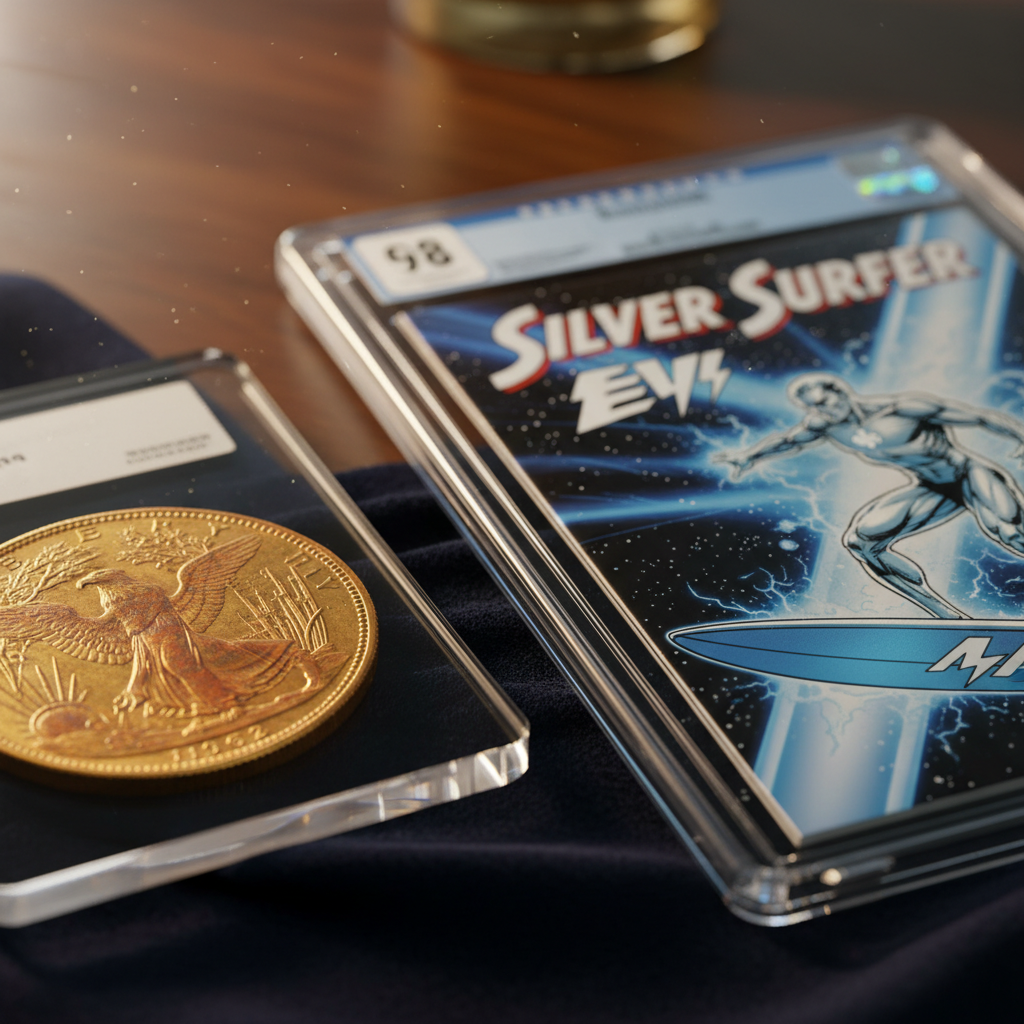
Gold's most reliable tailwind — the prospect of Federal Reserve rate cuts — has gone quiet. With Fed policymakers split on the timing and scale of any 2026 easing cycle, the metal that thrives on falling real yields is stuck waiting for a catalyst that may not arrive on schedule. Meanwhile, silver is finding support from an entirely different corner of the global economy: Europe's accelerating shift to electric vehicles.
The divergence between the two metals is sharpening, and for collectors and investors who hold bullion, numismatic gold, or silver-heavy portfolios, the macro picture right now is anything but unified.
Gold's Rate-Cut Story Is Getting Complicated
Precious metals analysts at Heraeus — one of the world's largest precious metals refiners and a closely watched voice in the institutional market — have flagged the Fed's internal divisions as a meaningful headwind for gold in the near term. The logic is straightforward: gold doesn't pay yield, so it becomes relatively more attractive when interest rates fall and the opportunity cost of holding it shrinks. A divided Fed that can't commit to a clear easing path removes that fuel from the equation.
That's a problem for gold bulls who spent much of 2024 pricing in aggressive cuts that never fully materialized. Gold hit an all-time nominal high above $2,700 per troy ounce in late 2024, driven partly by rate-cut optimism and partly by central bank accumulation — particularly from emerging market central banks diversifying away from dollar reserves. But that central bank bid, while still present, isn't infinite. And without a clear Fed pivot, the speculative premium baked into current prices looks fragile.
For numismatic collectors, this matters in a specific way. The bullion floor beneath high-grade U.S. gold coinage — Saint-Gaudens Double Eagles, Liberty Head Eagles, pre-1933 issues — is partly a function of spot prices. When gold stalls, the spread between melt value and collector premium can compress or expand depending on demand, but the underlying asset isn't doing the heavy lifting. Coins that have been riding the bullion wave need collector conviction to hold their auction prices if spot softens.
Silver's Industrial Argument Is Real — But Incomplete
Silver's situation is more nuanced. Europe's EV market is providing genuine industrial demand support, and that's not a trivial point. Silver is a critical component in photovoltaic cells and EV electrical systems — the metal's conductivity makes it effectively irreplaceable in certain applications at current technology levels. As European automakers accelerate electrification timelines under regulatory pressure, silver demand from that sector has a structural tailwind that doesn't depend on Fed policy or investor sentiment.
That's the good news. The complication, also flagged by Heraeus analysts, is that investment demand through silver-backed ETFs is weakening. ETF flows are a proxy for institutional and retail investor appetite, and when they're heading in the wrong direction, industrial demand alone rarely drives sustained price appreciation. Silver was trading in the $29–$31 per troy ounce range through much of early 2025, well below its 2011 peak near $50 and its brief 2020 spike above $29 driven by retail speculation.
The metal is essentially caught between two forces pulling in opposite directions — industrial tailwinds and investment headwinds — which tends to produce sideways price action rather than a breakout in either direction.
For collectors, silver's story plays out most visibly in the market for Morgan and Peace Dollars, American Silver Eagles, and 90% junk silver. Morgan Dollars in particular occupy an interesting space: their numismatic premiums are driven by date, mintmark, and grade rather than spot alone, but a sustained silver rally historically lifts the entire category. A flat silver market keeps the pressure on collectors to justify premiums on their own merit — which, for genuinely scarce dates in high grades, they usually can.
What the Divergence Signals for Precious Metals Collectors
The gold-silver ratio — the number of ounces of silver it takes to buy one ounce of gold — has been historically elevated for years, hovering around 80–90:1 versus a long-run historical average closer to 50:1. That ratio reflects exactly the dynamic playing out now: gold has been bid up by macro fear and central bank demand, while silver has lagged despite its industrial credentials.
A mean reversion in that ratio would benefit silver holders significantly. But mean reversion requires a catalyst — either gold pulling back sharply or silver breaking higher — and neither looks imminent given current conditions.
For dealers and auction houses moving significant numismatic inventory, the practical reality is that a rangebound precious metals market tends to concentrate buyer attention on the coins with the strongest independent collector cases: key dates, top-tier grades, and historically significant pieces that trade on their own story rather than bullion math. The 1916-D Mercury Dime in MS-65 doesn't need a silver rally. The generic roll of 1964 quarters does.
Gold is waiting for a Fed that can make up its mind. Silver is betting on European car buyers. Neither is a particularly clean narrative right now — and in precious metals, murky narratives usually mean choppy prices.