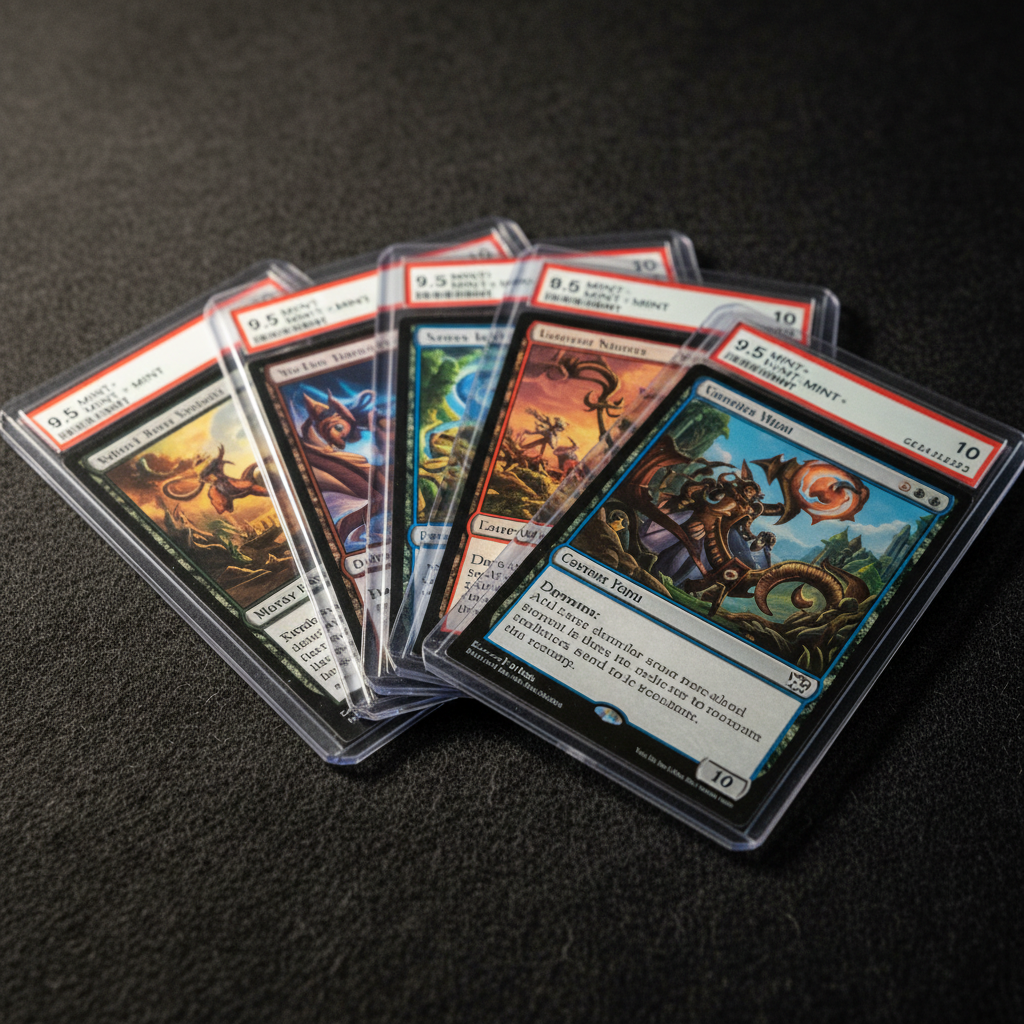
Nathan Steuer didn't win the Pro Tour Secrets of Strixhaven by outspelling his opponents. He won by playing lands. And the market is repricing accordingly.
Steuer, now a two-time Pro Tour champion, piloted Selesnya Landfall to the trophy on Sunday — a result that blindsided a metagame that had spent months preparing for Izzet Prowess dominance. The pivot is significant not just for competitive play, but for anyone holding positions in the cards that make the deck tick. High-profile staples like Icetill Explorer have already climbed toward the $20 range, but those gains are largely baked in. The real opportunity is further down the price ladder.
Five cards from the Selesnya Landfall core are still trading under $5 — and based on how quickly similar tournament breakouts have repriced in the past, that window is closing fast.
Why Landfall Caught Everyone Off Guard
The pre-tournament consensus was nearly unanimous: Izzet Prowess, fueled by the card-velocity engine of Flow State, would define the weekend. It's a reasonable assumption. Prowess strategies reward tight technical play, and Steuer is exactly the kind of pilot who thrives in high-decision-density games. The field prepared for spell loops and card advantage battles.
Instead, Steuer leaned into something more fundamental. Landfall mechanics reward consistent land deployment — a game plan that's inherently resilient, less disrupted by interaction, and capable of generating overwhelming board states without depending on any single card doing broken things. It's not a flashy archetype. That's precisely why it was undervalued.
The competitive result validates what some Landfall advocates had been arguing for weeks: the archetype wasn't underpowered, it was underplayed. A Pro Tour trophy from a two-time champion is the loudest possible confirmation of that thesis.
The Under-$5 Tier: Where the Value Still Lives
When a tournament archetype breaks out at this level, the market typically moves in waves. Flagship cards — the ones casual observers recognize — spike first and hardest. Icetill Explorer's move toward $20 is a textbook example. But the supporting pieces, the cards that make the engine run without being the engine itself, often lag by 48 to 72 hours.
That lag is the window. And right now, the core of Steuer's Selesnya Landfall build is full of cards still sitting in that gap.
The pattern here isn't new. After major competitive events, four-of staples in winning decks that start below $5 routinely 3x to 5x within a week if the archetype demonstrates staying power. Steuer's win wasn't a fluke — it was a dominant run through a prepared field. That staying power is real.
Several of the sub-$5 cards in the deck serve as redundant Landfall triggers, ramp pieces, or recursive threats that make the archetype consistent across a long tournament. Those functional roles don't diminish after the trophy is awarded. If anything, they become more valuable as players attempt to replicate the result at local and regional events over the coming weeks.
Reading the Post-Event Market
The collectibles and trading card market has a well-documented tendency to overcorrect on tournament results. Not every Pro Tour winner spawns a sustained price increase — sometimes a deck wins once and never tops another event. But Landfall as an archetype has structural advantages that suggest this isn't a one-weekend story.
The mechanic is format-agnostic in its appeal. It rewards players who enjoy a proactive, land-based game plan without requiring the kind of intricate sequencing that makes Prowess strategies punishing to pilot. That accessibility matters for demand. More players will attempt to build this deck than would attempt to replicate a technically demanding Prowess list, and that broader adoption pressure sustains card prices longer than a single spike.
Steuer's pedigree amplifies the signal. A two-time champion winning on a strategy carries more market weight than a first-time finalist. The competitive community takes the result more seriously, coverage lingers longer, and the archetype earns more testing time from high-level players — all of which feeds demand for the key pieces.
The under-$5 cards in this deck won't stay there long. The only real question is whether you're buying before or after the next wave of coverage hits.