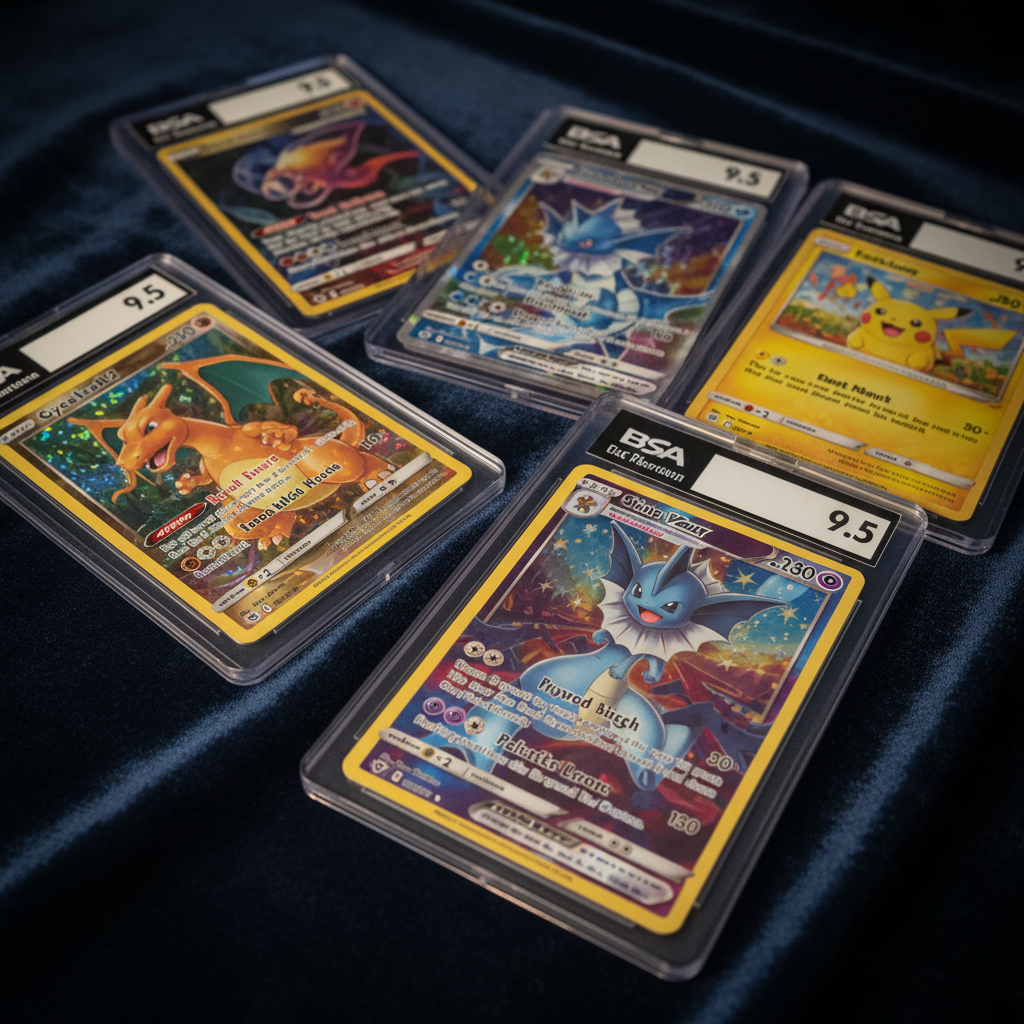
Most entry points into Pokémon collecting are traps. The hobby's most visible price tags — $200+ Charizards, $60 Illustration Rares, graded slabs pushing four figures — create the impression that meaningful collecting requires serious capital. It doesn't. Some of the most historically significant, visually striking, and genuinely playable cards in the hobby's 28-year history are still sitting on TCGPlayer for under five dollars, largely ignored by speculators chasing the next alt-art spike.
That's actually good news for new collectors. The floor of this hobby is more interesting than its ceiling gets credit for.
Why the Sub-$5 Tier Still Has Real Depth
The Pokémon TCG launched in the United States in 1998, and the sheer volume of product printed over nearly three decades means even iconic, recognizable cards from foundational sets exist in quantities large enough to keep raw prices accessible. Base Set Unlimited — the mass-market print run that followed the first-edition shadowless release — is the clearest example. Cards from that set defined an entire generation's relationship with the hobby, yet most of them trade ungraded for pocket change.
That accessibility cuts both ways. Because these cards are cheap raw, collectors who want a graded example face a genuine value question. PSA grading fees start at $25 per card on the economy tier, which means submitting a $3 card only makes economic sense if you're confident in a high grade — or if you're building a personal collection where the slab is the point, not the resale margin.
For new collectors, the smarter move is often to acquire clean raw copies first, learn condition grading by eye, and submit selectively. The sub-$5 tier is the best classroom in the hobby.
The Five Cards That Earn Their Place
The list centers on cards that qualify on at least one of three criteria: historical significance to the TCG's origin story, aesthetic quality that holds up decades later, or playability that kept the card relevant across competitive formats. A card that checks all three is rare. Each of these checks at least one convincingly.
Pikachu #58 (Base Set Unlimited) is the obvious anchor. As the franchise mascot and the card most likely to trigger a nostalgia response in anyone who touched the hobby before 2005, it carries cultural weight that no price tag fully captures. Raw copies in played condition move for under $2. Near-mint examples sit around $3–4. A PSA 10 of the same card trades in the $80–120 range depending on timing, which tells you everything about how much condition premiums matter here.
The remaining four cards on the list follow similar logic — each is either a recognizable name from the original 151, a card with a long competitive history, or a piece with artwork distinctive enough to justify display. The Pokémon TCG has always had a dual identity as both a game and an art product, and the best budget pickups reflect that duality.
What the list doesn't include is equally telling. No Charizard. No Blastoise. No Mewtwo. Those cards have been fully absorbed into the speculative market, and their floor prices reflect it. The cards worth owning under $5 are the ones the market hasn't bothered to hype — which is precisely what makes them interesting.
The Bigger Picture for New Collectors
There's a version of Pokémon collecting that's purely financial — graded slabs as assets, population reports as due diligence, auction results as benchmarks. Heritage Auctions sold a PSA 10 Pikachu Illustrator for $900,000 in 2022. Goldin has moved first-edition Base Set holos in PSA 10 for well over $300,000. That market is real, and it's not going anywhere.
But the hobby's actual foundation — the reason those auction prices exist at all — is the emotional connection millions of collectors formed with specific cards at specific moments in their lives. That connection doesn't require a five-figure budget to rebuild or establish for the first time.
A $3 Base Set Pikachu in a penny sleeve, sitting next to four other cards that meant something to someone, is a collection. The grading and the speculation can come later, or not at all. Either way, the cards hold up.