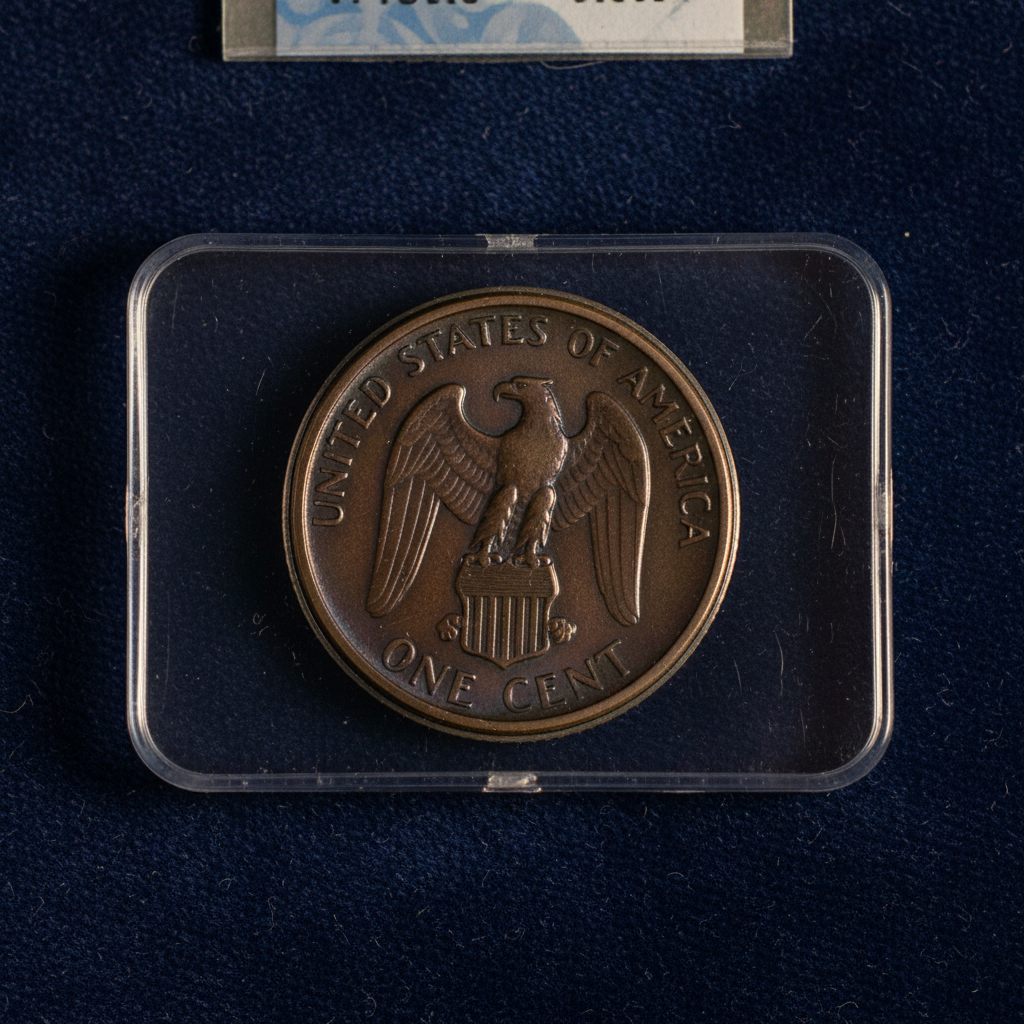
James Earle Fraser came within striking distance of rewriting one of American numismatics' most enduring icons. In 1952, the U.S. Mint commissioned the sculptor — already immortalized by the 1913–1938 Buffalo nickel — to propose a new reverse for the Lincoln cent. The design was never adopted. The pattern coins that survived are among the most consequential what-ifs in 20th-century American coinage.
Fraser was 76 years old when he took on the project, working near the end of a career that had already produced some of the most celebrated coin designs in U.S. history. The Buffalo nickel alone would have secured his legacy. That he was still being tapped for major Mint projects in the early 1950s speaks to how seriously the numismatic establishment regarded him.
The Context Behind the Commission
By 1952, the Lincoln cent reverse — the wheat ears design introduced alongside Victor David Brenner's portrait in 1909 — had been in continuous circulation for over four decades. Pressure to modernize was building. The Mint was fielding proposals from multiple artists, and the Lincoln Memorial reverse that Frank Gasparro eventually delivered wouldn't debut until 1959, the sesquicentennial of Lincoln's birth.
Fraser's proposed reverse represented a stylistically distinct alternative. Where Gasparro's eventual solution leaned architectural and literal — a faithful rendering of the Washington monument to Lincoln — Fraser's sensibility was rooted in the Arts and Crafts-influenced naturalism that defined his earlier work. The Buffalo nickel's reverse, after all, wasn't just a portrait of an animal; it was a compositional statement about the American West. His Lincoln cent proposal carried similar ambitions.
Pattern coins from this era occupy a peculiar niche in the market. They are official Mint products, struck in limited quantities to evaluate proposed designs, and they carry the full weight of institutional provenance. They are not fantasies or private issues. But because they were never released for circulation, population numbers are almost always in the single digits — sometimes fewer.
Fraser's Place in the Pantheon
It's easy to flatten Fraser into a one-coin legacy, but that undersells the depth of his numismatic output. He designed the 1922 Grant Memorial gold dollar, contributed to multiple commemorative issues, and his sculptural work extended to the famous End of the Trail statue, which became one of the defining images of early 20th-century American art. The Buffalo nickel, however, remains the market's primary lens for evaluating his work.
High-grade Buffalo nickels with strong strikes — particularly 1916 Doubled Die Obverse examples or the notorious 1918/7-D overdate — routinely clear five figures at Heritage and Stack's Bowers. A PCGS MS-66 example of a common-date Buffalo can still command $1,500–$3,000 depending on eye appeal and strike quality. Key dates in circulated grades remain accessible entry points for collectors who want Fraser in their registry sets without six-figure exposure.
The 1952 pattern reverse adds a different dimension entirely. Pattern coins don't grade on the same population curve as circulation issues. When NGC or PCGS certifies a pattern, the holder itself becomes part of the story — the grade matters, but the rarity tier matters more. A unique or near-unique pattern certified by either major service carries market dynamics closer to fine art than to standard numismatic trading.
What the Market Does With Lost Designs
The appetite for rejected and transitional designs has never been stronger. The 1964 Peace Dollar patterns, the 1974 aluminum cent trial strikes, the various Flowing Hair dollar die trials — all have commanded serious attention at major auction events when they've surfaced. Goldin has demonstrated that crossover collector interest, particularly from investors who entered through sports cards and are now diversifying into hard assets, is pushing pattern prices into territory that would have seemed speculative a decade ago.
Fraser's 1952 Lincoln cent pattern sits at the intersection of several collector obsessions simultaneously: Lincoln cents, Buffalo nickel provenance, mid-century Mint history, and the broader pattern coin category. That's a rare convergence.
The wheat ears cent ran until 1958. The Memorial cent that replaced it ran until 2008. Lincoln's portrait has now appeared on the cent for over 115 years — longer than any other figure on a circulating U.S. coin. Fraser's proposal, had it been accepted, would have been part of that unbroken chain. Instead, it exists as a handful of struck metal pieces that document a decision the Mint made and then moved past.
Sometimes the most interesting coins are the ones that lost.