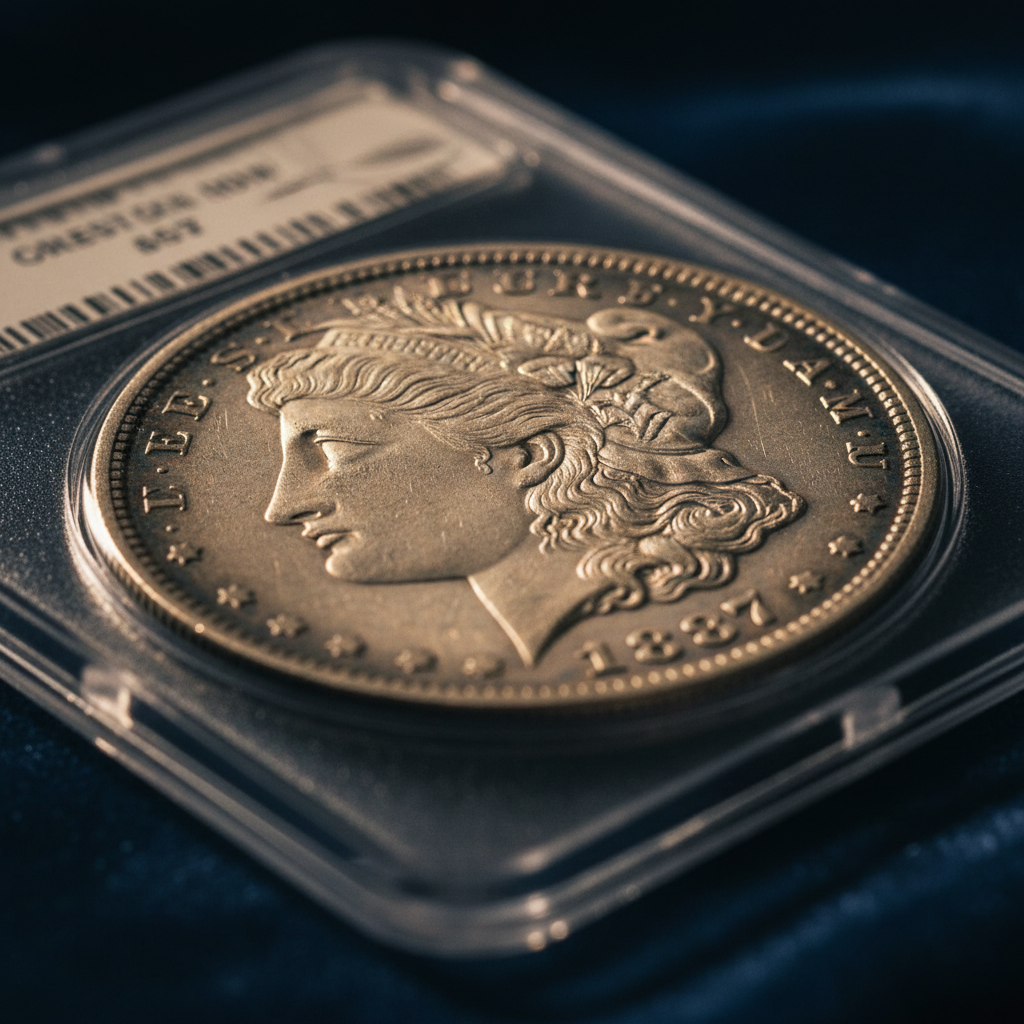
Fred Weinberg doesn't keep junk. That's the first thing you need to understand about why this auction matters.
One of the most celebrated error coin specialists in American numismatic history, Weinberg has spent decades handling, authenticating, and cataloguing the rarest minting mistakes ever to escape the U.S. Mint. When a coin earns a permanent spot in his personal collection, it's not because it's interesting. It's because it's exceptional. So the decision to consign his 1887 Morgan Silver Dollar double struck 25% off-center to GreatCollections — marking the coin's first-ever public auction appearance — is the kind of event that stops serious collectors mid-scroll.
What Makes This Error So Significant
Double-struck off-center errors on Morgan Dollars are not simply rare. They occupy a different category of scarcity altogether. The Morgan Dollar series, struck from 1878 through 1904 and again in 1921, is one of the most heavily collected series in U.S. numismatics. Hundreds of millions of coins were produced across multiple mint facilities. Quality control, while imperfect by modern standards, was sufficient to catch and destroy most catastrophic errors before they entered circulation. The ones that survived did so by accident — slipping through inspectors, mixed into bags, spending years in circulation before anyone recognized what they were holding.
A 25% off-center double strike is not a subtle anomaly. This is a coin where the die came down twice, the second time significantly misaligned, producing a dramatic visual displacement of the design. On a coin as iconic as the Morgan Dollar — Lady Liberty on the obverse, the heraldic eagle on the reverse — the effect is visually arresting and immediately identifiable as a major mint error.
The 1887 Philadelphia issue adds another layer of significance. Philadelphia Mint Morgans from the 1880s are common in circulated grades and even plentiful in Mint State, but that very abundance makes a catastrophic error survivor all the more improbable. The sheer volume of production should have made quality control easier, not harder. And yet here it is.
The Weinberg Provenance Factor
Provenance moves markets in every corner of collectibles — art, cards, coins, memorabilia. But in the error coin world, provenance from Fred Weinberg carries a weight that few names can match. Weinberg is not simply a dealer who has handled notable pieces. He is the dealer whose expertise has defined the error coin market for decades, whose authentication opinions have been cited in major reference works, and whose personal holdings have long been considered a benchmark for what a world-class error collection looks like.
The fact that this 1887 Morgan has lived in Weinberg's personal collection — not his dealer inventory, his personal collection — and is now making its first auction appearance tells you everything about its status. Coins that dealers consider their finest personal pieces don't come to market on a whim. Something about this moment, this platform, and this auction made it the right time.
GreatCollections, the Irvine, California-based auction house that has steadily built a reputation for handling significant U.S. coins with competitive buyer's premiums, is the venue. For a coin of this stature making its public debut, the platform choice reflects the shifting landscape of numismatic auctions — where Heritage Auctions and Stack's Bowers no longer have an automatic lock on major consignments.
What the Market Will Bear
Pricing a coin like this is genuinely difficult, and that's part of what makes the auction format the only rational choice. There are no clean comps. Major off-center double strikes on Morgan Dollars in this condition range are effectively one-of-a-kind events at auction. The closest reference points come from other dramatic Morgan Dollar errors — coins that have realized anywhere from the low five figures to well into six figures depending on the severity of the error, the date, and the eye appeal of the strike.
The Weinberg provenance almost certainly functions as a premium multiplier here. Collectors who understand the market know that a coin hand-selected and held by the foremost error specialist alive carries an implicit authentication and significance premium that no third-party grading sticker can fully replicate.
Whoever wins this coin isn't just buying a 137-year-old minting mistake. They're acquiring a piece of numismatic history that has been off the market its entire known life — and may not surface again for another generation.