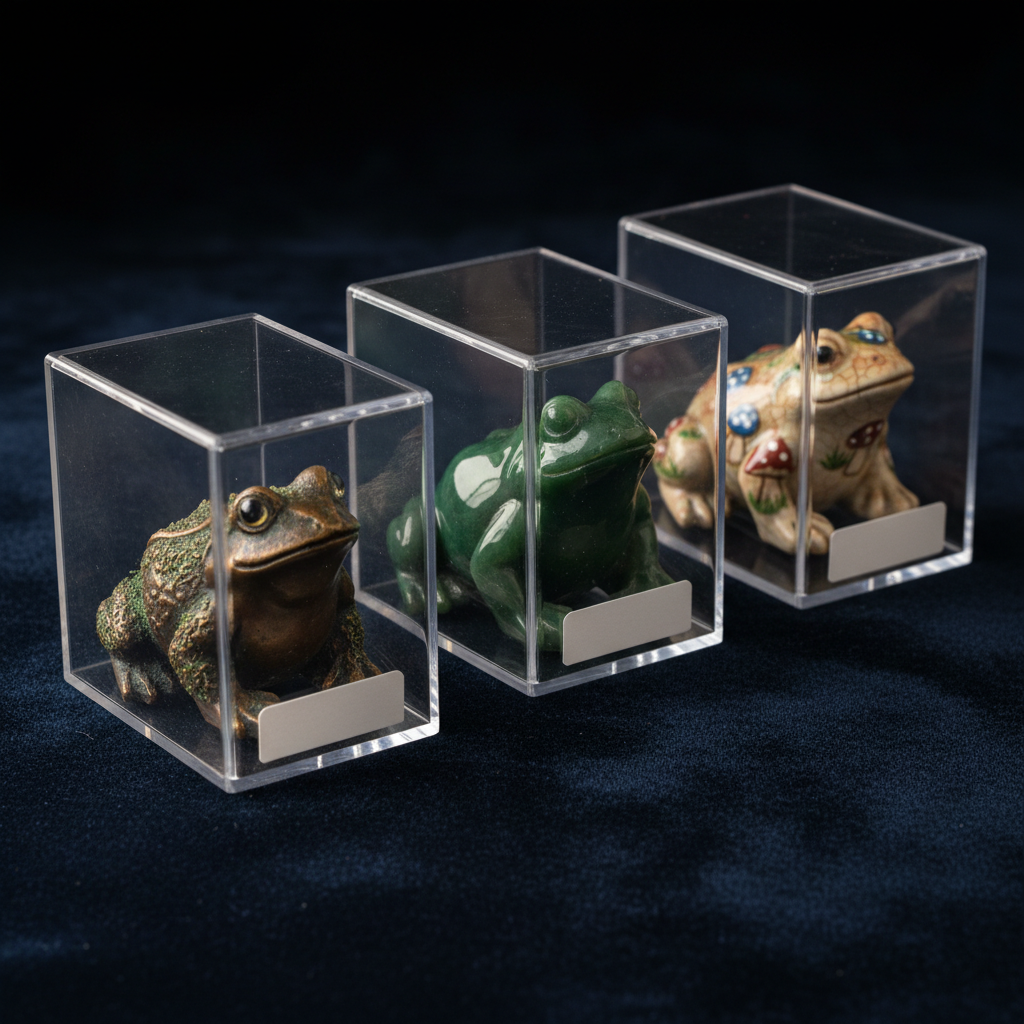
Nobody plans to collect garden frogs. That's precisely what makes the category interesting.
What starts as a single cast-iron doorstop or a whimsical ceramic piece picked up at an estate sale has a way of multiplying — on shelves, in display cases, eventually in storage bins. Collectors who've fallen into the niche describe a familiar arc: one becomes five, five becomes fifty, and somewhere along the way the hunt becomes the point. Garden frog collectibles occupy a peculiar corner of the antiques and decorative arts market, one that rewards patient, knowledgeable buyers while remaining largely invisible to the broader collecting public.
That obscurity, for now, is a feature rather than a bug.
What the Category Actually Covers
Garden frog collectibles span an enormous range of materials, eras, and price points. At the lower end, mass-produced ceramic figurines from the 1970s and 1980s — think Taiwan-stamped bisque pieces or glossy glazed novelties — trade at flea markets for $5 to $30. Decorative but common, they're the entry point for new collectors and the background noise of the category.
The serious money lives elsewhere. Cast-iron garden frogs from American foundries, particularly pieces dating to the late 19th and early 20th centuries, command significantly more attention. Authenticated examples in good original paint condition have sold at regional auction houses in the $200 to $800 range, with exceptional pieces — unusual poses, documented provenance, rare makers — pushing past $1,000 at houses like Morphy Auctions and Bertoia, which regularly handle cast-iron garden and doorstop categories.
Then there's the art pottery tier. Weller, Roseville, and McCoy all produced frog-form pieces during their peak American art pottery periods, and those carry the premiums you'd expect from branded vintage ceramics. A Weller frog flower frog in excellent condition — no chips, strong color, clear mark — is a $150 to $400 piece depending on the line and the day. Roseville examples with documented glaze variations can push higher in the right room.
Japanese Majolica frogs from the Meiji and Taisho periods deserve their own conversation. Underappreciated for years, these hand-painted pieces are seeing renewed collector interest as Japanese export ceramics broadly attract more serious scholarship and auction attention. Prices remain accessible compared to their European Majolica counterparts — often $75 to $250 for quality examples — but the gap is narrowing.
The Condition Problem (and Opportunity)
Garden pieces, almost by definition, lived hard lives. Sun, moisture, freeze-thaw cycles, and generations of casual handling mean that truly condition-strong examples are genuinely scarce. This creates the core tension — and opportunity — of collecting in this space.
A cast-iron frog with 80% original paint is a meaningfully different object from one that's been stripped and repainted, even if the casual eye can't tell the difference. Learning to read paint wear, casting seams, and period-appropriate patina is the skill that separates collectors who build real value from those who overpay for restored pieces at antique mall prices.
Ceramic pieces present their own grading challenges. Crazing — the fine network of cracks in a glaze — is expected and generally accepted on older earthenware. Chips and hairline cracks are not. The distinction matters enormously at auction: a chip to a Roseville frog's foot can cut realized value by 40 to 60 percent versus a mint example. Dealers who work this category regularly know this cold; newer collectors often learn it expensively.
Unlike graded trading cards or slabbed coins, garden frog collectibles have no standardized third-party grading infrastructure. Condition assessment is entirely buyer-driven, which means education is the only edge available.
Building a Collection With a Point of View
The collectors who get the most out of this category — financially and aesthetically — tend to specialize rather than accumulate broadly. Focusing on a single material (cast iron only, or art pottery only), a defined time period, or a specific geographic origin creates a collection with coherence and, eventually, reference value.
Cast-iron specialists, for instance, often cross-collect with the doorstop community, where organizations like the Doorstop Collectors of America have done serious cataloguing work that benefits adjacent categories. That scholarship infrastructure matters when it comes time to authenticate or sell.
The broader decorative antiques market has been navigating headwinds — brown furniture struggles, general Victorian decorative arts have softened — but whimsical, accessible categories with strong visual identity tend to hold collector interest across cycles. Garden frogs sit in that zone. They're displayable, they tell a story, and the best examples have genuine art historical context behind them.
The collection you never saw coming has a way of becoming the one you're most glad you built.