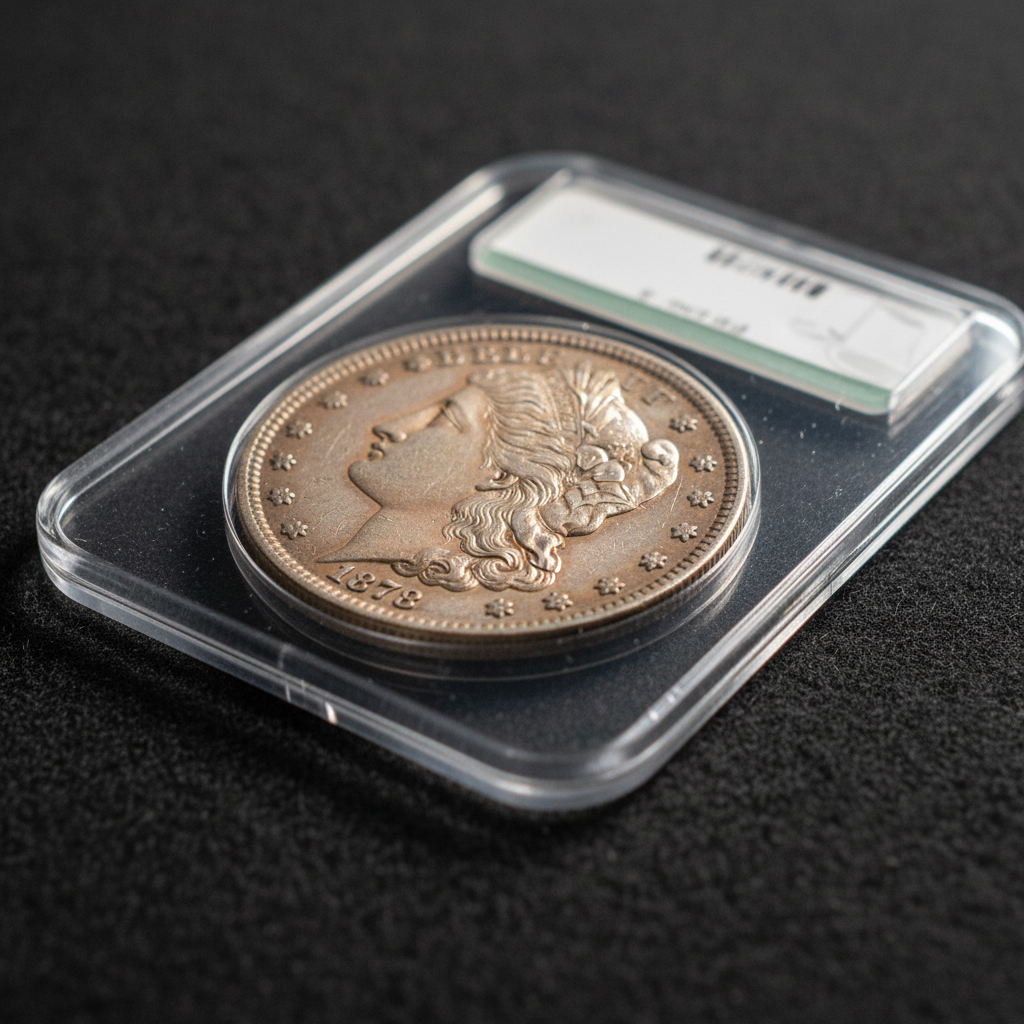
In 1878, a U.S. Mint assayer named Dr. Wheeler W. Hubbell proposed something genuinely radical: a new American coin struck not from gold or silver alone, but from a precisely engineered alloy of both — plus copper. He called it goloid. Congress, still raw from the monetary wars of the previous decade, actually listened.
The goloid dollar never entered circulation. But the pattern coins it produced are among the most intellectually fascinating — and numismatically significant — experimental pieces in American coinage history. They sit at the intersection of monetary policy, metallurgical ambition, and the bitter political fallout from the Coinage Act of 1873, a piece of legislation that silver advocates would spend the next two decades calling the Crime of '73.
The Crisis That Made Goloid Possible
To understand why Hubbell's proposal got traction, you have to understand how badly the post-Civil War monetary system had fractured. California's gold discoveries after 1848 flooded markets with the yellow metal, depressing its relative value and pushing silver coins out of circulation as their bullion content exceeded face value. Congress responded with the Coinage Act of 1873, which quietly demonetized the silver dollar — dropping it from the list of coins the Mint was authorized to strike.
The timing was catastrophic. Within two years, massive new silver deposits were discovered in Nevada's Comstock Lode. Silver prices collapsed. Western mining interests, farmers carrying debt, and inflationist politicians suddenly found themselves holding a metal that the government had just legally sidelined. The fury was real and sustained.
By the late 1870s, Congress was under enormous pressure to restore silver's monetary role. The Bland-Allison Act of 1878 forced the Treasury to purchase and coin silver in bulk. But Hubbell saw a more elegant solution: an alloy coin containing 1 part gold, 24 parts silver, and 1 part copper by weight, calibrated so that a single dollar coin would contain exactly one dollar's worth of metal at prevailing market ratios. No more bimetallism wars. No more ratio disputes. The coin's intrinsic value would be self-correcting.
The Pattern Coins Themselves
The Mint struck goloid dollar patterns across 1878, 1879, and 1880, experimenting with dies, legends, and compositions. These are catalogued today under Judd numbers — the standard reference for U.S. pattern coins — with the key pieces running from J-1568 through J-1660 and beyond, depending on the die marriage and metal composition.
Several distinct design types exist. Some feature the familiar Liberty head obverse paired with a reverse that explicitly states the alloy content — 1000 PARTS / 900 SILVER / 9 GOLD / 1 COPPER — a transparency about metallic composition that no circulating U.S. coin has ever matched before or since. Others use the metric system to express weight, reflecting a parallel congressional push to decimalize American weights and measures. The designs were largely the work of George T. Morgan and William Barber, the Mint's two principal engravers of the period.
Population data tells the story of their rarity clearly. Most individual goloid pattern die marriages have certified populations in the single digits across PCGS and NGC combined. Auction appearances are infrequent enough that a single example coming to market is a genuine event. When a high-grade goloid pattern does surface — say, a Proof-65 or better example at Heritage or Stack's Bowers — it routinely commands five figures, with the finest known specimens pushing well past $50,000 depending on the specific Judd number and eye appeal.
For context, the broader pattern coin market has seen sustained strength over the past decade. Collectors who built goloid sets in the early 2000s at four-figure prices have watched those holdings appreciate substantially, tracking the general rise in demand for pre-1900 U.S. patterns among advanced numismatists.
Why Congress Said No
Hubbell lobbied hard. He patented the goloid alloy, which itself created a political problem — the idea of a private citizen holding intellectual property rights over a national currency struck many legislators as constitutionally dubious at best. Beyond that, the practical objections were serious. Assaying a coin's precise gold and silver content in everyday commerce was impossible. Counterfeiting an alloy coin would be easier to disguise than counterfeiting a pure-metal piece. And the silver lobby, which wanted full silver dollar restoration, had no interest in a compromise that diluted their metal with gold.
The goloid dollar died in committee, repeatedly. What survived are the patterns — proof strikes in goloid alloy, in copper, and occasionally in aluminum or white metal for die testing — each one a physical record of a monetary argument that consumed American politics for a generation.
The irony is that Hubbell's core insight, that a coin's value should be anchored to a transparent, auditable metallic standard, sounds almost quaint now. But in an era when every monetary decision carried the weight of a culture war between creditors and debtors, East and West, gold men and silver men, a coin that tried to split the difference was always going to lose. The patterns that remain are beautiful precisely because they represent a road not taken — struck in proof, preserved in mint state, and still arguing their case more than 140 years later.