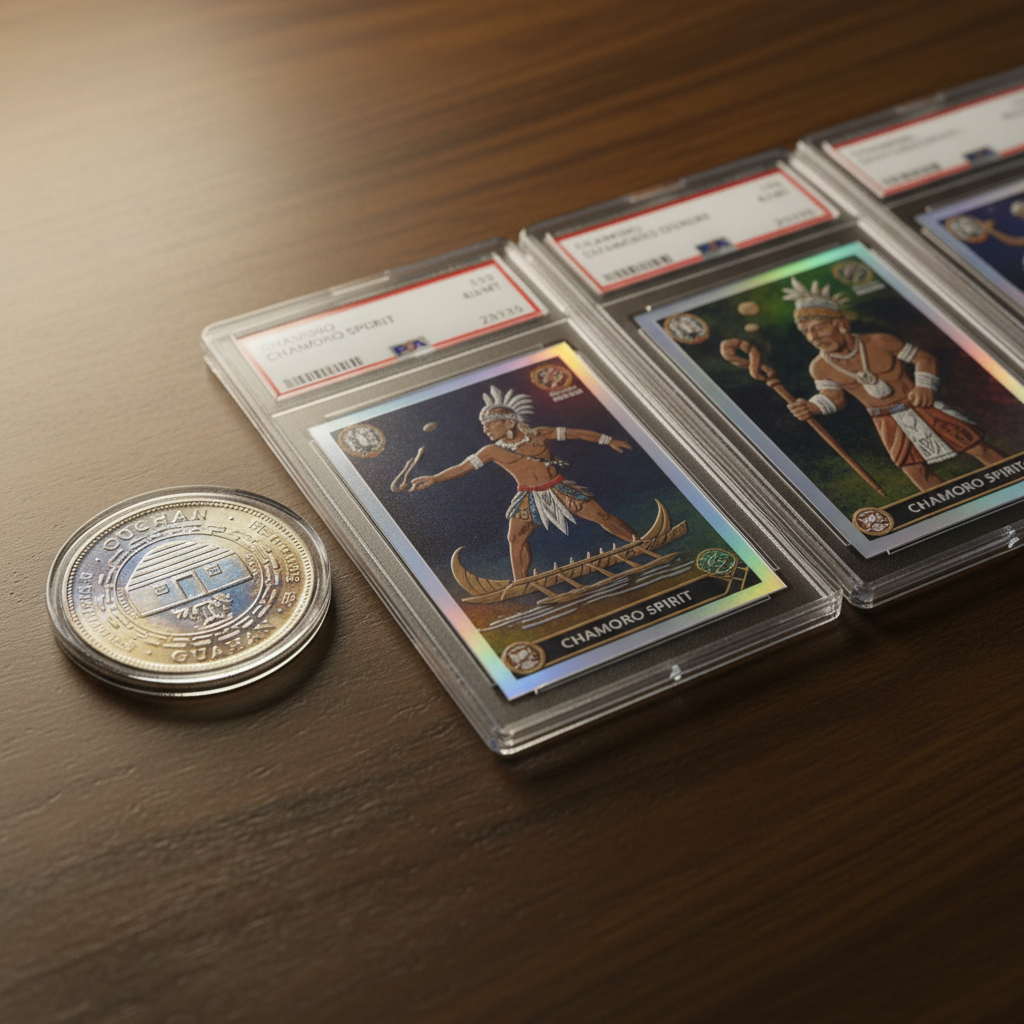
With the United States counting down to its 250th anniversary in 2026, the collectibles market is quietly surfacing a category that most mainstream dealers have undervalued for decades: artifacts, stamps, coins, and ephemera tied to Guam's Indigenous Chamorro culture and its layered colonial history. The semisesquicentennial is driving fresh institutional and private interest in Americana at the margins — and Guam sits at one of the most compelling margins on the map.
This isn't a niche story. It's a market correction in slow motion.
The Historical Record — and What It's Worth
Guam's collectible footprint spans more than three centuries of documented exchange. Spanish colonial-era pieces — religious medals, hand-stamped documents, early cartographic prints of the Marianas — surface occasionally at auction but rarely with the provenance research they deserve. When they do appear with solid documentation, they command premiums that surprise underprepared buyers.
The U.S. territorial period, beginning after the Spanish-American War of 1898, introduced a distinct philatelic and numismatic record. Guam overprint stamps from the early territorial era — U.S. issues hand-stamped with the island's name for local postal use — are among the rarest American territorial philatelic items in existence. Authenticated examples in Fine or better condition have cleared $4,000 to $18,000 at specialized auction, with the upper end reserved for the handful of inverted or double-overprint errors that collectors have chased for generations.
On the numismatic side, coins circulated under Spanish and later American administration tell a parallel story. Philippine-Guam crossover coinage from the early 1900s — pieces that moved fluidly between the two territories — occupies a genuinely underresearched corner of U.S. territorial numismatics. PCGS and NGC have both graded examples, though population reports remain thin, which is itself a signal: scarcity of graded examples in a category with growing collector interest is historically a leading indicator of price appreciation, not a reason to stay away.
Chamorro Material Culture and the Antiques Market
Beyond paper and metal, the deeper collectible story is Chamorro material culture itself. Traditional woven goods, carved sling stones used in ancient warfare, and latte stone-inspired decorative arts have circulated in the Pacific antiques trade for well over a century — often misattributed, undervalued, or stripped of cultural context by the time they reach mainland auction floors.
That's beginning to change. The broader movement toward provenance transparency in Indigenous art markets — accelerated by the Native American Graves Protection and Repatriation Act and its ongoing enforcement — has pushed serious collectors to do more homework before acquiring Pacific Islander material. Dealers who specialize in Oceanic art have noted increased due diligence requests from buyers, particularly for pieces that may have left Guam during the post-World War II period, when the island's reconstruction brought significant cultural disruption alongside physical rebuilding.
The WWII angle alone is a distinct sub-market. Guam was the site of one of the Pacific War's most significant campaigns — the Liberation of Guam in July and August 1944 — and militaria from that theater commands serious collector attention. Authenticated dog tags, field equipment, and liberation-era documents tied specifically to Guam (rather than generic Pacific Theater lots) carry meaningful premiums. A well-documented Guam liberation flag or unit citation can easily reach five figures at Heritage Auctions or a specialized militaria house.
The Semisesquicentennial Effect
Anniversary cycles reliably move markets. The U.S. Bicentennial in 1976 created a sustained multi-year surge in Americana collectibles that lifted prices across categories — coins, stamps, political ephemera, folk art — and left a lasting baseline elevation. The 250th is shaping up similarly, with the U.S. Mint already announcing commemorative programs and major auction houses building anniversary-themed catalog sections.
What's different this time is the cultural conversation happening alongside the commercial one. Collectors and institutions are increasingly interested in the full American story — including its territories, its Indigenous peoples, and the communities whose histories don't fit neatly into the standard Americana narrative. Guam, with its 4,000-year record of Chamorro habitation predating any European contact, its Spanish colonial chapter, its American territorial century, and its WWII liberation story, is one of the richest single-island collectible narratives in the entire U.S. system.
Dealers who get ahead of this now — building inventory, investing in provenance research, and developing relationships with Chamorro cultural organizations — are positioning themselves well. The window before the 2026 anniversary fully opens the mainstream market is narrowing. The pieces are already out there. The question is who's paying attention.