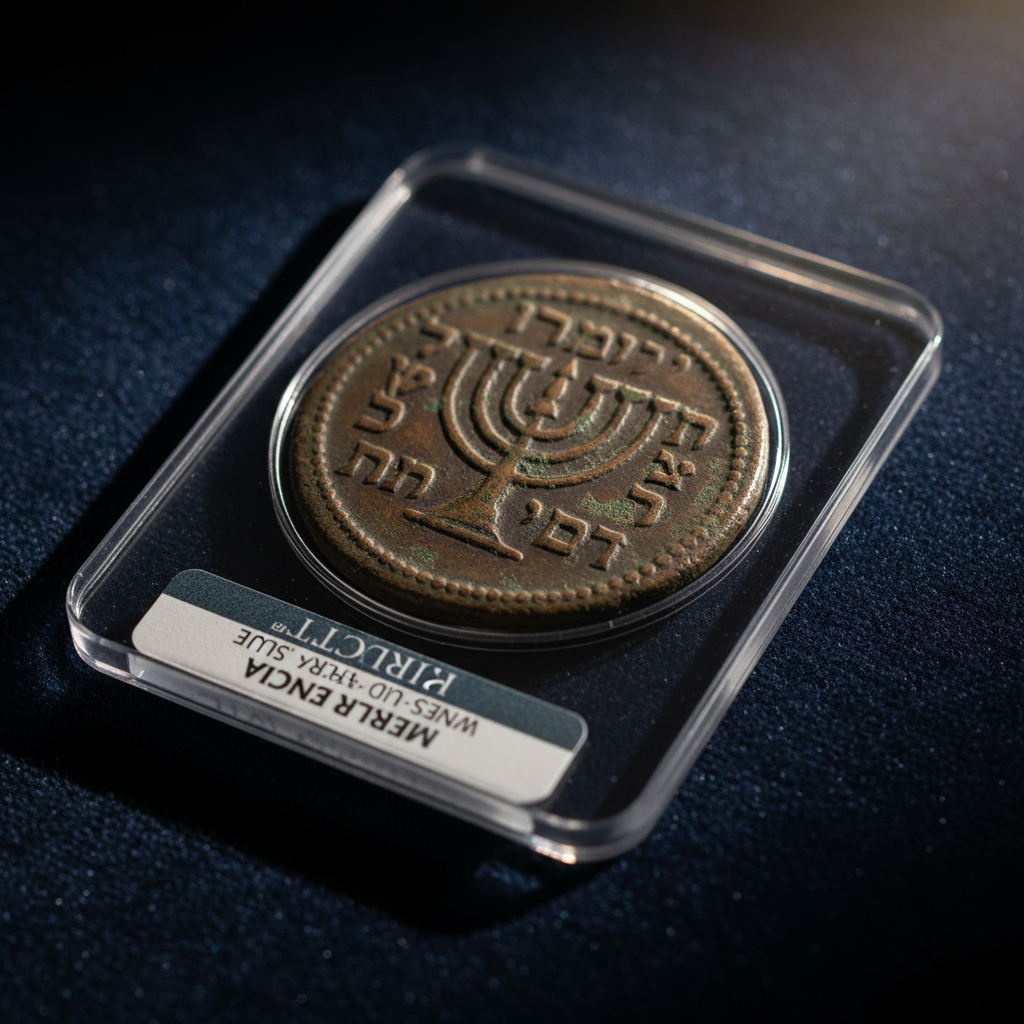
Herbert Lewis Kreindler, one of the most respected voices in ancient numismatics and a leading authority on coins of the Holy Land, died April 25, 2026, in Burlington, Vermont, following a short illness. He was 91.
His death closes a chapter in a field that doesn't produce many genuine specialists. Ancient coin collecting — particularly the subset focused on Judaean and broader Holy Land coinage — demands a rare convergence of archaeological literacy, linguistic range, and market experience. Kreindler had all three.
A Career Built on One of Numismatics' Most Demanding Specialties
Born in Manhattan in 1935, Kreindler came of age during a period when ancient coins were still largely the province of European academics and a thin layer of American museum curators. That the field eventually developed a serious collector base in the United States owes something to practitioners like him — dealers and scholars who could translate arcane provenance into accessible expertise without dumbing it down.
Holy Land coinage is a notoriously complex niche. It spans roughly a millennium of minting history, from the Persian period through Hasmonean dynastic issues, the Roman procurators, the Jewish War coins of 66–70 CE, and the Bar Kokhba revolt coinage of 132–135 CE. Each series carries its own authentication challenges, political weight, and collector demand. The Bar Kokhba bronzes and silver, for instance, command premiums that rival far more famous ancient series — a high-grade example of the silver sela can clear five figures at auction, and the finest specimens have sold north of $50,000 at houses like Stack's Bowers and Heritage Auctions.
Kreindler operated in this world with authority. His expertise wasn't the kind that lives in footnotes — it was the working knowledge of someone who handled coins, authenticated them, and understood why a particular prutah from Alexander Jannaeus or a bronze of Pontius Pilate mattered to a collector beyond its metal content.
What His Loss Means for the Field
Ancient numismatics has an aging knowledge base problem that the hobby rarely discusses openly. The dealers and scholars who built their expertise before the internet — when learning meant correspondence, in-person examination, and years of auction catalog study — are a diminishing cohort. Kreindler represented that generation.
The Holy Land specialty in particular has seen increased collector interest over the past decade, partly driven by the broader expansion of ancient coin collecting among American and Israeli buyers, and partly by the crossover appeal of coins that carry direct biblical and historical resonance. That demand has pushed auction results higher across the board. A first-century Judaean bronze that might have brought $200–$400 in the early 2000s now routinely clears $800 to $2,000 in mid-tier condition, with exceptional pieces — high-relief types, rare procurator issues, coins with strong provenance — achieving multiples of that.
More collector dollars chasing a finite supply of authenticated material makes expertise more valuable, not less. Which is exactly why losing a numismatist of Kreindler's caliber stings the community in a practical sense, not just a sentimental one.
Authentication in ancient coins has no equivalent of PSA or NGC's structured grading infrastructure. There is no population report telling you how many examples of a particular Hasmonean type have been certified. The field runs on reputation, published references — Hendin's Guide to Biblical Coins being the standard American text — and the judgment of experienced hands. Kreindler was one of those hands.
The Longer View
Obituaries in the coin world tend to undersell their subjects. The people who spend decades mastering a narrow specialty rarely make headlines while they're working — their influence shows up in collections they helped build, attributions they corrected, and younger collectors they mentored along the way.
Kreindler spent more than half a century in that work. He was 91. By any measure, he got to finish what he started — and the field is measurably better for it.