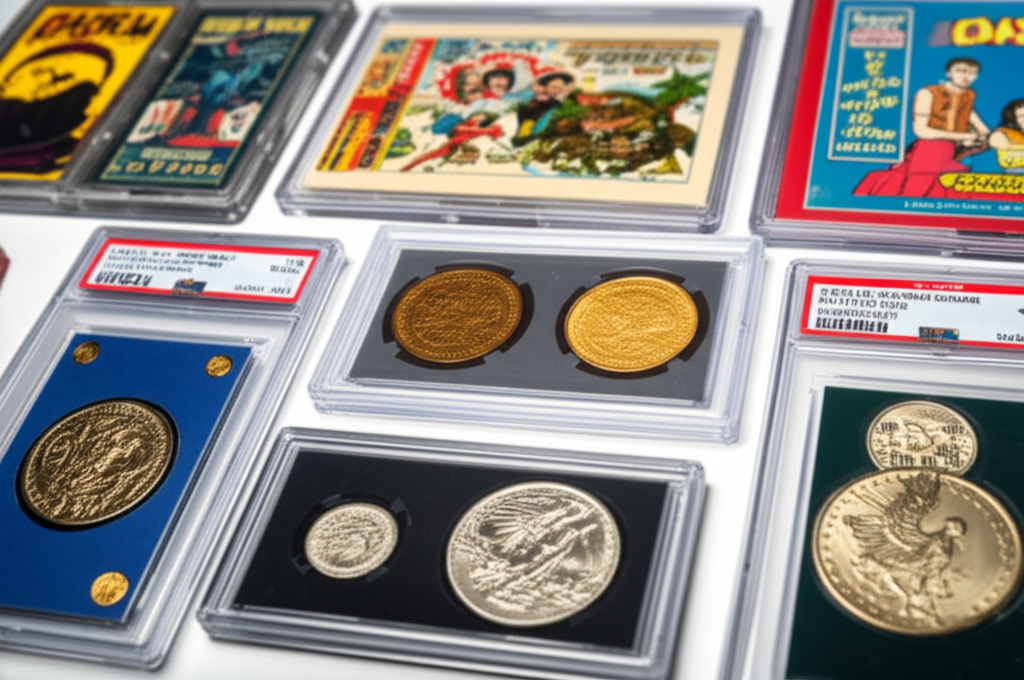
Heritage Auctions doesn't need a gimmick when the material speaks this clearly. The firm's March 26–28 U.S. Coins Signature® Auction arrives loaded with genuine numismatic weight — early American gold, shipwreck ingots, and coins pulled from celebrated private collections — making it one of the more compelling coin sales the market has seen this side of the January FUN event.
Two coins sit at the top of the offering and deserve to be there.
The Gold That Defines the Sale
The 1796/5 BD-1 Half Eagle is the kind of coin that stops a room. Struck in the first years of the U.S. Mint's gold coinage program, the 1796 Half Eagle represents a transitional moment in American monetary history — the overdate variety (5 punched beneath the 6) adds a layer of production drama that specialists have chased for generations. Survivors in any condition are scarce; examples in problem-free, original surfaces are genuinely rare. Heritage has placed it at the top of the bill, and that positioning is earned.
Alongside it, a 1825 Quarter Eagle rounds out the early gold headline pair. Quarter Eagles from this era carry their own rarity profile — annual mintages were modest by any standard, and attrition over two centuries has been brutal. The 1825 is not a coin you expect to see in a standard auction cycle.
Early American gold as a category has held up well through the broader market softness that hit moderns and certified common-date material in 2023–2024. Collector demand for pre-1834 gold remains structurally strong, driven by a finite and well-documented population. When Heritage puts two legitimate examples at the front of a sale, the floor tends to show up.
Shipwreck Ingots and the Romance Premium
The inclusion of shipwreck ingots is a smart programming move, and not just for optics. Shipwreck-recovered silver and gold consistently commands a premium that pure numismatic logic can't fully explain — and that's precisely the point. These objects carry provenance that no mint can manufacture. They are artifacts of maritime history first, financial instruments second, and the collector base that pursues them overlaps only partially with traditional coin buyers.
That crossover appeal matters at auction. Shipwreck material tends to attract bidders who aren't watching the standard registry competition or PCGS population reports. They're buying a story with metal attached. Heritage has leveraged this category effectively in past sales, and folding ingots into a March signature event — positioned between the FUN sale in January and the Central States auction on the spring calendar — is a deliberate attempt to sustain momentum across the collecting year.
The ingots also provide a visual and narrative contrast to the precision-graded coins surrounding them. In a catalog that might otherwise read as a sequence of slabbed early American issues, shipwreck material breaks the rhythm and broadens the audience.
Collection Provenance as Market Signal
Heritage has flagged that several lots carry pedigree from named collections — a detail that matters more than casual observers might assume. In the coin market, collection provenance functions as a secondary authentication layer and, in many cases, a price multiplier. A coin that passed through a respected collection carries an implicit endorsement from every dealer and specialist who handled it along the way.
For bidders, pedigreed material also offers liquidity confidence. Coins with documented ownership histories — especially those tied to collections that have been publicly recognized within the hobby — tend to perform better at resale than comparable examples without that paper trail. It's not sentiment. It's market mechanics.
The March sale's positioning on Heritage's calendar is also worth parsing. Bridging the January FUN event and the upcoming Central States auction, it serves collectors who missed FUN and aren't willing to wait until spring. Heritage has effectively created a holding pattern for serious buyers, and the quality of the early gold anchors suggests they expect competitive bidding rather than bargain hunting.
For anyone tracking the early American gold market specifically: this sale is a data point. The hammer prices on the 1796/5 Half Eagle and the 1825 Quarter Eagle will tell you something real about where collector conviction sits in the first quarter of 2025. Watch the numbers.