The difference between a bullion coin that commands a premium and one that gets melted is often decided in a fraction of a second — the moment a hydraulic press closes at anywhere from 35 to 200 tons of pressure and forces metal into a die. That moment is the culmination of decisions made weeks or months earlier, and understanding it changes how you evaluate every piece in your stack.
Alex Sim of First Mint LLC, writing for CoinWeek, has laid out a detailed breakdown of the coin-striking process — from blank preparation through die design to final strike — and the implications for the modern bullion market are more significant than most stacking forums acknowledge.
The Die Is the Design
Before a single planchet is fed into a press, the artistic and technical decisions embedded in the die have already determined the coin's ceiling. Relief height is the first constraint. High-relief designs — think the 2009 Ultra High Relief Double Eagle or the annual Australian Proof releases from the Perth Mint — require multiple strikes because the metal simply cannot flow into deep recesses in a single pass. That's not a flaw; it's physics. Each additional strike adds production cost and time, which is why genuine high-relief coins carry legitimate premiums over their spot-price cousins.
Proof dies are polished to a mirror finish using progressively finer abrasives, then the design elements are treated separately to create the frosted contrast that defines a cameo appearance. Bullion dies skip much of that labor. The result is a coin that looks attractive in hand but lacks the field-to-device contrast that makes proof coinage visually arresting — and, in certified form, financially distinct. A PR70 Deep Cameo American Silver Eagle from PCGS routinely trades at multiples of its bullion counterpart, even when silver spot is flat.
Metal Matters More Than Most Buyers Realize
The alloy composition of a planchet isn't just a purity question — it's a striking question. Pure silver (.999 or .9999 fine) is softer and flows more readily into die recesses than the 90% silver used in pre-1965 U.S. coinage. That's why modern bullion coins from the Royal Canadian Mint, Perth Mint, and the U.S. Mint can achieve sharper detail at lower strike pressures than their predecessors. It also means they're more susceptible to contact marks, which is why population reports for high-grade modern bullion coins skew so dramatically toward the top — and why a single bag mark on an otherwise flawless American Silver Eagle can drop a coin from a PSA 10 to a 9, slashing its market value by 60% or more in a hot registry market.
Gold behaves differently. At .9999 fineness — the standard for Canadian Maple Leafs and Australian Kangaroos — the metal is extraordinarily ductile. Beautifully struck, yes. But also prone to hairlines from the faintest mishandling. The irony is that the purity that makes these coins desirable as investment vehicles makes them fragile as collectibles. Dealers who've watched a roll of Maple Leafs come back from a customer with hairlines across every reverse know this intimately.
Why Strike Quality Is a Market Signal, Not Just Aesthetics
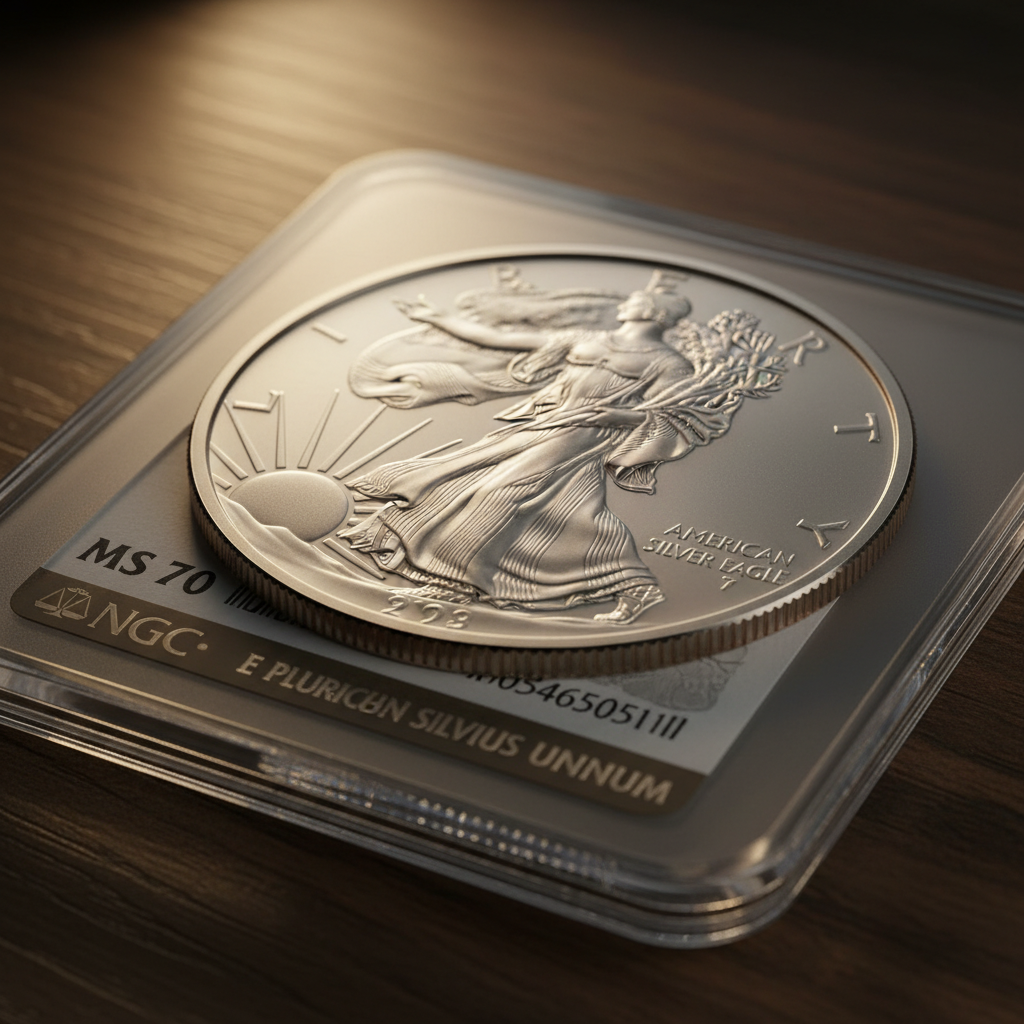
The bullion market has spent the last decade fragmenting. What was once a straightforward spot-plus-premium calculation now has a certified tier sitting above it, with graded modern bullion from PCGS and NGC commanding premiums that would have seemed absurd to stackers in 2010. A PSA 10 or NGC MS70 label on a first-strike or early-release coin isn't just a vanity grade — it's a liquidity mechanism. It standardizes a product that is otherwise subject to the subjectivity of every dealer's loupe.
That standardization only works if the underlying strike quality is consistent enough to produce coins worth grading in the first place. Mints know this. The Perth Mint's Lunar Series and the Royal Mint's Britannia program have both invested heavily in die maintenance protocols and quality control specifically because the certified secondary market rewards consistency. A mint that produces coins with weak strikes, uneven frost, or die fatigue artifacts loses not just aesthetic points — it loses certified population, and certified population drives the premium tier that increasingly defines collector demand.
Sim's breakdown is a useful primer, but the real takeaway for serious collectors is this: strike quality is a supply-side variable that the market prices imperfectly. When a new bullion release has a short mintage, strong die quality, and early-release certification eligibility, the window between spot price and certified premium can be substantial — and brief. The collectors who understand the mechanics are the ones positioned to act before that window closes.