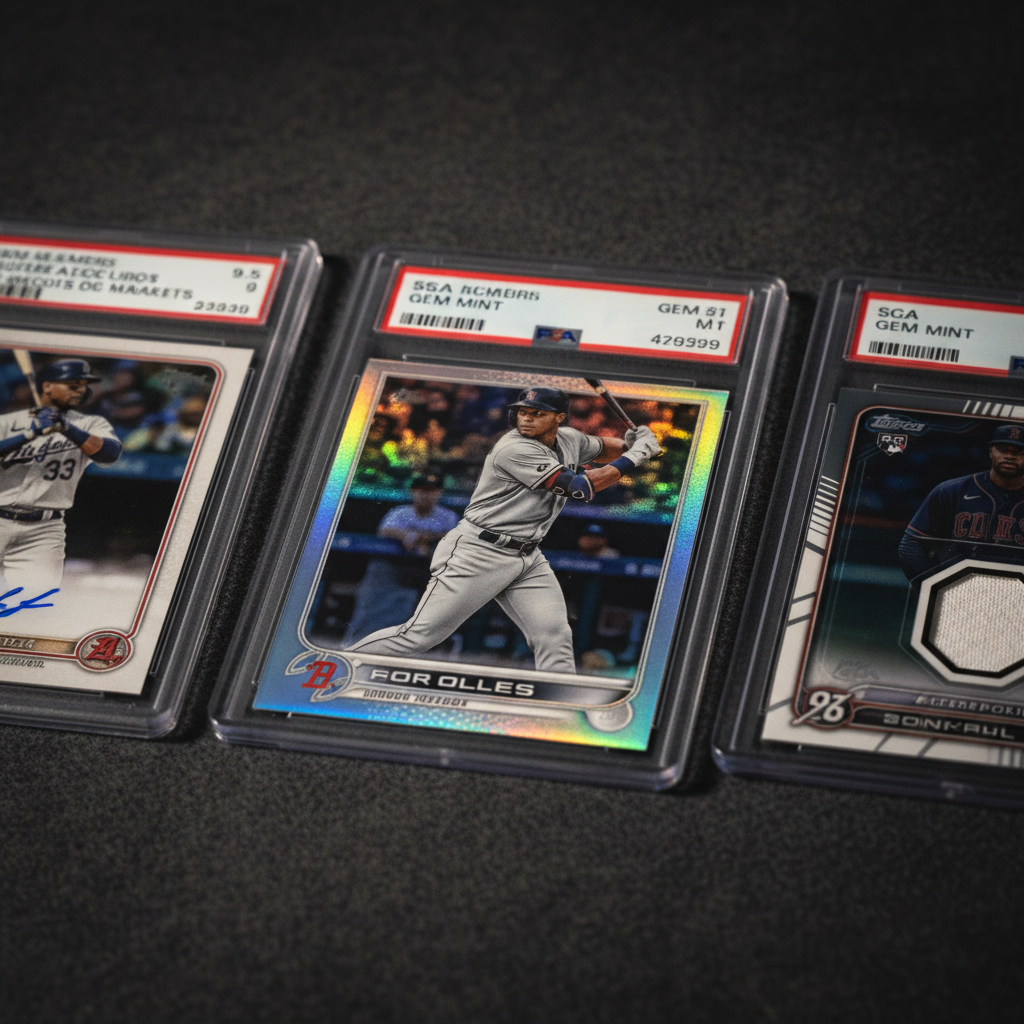
Somewhere in a storage unit outside Tampa, there are roughly 4,000 signed baseballs with one thing in common: they're all fake. That unit belonged to a memorabilia dealer who was convicted in 2019 as part of Operation Bullpen, the FBI's decade-long investigation into forged sports autographs that ultimately exposed a counterfeit market the bureau estimated at $100 million in fraudulent merchandise. The forgeries were good enough to fool casual collectors, dealers, and in some cases, authentication services that didn't yet have the infrastructure to catch them.
The autograph market has changed substantially since then. Third-party authentication is more rigorous. Provenance tracking has improved. But the fakes haven't gone away — they've just gotten smarter. If you're buying your first signed piece, the single most important thing you can do is understand the authentication landscape before you spend a dollar.
This guide will walk you through every step, from identifying what you want to buy, to verifying it's real, to storing it properly once it's yours.
1. Know Exactly What You're Buying
The autograph category is enormous, and that breadth is both its appeal and its danger. A signed Babe Ruth single on an OAL baseball is a fundamentally different asset than a Shohei Ohtani signed Fanatics baseball from a private signing session. One is a finite vintage item with decades of auction history. The other is a modern piece produced in quantities large enough to suppress scarcity-driven premiums. Both can be excellent purchases — but only if you understand what you're actually acquiring.
Start by narrowing your focus to a category: sports memorabilia, music and entertainment, historical documents, or cut signatures. Each has its own authentication infrastructure, its own forgery risks, and its own collector base. A vintage Ty Cobb cut signature authenticated by PSA/DNA sells to a very different buyer than a signed vintage concert poster authenticated by JSA (James Spence Authentication). Know your category, then go deep.
Within sports, decide whether you want signed flats (photos, cards, jerseys) or three-dimensional items (balls, bats, helmets, equipment). Flats are easier to display, easier to store, and generally easier to authenticate because the surface area gives examiners more to work with. Balls and bats carry a premium for display value but are harder to protect against environmental damage.
The single most important question to ask before any autograph purchase: Can I independently verify this signature through a reputable third-party authenticator, and does that authentication come with a traceable certificate I can look up online?
If the answer is no, or if the seller hesitates, stop. The deal doesn't matter. The price doesn't matter. Walk away.
2. The Authentication Landscape, Demystified
There are three names that dominate legitimate autograph authentication in North America, and you need to understand what each one is actually telling you when they certify a piece.
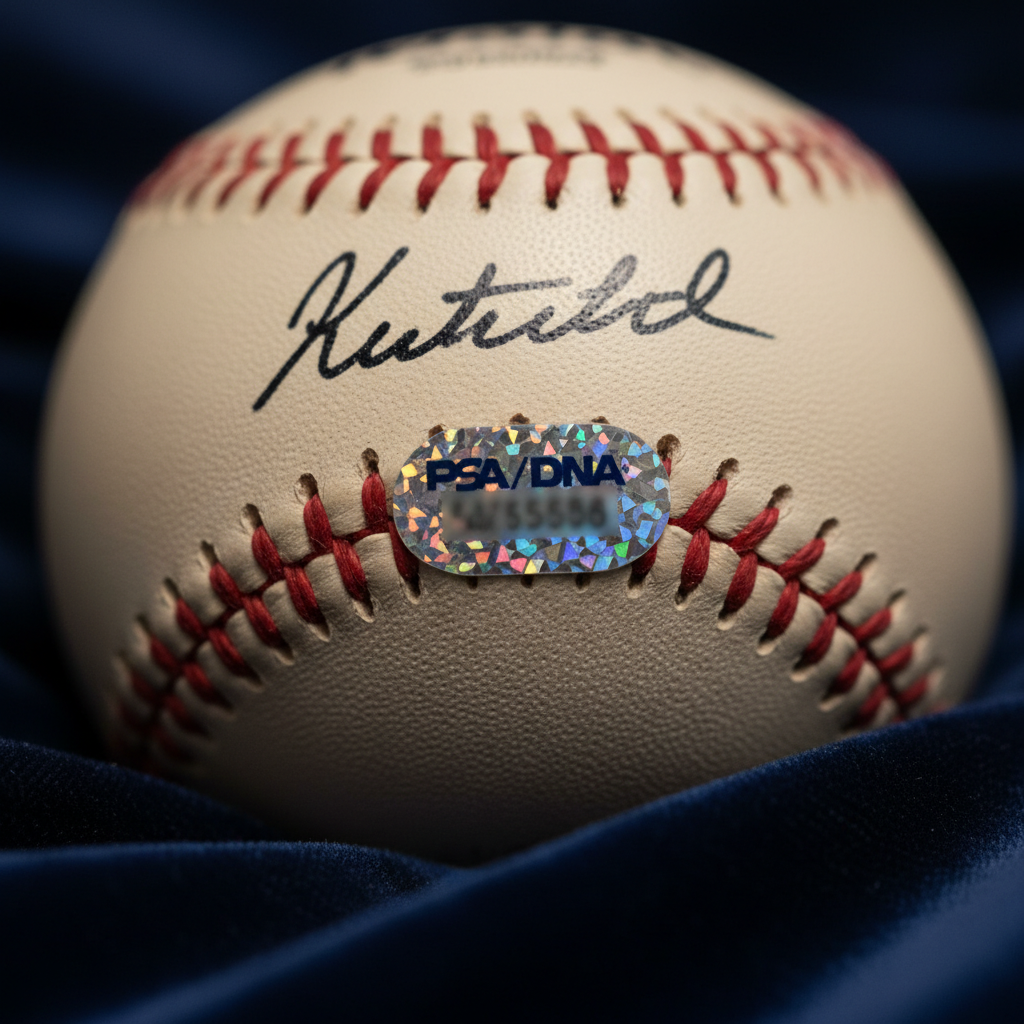
PSA/DNA (Professional Sports Authenticator's autograph division) is the largest and most recognized in the hobby. When PSA/DNA authenticates a signature, they're offering an opinion — a highly informed, expert opinion — that the signature is consistent with known exemplars of that signer. They issue a numbered certificate and a tamper-evident sticker. You can verify any PSA/DNA cert at psacard.com/cert. In the trading card world, PSA's graded card population reports are gospel; in the autograph world, their authentication carries similar weight with major auction houses.
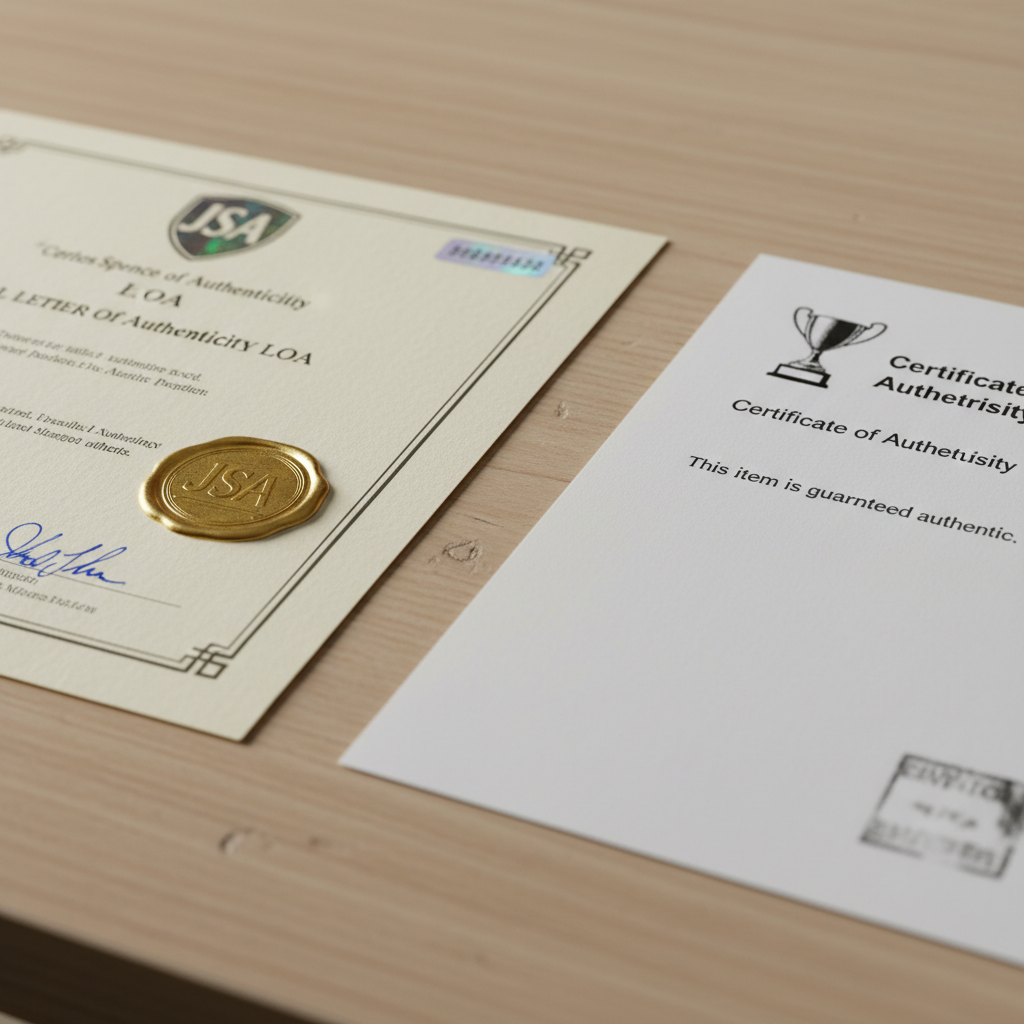
JSA (James Spence Authentication) is the primary competitor and, for certain categories like music memorabilia and vintage Hollywood signatures, is considered equally authoritative. JSA issues both full letter of authenticity (LOA) certifications and witnessed-signing certifications. Many serious collectors actually prefer JSA for non-sports categories because of Spence's deep background in entertainment signatures.
Beckett Authentication Services (BAS) rounds out the top three. Beckett is particularly strong in the modern sports card and autograph crossover space — their graded autograph cards (BGS with BAS authentication) are a standard format in the trading card hobby. BAS also does in-person authentication at major card shows, which is a legitimate and convenient option for collectors who acquire pieces at events.
There are also smaller services worth knowing. Tri-Star Productions runs some of the most tightly controlled private signing events in the hobby — if a piece comes with a Tri-Star COA from one of their documented signings, that provenance is solid. AIV (Autograph Investigation and Verification) focuses on historical documents and vintage material, particularly presidential and Civil War-era signatures.
What you should ignore entirely: any certificate of authenticity issued by the seller themselves, any COA from a company you can't independently research, and any hologram sticker that isn't tied to a verifiable online database. In Operation Bullpen, forgers produced fake COAs alongside fake signatures. A piece of paper saying something is real proves nothing.
3. Where to Buy (and Where to Run)
The marketplace you choose is almost as important as the item itself. Here's an honest breakdown of your options.
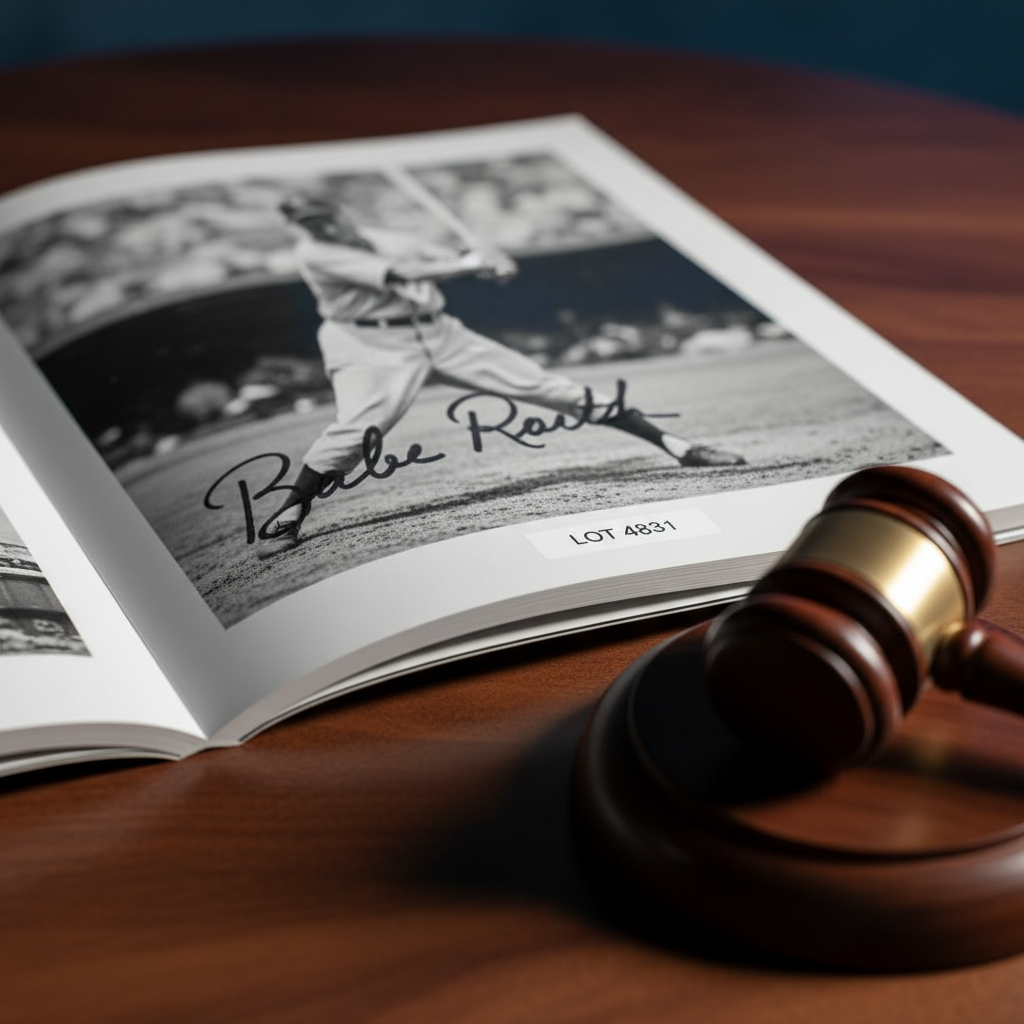
Major auction houses — Heritage Auctions, Goldin, Stack's Bowers, and Lelands — are your lowest-risk entry point for significant purchases. These firms have in-house authentication review, established consignor vetting, and legal liability that private sellers don't. Heritage's Sports Collectibles division, for example, will not accept a consignment with questionable authentication, because their business model depends on buyer trust. When Heritage sells a signed Willie Mays jersey for $18,000, they've done the work to verify it. You're paying a buyer's premium — typically 20–25% — but you're also paying for that infrastructure.
Goldin has become particularly aggressive in the high-end autograph space over the past three years, and their social media presence has brought younger collectors into auction buying who previously only shopped on secondary platforms. For modern athlete autographs, Goldin often achieves strong results and their authentication standards are rigorous.
eBay is a different animal entirely. There are legitimate dealers on eBay with decades of reputation, strong feedback scores, and proper authentication. There are also thousands of listings for fraudulent items. The platform does offer a Money Back Guarantee for items not as described, which provides some protection, but fighting a dispute over an autograph's authenticity is a miserable experience. If you buy on eBay, restrict yourself to sellers with 99%+ feedback over 500+ transactions who provide third-party authentication from one of the three major services. Never buy a raw autograph on eBay without PSA/DNA, JSA, or BAS authentication unless you personally know the seller's history.
Private signings are the cleanest provenance you can get for modern athletes. Companies like Fanatics Authentic, Steiner Sports, and independent promoters like Schwartz Sports Memorabilia run controlled signing sessions where the athlete signs in front of witnesses and every item is documented. The premium over secondary market prices is real, but so is the peace of mind. For a first purchase, a piece from a documented private signing is close to ideal.
Card shows deserve a mention. The National Sports Collectors Convention — the hobby's largest annual event — features both private signings with active players and dealer floors with raw and authenticated pieces. Shows are excellent for education, comparison shopping, and building relationships with dealers whose reputation you can verify in person. First-time buyers often learn more in a single afternoon at a major show than they would in months of online research.
Common Mistake #1: Buying based on price alone. A signed LeBron James photo for $45 on a marketplace you've never heard of is not a deal. It is a forgery. Legitimate authenticated LeBron autographs on 8x10 photos sell in the $300–$600 range depending on the image and the authentication. If the price seems impossibly good, it isn't good at all.
Common Mistake #2: Ignoring provenance in favor of authentication. Authentication tells you the signature is real. Provenance tells you the story of how it got to you. A piece with both — say, a signed Joe DiMaggio ball with a JSA LOA and documentation that it came from a 1990 private signing — is worth meaningfully more than the same item with authentication but no history.
4. Condition, Display, and What Actually Drives Value
Autograph condition is not graded on the same standardized 1–10 scale as trading cards, but it matters enormously — and understanding what affects it will make you a smarter buyer.
Signature quality is the first variable. A bold, full-name signature signed in black or blue Sharpie on a clean surface is worth more than a faded, partial, or rushed signature on the same item. Athletes sign differently depending on context: a signature obtained at a stadium after a game is often rushed and degraded compared to one from a controlled private signing. PSA/DNA's autograph grading service (separate from their authentication service) actually grades signature quality on a 1–10 scale, with grades of 8 and above commanding meaningful premiums. A PSA/DNA-graded autograph at a 9 or 10 is a different product than a raw authenticated signature.
The surface matters. A signature on a white panel baseball holds better than one on a leather panel. A signature on a glossy photo holds better than one on matte paper. Sharpie on a jersey can fade or bleed over time without proper UV protection. When evaluating a piece, consider not just how it looks now but how it will look in ten years under reasonable storage conditions.
Inscriptions are a double-edged sword. A signature with a personalized inscription — To Mike, Best Wishes — is generally less valuable than a clean signature alone, because personalization limits the resale market. A content-relevant inscription, however, can add value: a signed Mike Tyson photo inscribed Iron Mike sells better than a clean signature on the same image. Know the difference before you chase inscriptions.
5. Storage, Protection, and Long-Term Preservation
This section is where most first-time buyers make expensive mistakes through pure inattention. The autograph survives the signing. The authentication survives the purchase. What kills value over time is environment.
Temperature and humidity are your primary enemies. Ideal storage conditions for paper-based autographs are 65–70°F with 30–50% relative humidity. Fluctuating humidity causes paper to expand and contract, which eventually degrades the ink and the substrate. If you live in a humid climate — Florida, the Gulf Coast, the Pacific Northwest — a dehumidifier in your display or storage space is not optional. It's infrastructure.
For signed balls, bats, and three-dimensional items, UV-protective acrylic display cases are the standard. Steiner Sports, Ultra Pro, and BCW Supplies all make cases specifically designed for sports memorabilia. Avoid cheap plastic cases that off-gas chemicals — over years, those chemicals can interact with Sharpie ink in ways that are subtle but damaging.
Signed jerseys deserve particular care. Never fold a signed jersey along the signature. The crease will eventually crack the ink. Frame it flat under UV glass, or store it rolled (not folded) in an acid-free tube. Archival Methods makes acid-free tubes and tissue specifically for textile storage — it's the same product used by museum conservation departments.
Document your collection digitally. Photograph every piece with its authentication documentation before storing it. Use a service like Collectify or maintain a simple spreadsheet with purchase price, authentication cert numbers, and acquisition date. This matters for insurance, for eventual resale, and for your own records if a certificate is ever lost or disputed.
Common Mistake #3: Displaying signed items in direct sunlight. A signed photo in a south-facing window will fade visibly within two to three years regardless of the ink quality. Indirect light only, always.
- Authentication is non-negotiable. Only accept PSA/DNA, JSA, or BAS authentication — or documented provenance from a witnessed private signing.
- Price is a signal. If it's priced significantly below market, it is almost certainly not real.
- Buy from platforms with accountability: Heritage, Goldin, Lelands, and established dealers with verifiable track records.
- Condition and signature quality drive value as much as the name on the piece. A bold PSA/DNA-graded 9 signature is a different asset than a faded raw signature.
- Provenance compounds authentication. Know the history of how a piece got to market.
- Preservation is an investment. UV glass, humidity control, and acid-free storage protect the value you paid for.
- Start narrow. One category, one era, one athlete — depth beats breadth for first-time buyers building knowledge and instincts.
Your Next Steps
Here is what you should do before you spend a single dollar on a signed piece:
- This week: Create a free account on psacard.com and spend thirty minutes using their cert verification tool on randomly selected listings you find on eBay. Get comfortable with what legitimate certs look like and how to spot inconsistencies.
- This week: Pick one athlete, musician, or historical figure you genuinely care about. Research their authentic signature on JSA's database and Heritage's past auction archives. Know what a real signature looks like before you're in a buying situation.
- Before your first purchase: Set a budget and a category. Do not deviate. The autograph market rewards focus and punishes impulse buying.
- For your first purchase: Buy from a major auction house or a documented private signing. Pay the premium. Learn the process. Your second and third purchases can be more adventurous once you have a baseline for what legitimate feels like.
- After purchase: Order UV-protective storage supplies before the item arrives. Have the infrastructure ready. Don't improvise.
- Ongoing: Follow Heritage Auctions' realized price archives and Goldin's sale results for your category. Market literacy is a skill built over time, and it is the most durable protection against getting burned.
The collectors who lose money in the autograph market almost always lose it the same way: they rushed, they trusted a price that was too good, and they skipped the verification step because the deal felt urgent. Urgency is a sales tactic. Authenticity is a fact. Take your time, buy it right, and the piece you acquire will be worth owning for the rest of your life.