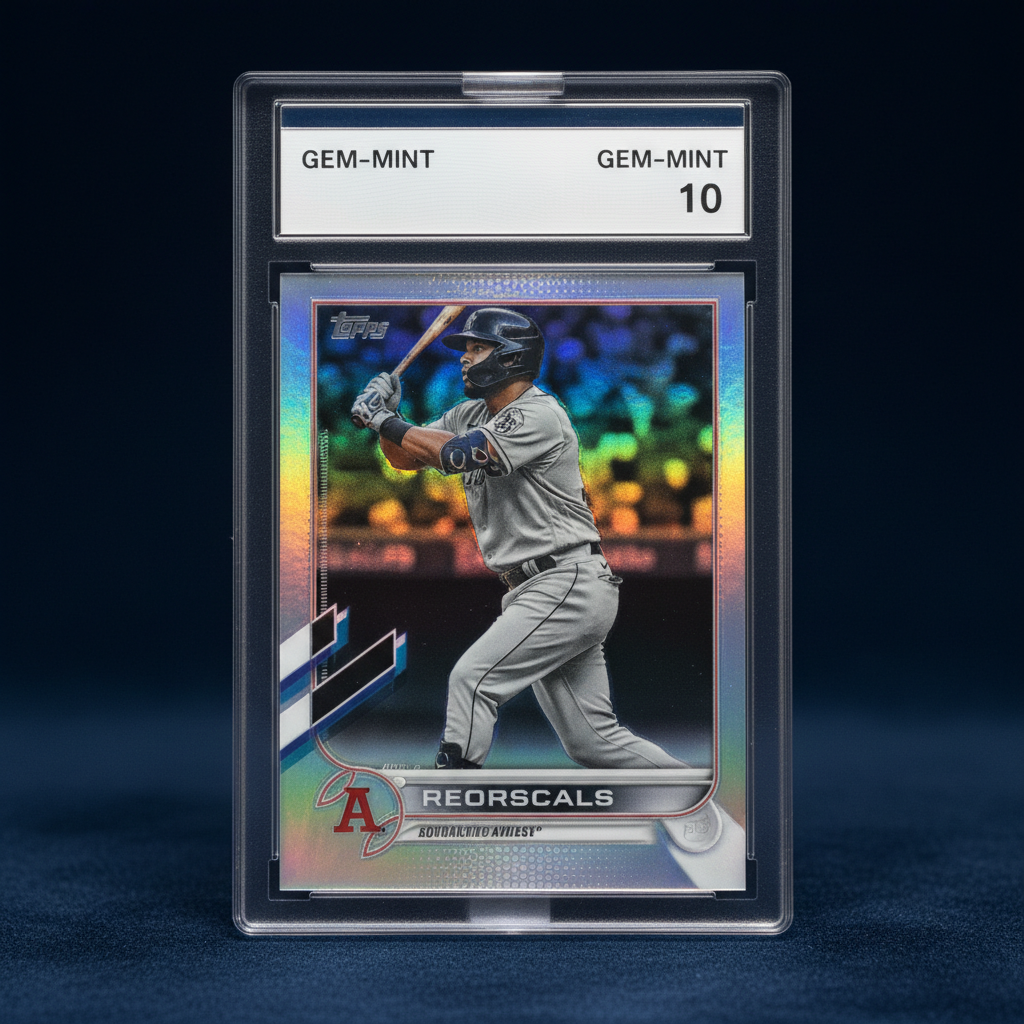
Last spring, a collector in Ohio pulled a 1952 Topps Mickey Mantle from his grandfather's attic. It wasn't a PSA 9 — the corners were soft, and there was a small crease along the bottom edge. He submitted it anyway. It came back PSA 4, and he sold it at Heritage Auctions for $41,000. The card had been sitting in a shoebox for 70 years. That's the power of a graded slab: it transforms a piece of cardboard into a universally trusted, liquid asset.
Most new collectors understand this in theory. In practice, they're terrified to touch the process. Grading feels opaque, expensive, and risky — a minefield of submission tiers, population reports, and crossover strategies that seems designed for insiders. It isn't. The process is learnable, and the upside of getting it right is enormous. This guide walks you through every step, from pulling a card off your shelf to watching your slab sell.
Step 1: Decide If the Card Is Worth Grading
The single most expensive mistake beginners make is submitting cards that will never recoup their grading fees. PSA's current bulk submission tier runs $25 per card with a 60-90 business day turnaround (as of mid-2025). BGS bulk is in a similar range. Submit 20 cards at $25 each and you've already spent $500 before you see a single slab. If those 20 cards come back as mid-grade commons worth $8 apiece in a slab, you've destroyed value, not created it.
The rule of thumb I use: a raw card needs a realistic ceiling of at least 3x the submission cost in its expected grade to justify grading. If you're submitting at $25 and the card is a 2018 Panini Prizm Luka Doncic base that might grade a PSA 9, check eBay's sold listings first. A PSA 9 Luka base Prizm has been selling in the $60-80 range through most of 2025. That math works. A PSA 9 common from the same set might fetch $15. That math doesn't.
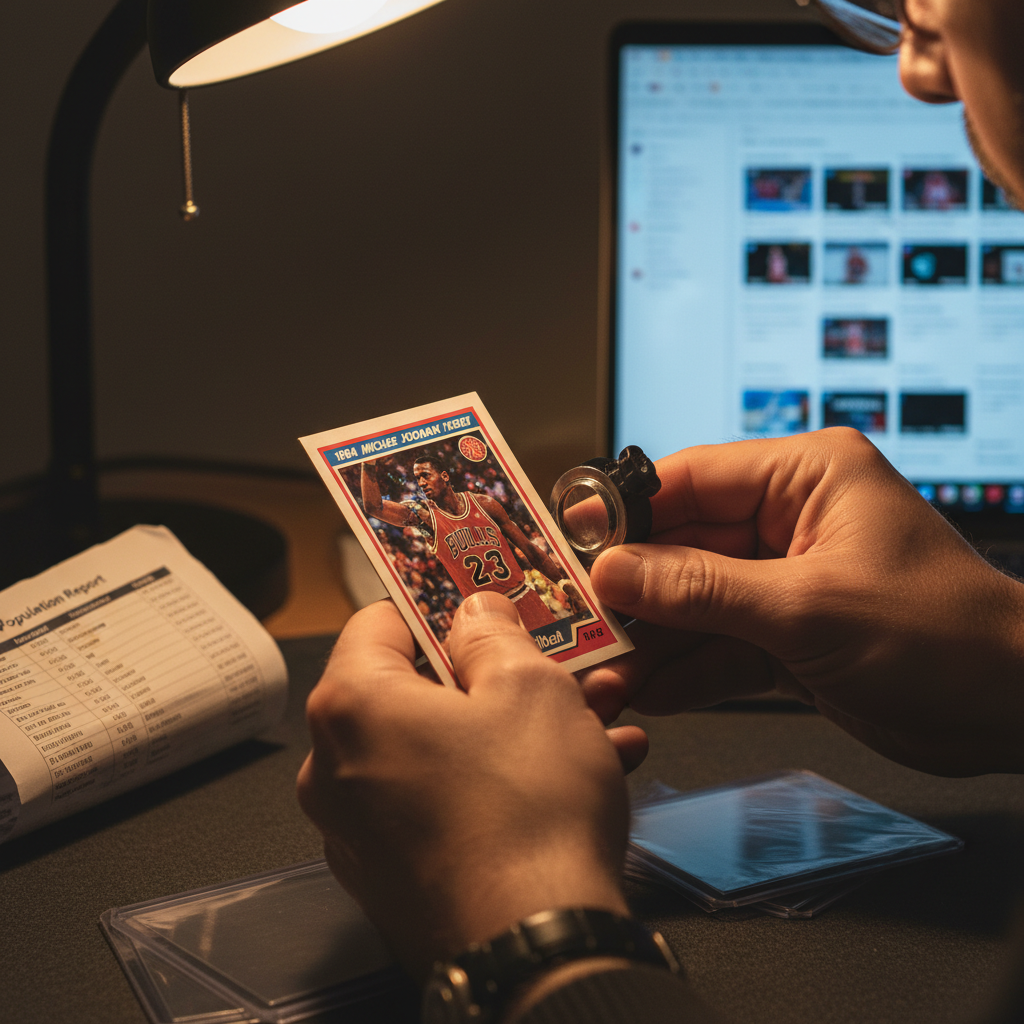
Use 130point.com or PSA's own Population Report to check how many copies exist in each grade. High-pop cards — those with thousands of PSA 9s and 10s already in circulation — face brutal price compression. Low-pop cards in high grades are where real value lives.
The Pop Report is your first stop, not an afterthought. If a card has 12,000 PSA 10s already graded, the marginal value of adding yours is near zero.
Pro Tip: For vintage cards (pre-1980), the math shifts dramatically. A PSA 4 on a 1955 Topps Roberto Clemente rookie still commands serious money because raw vintage is increasingly distrusted by buyers. Even mid-grade slabs on key vintage rookies add liquidity and buyer confidence that raw cards simply can't match.
Step 2: Choose Your Grading Company
Three companies dominate the trading card grading market, and they are not interchangeable. Choosing the wrong one for your specific card is a real error with real financial consequences.
PSA (Professional Sports Authenticator) is the market leader for sports cards, full stop. Its 1-10 scale is the most recognized globally, its population reports are the deepest, and its slabs command the highest premiums on secondary markets. A PSA 10 on a key modern rookie typically sells for 20-40% more than the equivalent BGS 10 — not because PSA grades are more accurate, but because the market has decided PSA is the standard. On platforms like eBay, PWCC Marketplace, and Goldin, PSA-graded cards dominate search results and buyer confidence.
BGS (Beckett Grading Services) grades on a half-point scale (1-10 in 0.5 increments) and uses four subgrades: centering, corners, edges, and surface. A BGS 9.5 with four subgrades of 9.5 earns a coveted BGS Black Label Pristine designation — the most demanding standard in the hobby. For modern ultra-premium cards like 1/1 superfractors, high-end autos, and Logoman patches, BGS Black Label is the prestige tier. The subgrade transparency also helps sellers: a BGS 9 with a 9.5 surface grade tells a buyer far more than a PSA 9 alone.
CGC (Certified Guaranty Company) entered the trading card space in 2020 after dominating comic book grading for decades. Their slabs are visually stunning, their holders are arguably the most secure, and their grading has earned a growing reputation for consistency. CGC is gaining ground particularly in the non-sports card segment — Pokémon, Magic: The Gathering, and entertainment cards — where their comic book collector crossover audience shops actively.
For coins and currency, the calculus is entirely different. PCGS and NGC split the numismatic world, with PCGS generally commanding slight premiums on U.S. coins and NGC dominant in world coins and ancient coinage. Don't cross these wires — submitting a rare Morgan dollar to a sports card grader is not a thing, and submitting a Pokémon card to NGC would be equally absurd.
Pro Tip: If you own a high-value card graded by a lesser-known company — SGC, HGA, or similar — consider a crossover submission to PSA or BGS. PSA's crossover service will grade the card and only slab it if it meets your requested minimum grade. A card sitting in an SGC 9 holder that crosses to PSA 9 can see an immediate 30-50% market value increase simply from the holder swap.
Step 3: Prepare and Package Your Submission
This step is where nervous beginners cause the most self-inflicted damage. Improperly packaged cards arrive damaged. Damaged cards grade lower. Lower grades mean money left on the table — or worse, value destroyed.
Here's the exact workflow I recommend:
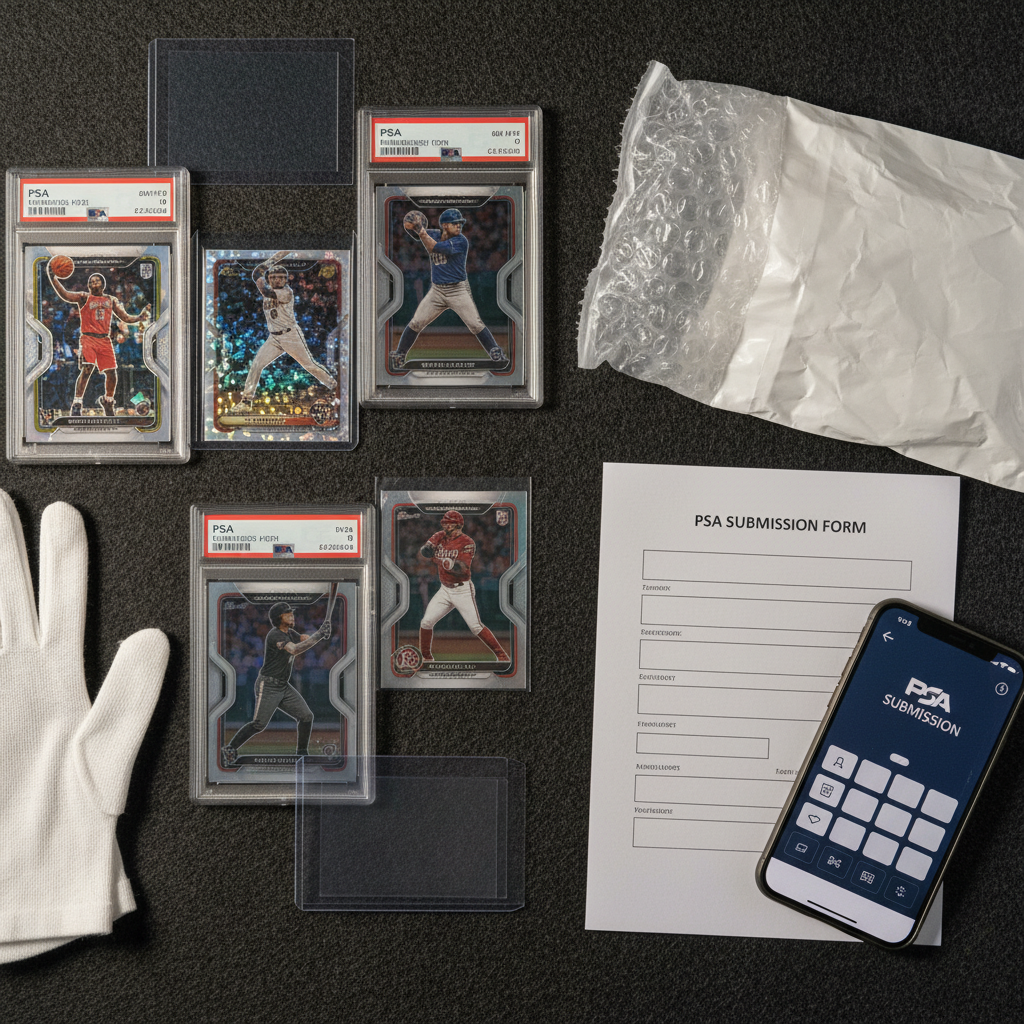
- Handle cards by the edges only. Fingerprints leave oils that show up under graders' lights and can ding a surface subgrade. If you're handling a high-value card, wear thin cotton gloves.
- Sleeve immediately in a penny sleeve, then into a semi-rigid card saver (Card Saver I is the PSA-recommended holder). Do not use rigid top-loaders for PSA submissions — they can actually cause corner damage during extraction and PSA specifically discourages them for bulk and standard submissions.
- Stack cards in submission order matching your online submission form. Label each card saver with a small sticky note or use the numbered order from your PSA account submission list.
- Package in a small box with bubble wrap on all six sides. Cards should have zero movement inside the package. I use a small flat-rate USPS Priority box with two layers of bubble wrap around the card stack and foam padding at both ends.
- Ship with tracking and insurance. PSA recommends insuring shipments for declared value. Use USPS Priority Mail or FedEx with signature confirmation. Do not use regular first-class mail for anything valuable.
Before you ship, photograph every card front and back at high resolution. This is your documentation if anything goes wrong in transit or during grading.
One scratched surface from a poorly fitting top-loader has cost collectors the difference between a PSA 9 and a PSA 10 — sometimes hundreds or thousands of dollars on a key card. Package like a professional from day one.
Step 4: Navigate the Submission Tiers
Every major grading company offers multiple service tiers differentiated by price and turnaround time. Understanding this menu is essential — overpaying for speed you don't need is wasteful; underpaying and waiting six months on a card you want to sell during a hot market window is equally painful.
PSA's current tier structure (mid-2025, always verify at psacard.com before submitting):
- Economy ($25/card): 60-90 business days. Best for bulk submissions of modern cards where market timing isn't critical.
- Regular ($50/card): 20-30 business days. The workhorse tier for mid-value cards where you want a reasonable turnaround.
- Express ($150/card): 10 business days. For cards worth $500+ in expected grade where speed matters.
- Super Express ($500/card): 5 business days. Reserved for cards where market conditions are time-sensitive and the card's value justifies the fee.
- Walk-Through ($1,000/card): Same-day at major shows. For six-figure submissions where every day matters.
The tier decision should always flow from one question: what is the expected value of this card in its likely grade, and how time-sensitive is the market? A $300 card doesn't need Super Express. A $5,000 card during a player's playoff run might absolutely justify it.
Pro Tip: PSA periodically runs promotional pricing — historically around the National Sports Collectors Convention in July and at year-end. These promos can cut bulk pricing by 30-40% and are the single best opportunity to submit large quantities of modern cards economically. Follow PSA's official social channels and set a calendar reminder for the National every year.
Step 5: Understand the Grade You Receive
Your slabs arrive. Some grades will delight you. Some will sting. Both outcomes contain information.
PSA's grading scale runs 1 through 10, with 10 being Gem Mint. In practice, the grades that matter commercially cluster at the top: PSA 10, PSA 9, and — for vintage — PSA 8 and below. A PSA 10 on a modern star card can be worth 3-5x a PSA 9 of the same card. The gap between a PSA 9 and a PSA 8 is often smaller but still meaningful on key cards.
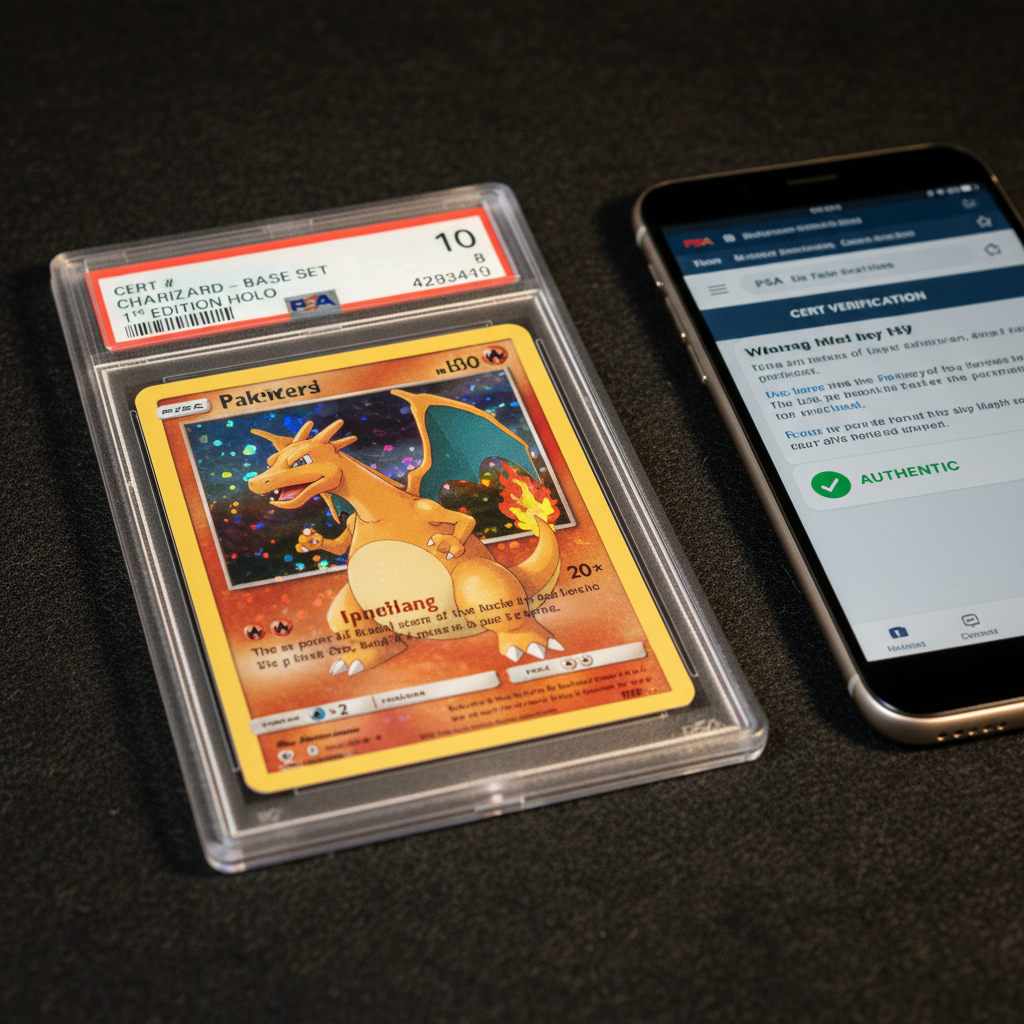
When a grade surprises you downward, do two things before reacting. First, verify the card on PSA's cert verification tool at psacard.com/cert using the certification number on the label. Confirm the grade is recorded correctly. Second, examine the card under a loupe or magnification and try to identify what cost you points. Was it centering? Corner wear? A surface scratch? This forensic work makes you a better grader of your own raw cards over time.
If you genuinely believe a grade is incorrect, PSA offers a Review service. Submit the card for review with a fee, and PSA will re-examine it. Reviews result in upgrades, confirmations, or occasionally downgrades — yes, a review can hurt you, so only pursue them when you have a specific, articulable reason to believe the grade was wrong. Not just because you wanted a higher number.
BGS reviews work similarly, with the added complexity of four subgrades. A BGS 9 with a 9 on centering, 9.5 on corners, 9.5 on edges, and 9 on surface is a fundamentally different card than a BGS 9 with an 8.5 surface dragging down three 9.5 subgrades. Read the subgrades. They tell a story raw grades can't.
Step 6: Sell, Hold, or Crossover
A graded card is a decision point, not a destination. Now you choose what to do with it.
Sell when the card has reached a grade where the market is liquid, you need the capital, or you believe the player's or set's peak valuation is near. For modern cards, eBay remains the deepest liquid market for most price points. For cards above $1,000, PWCC Marketplace, Goldin, and Heritage Auctions offer access to serious buyers willing to pay premiums that casual eBay buyers won't reach. Goldin's monthly auctions and Heritage's quarterly sports card sales consistently set record prices for high-grade key cards.
Hold when the card represents a player still ascending, when the population is genuinely low, or when you believe the hobby's overall market is in a trough. The PSA 10 population on a given modern rookie card grows over time as more raw copies get submitted — holding a card while the pop grows works against you. Holding a card where new raw supply is exhausted (vintage, short-printed parallels, 1/1s) is a different and more defensible strategy.
Crossover when you own a card graded by a lower-market-confidence company and you believe it meets the standard of PSA or BGS. As noted earlier, the market premium for PSA over SGC, HGA, or other graders is real and persistent. The crossover fee is usually worth it on any card worth more than a few hundred dollars in the target grade.
Pro Tip: When listing on eBay, always include the PSA cert number in your listing title and description. Savvy buyers will verify the cert before bidding on high-value cards. A listing that pre-emptively includes the cert number signals transparency and typically converts at higher prices.
Step 7: Build a Submission System That Scales
One submission is a transaction. A system is a business — or at minimum, a disciplined collecting practice that compounds over time.
Serious collectors maintain a submission tracker — a simple spreadsheet logging every card submitted, the service tier, submission date, expected return date, declared value, and final grade. Cross-reference this against your sale prices when cards eventually sell. Over 20-30 submissions, patterns emerge: which sets consistently grade well for you, which players' cards you're consistently overpaying on grading fees, which tier delivers the best ROI for your typical card profile.
Use Market Movers or Card Ladder to track price trends on your slabbed holdings. These platforms aggregate sales data from eBay, PWCC, and other venues to give you a live picture of your portfolio's market value. Knowing when a card's price has peaked — and having the discipline to sell into strength — separates collectors who build wealth from those who simply accumulate slabs.
Join a collector group that does combined submissions. PSA's bulk pricing requires a minimum number of cards per submission, and many collectors pool cards with trusted community members to hit minimums and share shipping costs. The National Sports Collectors Convention Facebook groups and hobby-focused Discord servers are the best places to find these arrangements.
Finally: never stop studying raw cards. The best submitters are the best raw card graders. Every hour you spend examining raw cards under good light, learning how to read centering, spot print lines, identify surface issues, and assess corner integrity is an hour that pays dividends across every future submission you make.
- Never submit a card without checking the PSA Population Report and eBay sold comps first — the math has to work at 3x the submission fee minimum.
- PSA dominates the sports card market; BGS Black Label is the prestige tier for pristine modern cards; CGC is the choice for non-sports and entertainment cards.
- Card Saver I holders, penny sleeves, and proper bubble packaging are non-negotiable — one transit scratch can cost you a full grade point.
- Match your submission tier to the card's expected value and your market timing needs. Economy bulk is for patience; Super Express is for urgency with high-value cards.
- A downgrade from review is possible — only pursue a PSA review when you have a specific, articulable reason, not just disappointment.
- Crossover submissions from lesser-known graders to PSA can unlock 30-50% market value increases on the same physical card.
- Track every submission in a spreadsheet. Patterns in your own data will make you a sharper, more profitable submitter over time.
Your Next Steps
Pull five cards from your collection right now. Not your best five — just five cards you've been wondering about. Run each one through the PSA Population Report at psacard.com/pop and check eBay sold listings filtered to graded copies. By the time you've done this for five cards, you'll have internalized the math faster than any guide can teach it. Create a free PSA account, download the submission app, and price out a bulk submission. The first one is the hardest. After that, it becomes muscle memory.
The collector who understands grading has a permanent edge over the one who doesn't. Every undergraded raw card you recognize, every smart crossover you execute, every submission you time to a market peak — these compound. Start the system today, even imperfectly, and refine it as you go.